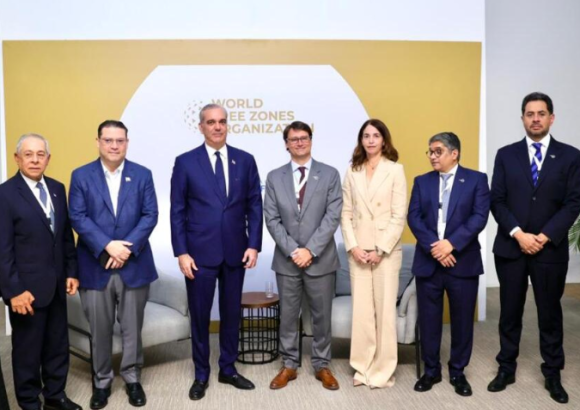
Dominican Republic President Luis Abinader touched back down in the nation’s capital of Santo Domingo on Thursday, wrapping up a two-stop official diplomatic tour that took him first to Panama and then to Guyana. The trip centered on two core goals: drawing new foreign direct investment to the Caribbean nation and expanding bilateral cooperation across key economic and energy sectors, yielding a landmark agreement for joint oil exploration by the end of his travels.
Abinader kicked off his international itinerary in Panama, where he took the stage as the keynote speaker for the World Free Zones Congress. During his address, he laid out a compelling case for global businesses to choose the Dominican Republic as their next investment hub, spotlighting the country’s unique competitive advantages in both advanced manufacturing and high-technology sectors. Beyond his conference appearance, the president held one-on-one bilateral talks with Panamanian President José Raúl Mulino, and also convened a series of roundtable discussions with leading private sector executives from both nations. These conversations focused on breaking down trade barriers and expanding two-way export volumes to strengthen economic ties between the two countries.
From Panama, Abinader traveled onward to Georgetown, the capital of Guyana, where he was formally greeted by Guyana’s Prime Minister Mark Phillips and Foreign Minister Hugh Todd ahead of a high-level meeting with Guyanese President Mohamed Irfaan Ali. The working visit concluded with a formal signing ceremony for a new bilateral cooperation agreement, crafted specifically to advance joint exploration activities in the oil and gas sector.
Immediately after his arrival back in Santo Domingo, Abinader traveled directly to the National Palace to resume his daily presidential duties. Officials close to the president noted that the tour reflects the Dominican government’s sustained, strategic push to expand global partnerships, attract much-needed foreign capital, and unlock new growth opportunities across the energy, trade, and broader economic development sectors.