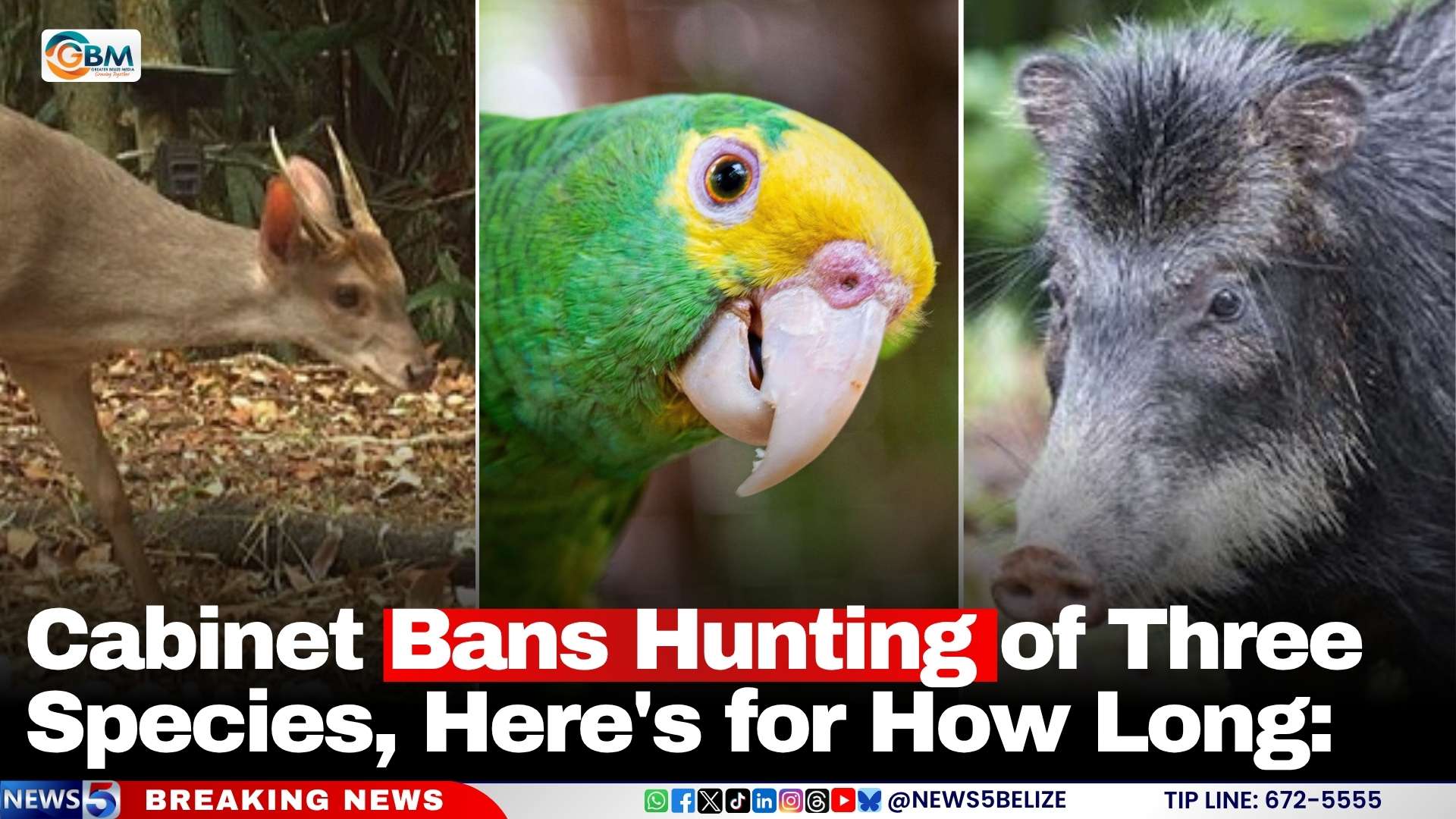
In a developing environmental policy announcement dated May 14, 2026, Belize’s national Cabinet has greenlit a 12-month moratorium on all hunting and capture activities for three native wildlife species, paired with a sweeping update to the country’s outdated wildlife protection legal framework — a move that has drawn both praise and measured criticism from regional conservation leaders. The temporary ban specifically targets three at-risk populations: the white-lipped peccary, the yellow-headed Amazon parrot, and the brown brocket deer, all of which have recorded sustained population declines in recent decades due to unregulated hunting and habitat loss across Belize. Alongside the hunting restriction, Cabinet formally approved the new Wildlife Conservation and Management Bill, a piece of legislation designed to replace the decades-old original Wild Life Protection Act that has guided the country’s conservation rules for generations. Dr. Celso Poot, the long-serving Managing Director of the Belize Zoo and a prominent voice in Central American wildlife conservation, described the policy updates as a long-awaited milestone for the region’s environmental community. In his response to the announcement, Poot emphasized that the revised legislation has been years in development, shaped by extensive cross-stakeholder consultations that address gaps in the country’s original, outdated regulatory framework. “This is something that has been in the works for many years. A lot of consultations have gone into the updating of it… I think that will be welcomed by the conservation community because we have a lot of antiquated laws,” Poot stated. Despite his support for the broader regulatory overhaul, Poot raised pointed questions about whether the one-year timeline for the hunting ban will be sufficient to allow the protected species’ populations to recover to sustainable levels. He noted that the three species included in the ban are just a small fraction of the Belizean wildlife currently facing downward population trends, adding that most vulnerable large mammal and bird species require far longer than 12 months of protection to rebound from decades of overexploitation. Poot further argued that hicatee turtles, a critically endangered freshwater turtle species native to Central America, should have been added to the list of species protected under the new moratorium, given their ongoing population collapse across the country. This developing story will be updated with full additional details in a broadcast airing at 6:00 p.m. local time.