In the wake of a destructive severe weather event that struck Dominica on April 26, 2026, the island nation’s government is ramping up coordinated recovery and relief operations across the hard-hit Salybia Constituency and Kalinago Territory, led by the Ministry of Environment, Rural Modernisation, Kalinago Upliftment and Constituency Empowerment.
A recent official press release from the ministry outlined that it has partnered closely with national government agencies, humanitarian organizations, local governing bodies, and community leaders to deliver support to affected residents and speed the return of daily life to impacted areas. Current response efforts are centered on four key priorities: reopening blocked access routes, completing comprehensive damage assessments, supporting at-risk vulnerable households, and boosting community preparedness ahead of the upcoming Atlantic hurricane season.
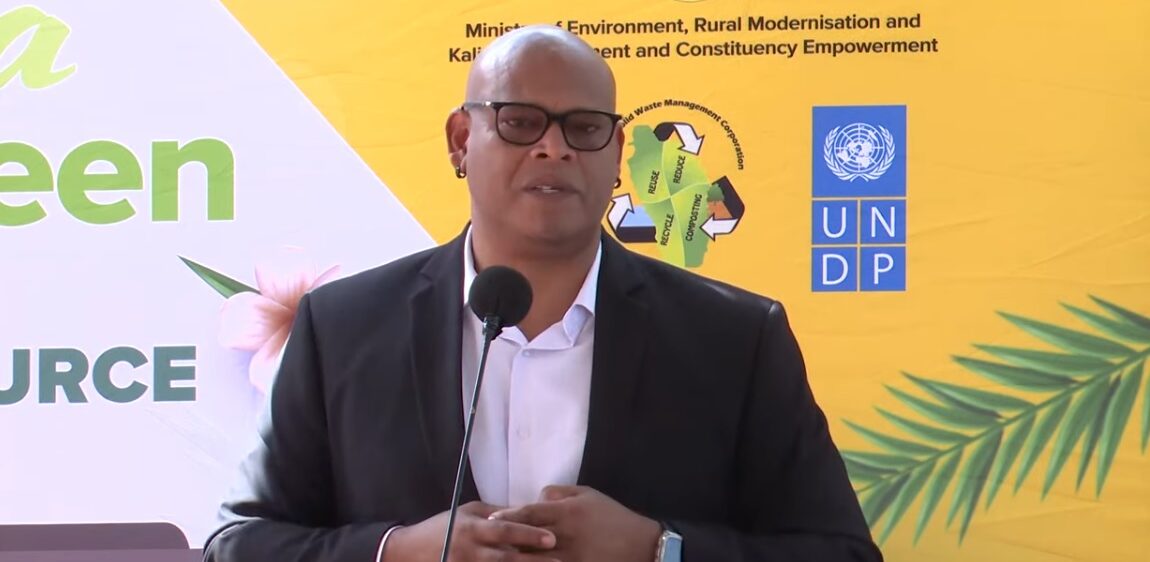
Hon. Cozier Frederick, the minister heading the ministry and parliamentary representative for Salybia, has been embedded with response teams on the ground throughout the operation, and Dominica’s Prime Minister has also traveled to the Kalinago Territory to meet directly with impacted residents and inspect storm damage firsthand. Minister Frederick reported that substantial progress has already been achieved across the constituency.
“We have made significant progress in the Salybia Constituency,” Frederick explained in the release. “We have cleared multiple landslides to reopen access between Hatton Garden and Castle Bruce. We have also begun evaluating damage to residential properties impacted by the weather system, completed full assessments of small farms and agricultural holdings whose owners lost critical livelihoods, and we are already addressing the psychosocial trauma that storm exposure has caused for local residents.”
A diverse coalition of response teams has been deployed to support recovery work across the region, including crews from the Ministry of Public Works, contracted private heavy equipment operators, staff from the Forestry, Wildlife and Parks Division, and teams from the National Employment Programme (NEP). Together, these groups have worked to clear storm debris, reopen closed roads, inspect damaged culverts, and resolve urgent public safety hazards across affected zones. Joint assessments have identified 18 culverts that require immediate repair, with input from four key stakeholders: the Ministry of Environment, Ministry of Public Works, NEP, and local equipment operators.
The Forestry Division has dispatched specialized chainsaw crews to remove fallen trees, clear blocked access routes, and support slope and environmental damage assessments alongside the Office of Disaster Management (ODM). NEP teams drawn from seven communities across the island — Salybia, Delices, La Plaine, Marigot, Riviere Cyrique, Grand Fond, and Belles — have also joined ongoing community clean-up operations to speed recovery.
On the humanitarian assistance front, support for affected households has expanded steadily over the course of the response. To date, approximately 1,041 households have received emergency food hampers through the government’s national Rapid Response Programme, with priority distribution allocated to elderly residents, households with young children, people living with disabilities, and other high-vulnerability groups.
Mental health and psychosocial support services have also been launched to address the emotional toll of the storm. The Ministry of Health and UNICEF are providing trauma counseling for residents impacted by the disaster, and UNICEF has rolled out its specialized “Return to Happiness Programme” at three primary schools in Atkinson, Salybia, and Sineku. The program uses play-centered therapeutic activities including art and music to help children process their storm-related experiences and recover emotionally.
Agricultural recovery efforts are also moving forward according to the official update. Assessments led by the Ministry of Agriculture have currently evaluated 100 separate agricultural holdings: 70 located within the Kalinago Territory and 30 in the neighboring community of Atkinson. Emanuel Joseph, Animal Health and Production Officer and Acting Team Leader of the East Agricultural Region, confirmed that local farmers have identified four core unmet needs: support to restore damaged farmland, livelihood assistance to offset income losses, improved access to farm areas, and investment to strengthen long-term resilience against future climate-driven extreme weather.
Housing damage assessments are also ongoing, conducted jointly by the Ministry of Housing and Urban Development and the Kalinago Affairs Department. Oswald James, Quality Assurance Officer at the Ministry of Housing and Urban Development, shared that early assessments have already uncovered urgent housing needs across multiple affected communities. “To date, initial assessments have been completed for 26 impacted households, with 14 of these households identified as requiring urgent relocation support,” James stated. “Immediate needs we have documented include emergency construction repair materials, roof rehabilitation assistance, temporary shelter provision, and slope mitigation work around homes located at high risk of further landslides.”
The Dominica government has emphasized that it is continuing to coordinate closely with a broad network of partner organizations and international donors to scale up relief and recovery, including UNICEF, UNDP, IsraAID, Tropical Shipping, local private sector groups, and international overseas donors. Support received so far has covered a range of critical needs: psychosocial support services, clean-up tools and heavy equipment, emergency supplies, potable water provision, and logistics support for response operations.
For long-term recovery planning, the ministry has requested specialized technical assistance from the Economic Commission for Latin America and the Caribbean (ECLAC) to conduct a comprehensive national post-disaster damage and economic loss assessment. Per the official release, a team of six ECLAC experts is scheduled to arrive in Dominica in early June to conduct environmental and geospatial assessments that will inform evidence-based recovery planning and long-term resilience building.
In addition to these efforts, the government has launched a local community work crew recruitment program that serves two goals: it supports ongoing clean-up, agricultural restoration, and road rehabilitation work, while also creating short-term income opportunities for residents whose livelihoods were disrupted by the storm. To date, six local residents have already been recommended for immediate hiring, with additional applications still under review.
The Government of Dominica reaffirmed its ongoing commitment to supporting residents through every stage of the recovery process, with a core focus on rebuilding communities that are stronger, safer, and more resilient to future extreme weather events.