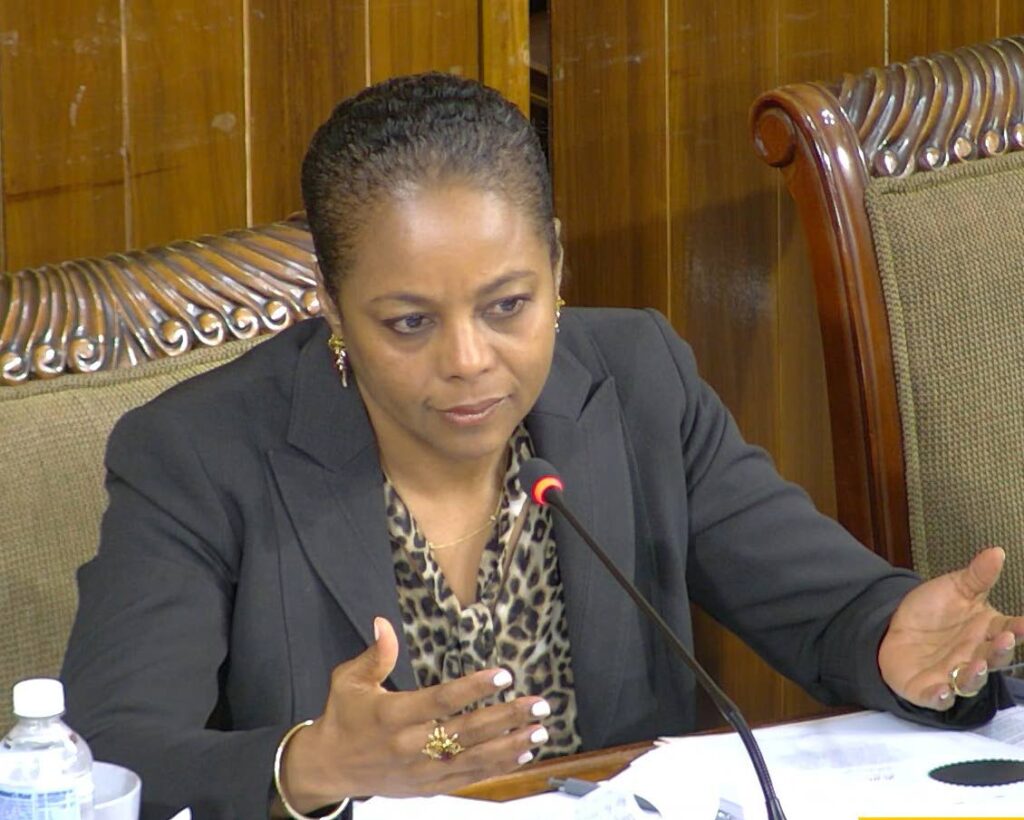
Questions surrounding the Jamaica Ethics Committee’s handling of the exemption controversy involving St Andrew East Central Member of Parliament Dennis Gordon persisted through Wednesday’s sitting, as committee chair Marlene Malahoo Forte confirmed neither she nor the committee clerk had received the widely referenced legal opinion that argues the body lacks jurisdiction to recall Gordon.
The ongoing dispute centers on a growing partisan and constitutional debate over whether the committee overstepped its institutional authority when it moved to summon Gordon for additional questioning, after Jamaica’s House of Representatives already approved the committee’s initial recommendation on Gordon’s exemption application. Throughout this process, opposition lawmakers have repeatedly cited an external legal opinion to back their claim that the committee no longer has standing to investigate the matter, but Malahoo Forte confirmed Wednesday that neither she nor the committee’s top administrative official have ever received a formal copy of the document.
“I thought it was not proper to get the opinion on the record in the way that the attempt was made. Because there is a proper way to do it, and my view was that it was not done properly, and to date, I still do not have the opinion, I don’t know its content, and I’m advised by the committee clerk that he doesn’t have it either,” Malahoo Forte told the committee during the session. She also firmly pushed back against claims that she had privately reviewed the undisclosed opinion or allowed it to influence the committee’s deliberative process.
Clarity on the origin of the opinions emerged later in the sitting, when Senior Legislative Counsel Tiffany Stewart addressed the committee to detail how the documents were requested and distributed. “For the purposes of clarity solely and for the avoidance of any form of doubt or misinterpretation, the legal opinion was sought by the leader of opposition business through the Office of the Clerk and not directly from the Legislative Council Department. Additionally, a request was made for a supplemental legal opinion on April 30th through the Office of the Clerk on the same matter and that was provided, I think, on May 1st to the leader of opposition business,” Stewart explained.
The core legal argument advanced by Opposition members holds that once the full House of Representatives approved the Ethics Committee’s original recommendation on Gordon’s exemption application, the matter is officially closed — a legal doctrine known as functus officio, meaning the body has exhausted its authority over the case. This position was forcefully laid out by Opposition member Anthony Hylton during Wednesday’s debate, who emphasized that the dispute is not a partisan political fight, but a technical matter rooted in constitutional governance.
As the discussion grew more tense, Hylton warned the committee that it risks acting outside its lawful bounds unless clear constraints are placed on its authority and investigative scope. “We need to have the scope properly defined so that we don’t go wandering and thrashing about into matters that properly does not concern this committee… if we don’t have limits, we can find ourselves in deep waters,” he cautioned.
Malahoo Forte pushed back against this framing, arguing that the committee has a clear mandate to investigate new questions that have emerged about the accuracy of information Gordon submitted during the initial exemption application process. “The committee’s recommendation was based on the information provided by the member. The accuracy of that information on which the committee’s recommendation was grounded was subsequently brought into question, and the committee sought to obtain clarification on the information which led to the member being summoned to reappear before the committee,” she explained.
Beyond the narrow dispute over Gordon’s case, Wednesday’s sitting expanded into a broader debate over the appropriate scope of parliamentary scrutiny for elected officials. Malahoo Forte suggested that the Ethics Committee may need to undertake a full overhaul of its procedures for processing exemption motions moving forward, noting that public expectations for elected official accountability have shifted dramatically in recent years.
“Today, the people of Jamaica are demanding more of their parliamentarians with all due respect… And when a member of parliament has a contract with the Government of Jamaica on account of the public service, and issues arise, the people want to know. If you think that because in the past, a member may just be called upon to say this is it, and it is acted on, that may not be the case going forward… I believe we are under a duty to find out what is the extent of the contract and how will any conflict of interest be resolved in the public interest,” Malahoo Forte added. Hylton reaffirmed his position at the close of the sitting, restating that the matter is legally closed following the House’s vote on the original recommendation.