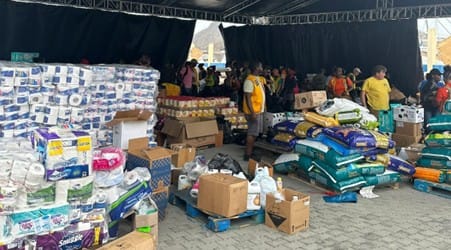
For the Caribbean region, which is frequently battered by natural hazards, international goodwill and charitable giving are nothing new. But two disaster response specialists are sounding the alarm: even the most well-meaning acts of generosity can spiral into a secondary disaster if they are not properly organized, hampering life-saving response efforts at a time when every second counts for vulnerable communities.
In a joint opinion editorial, Kevon Campbell, a logistics specialist with the Caribbean Disaster Management Agency (CDEMA), and Jan Willem Wegdam, a shelter advisor with the International Organization for Migration (IOM), outline the persistent challenges created by unsolicited, uncoordinated donations in the aftermath of major catastrophic events. Too often, these unscreened contributions overwhelm already overstretched local ports and storage facilities, they report. Common problematic donations include heavy winter clothing shipped to tropical Caribbean nations, expired food products, unsorted mixed boxes of goods that no staff can organize, and flimsy tarpaulins that cannot hold up to heavy tropical rainstorms.
Far from supporting communities in crisis, these inappropriate donations create massive logistical backlogs and draw critical resources away from addressing the most urgent, life-threatening needs. Data collected by CDEMA and its participating member states underscores the scale of the problem. Without clear, enforced donation management policies in place, large volumes of unusable or ill-suited goods consume limited, valuable staff time, operational capacity, and emergency funding. This places crippling strain on already strained national logistics networks, which in turn delays the delivery of actually essential supplies: clean drinking water, nutritious food, durable shelter materials, and critical medical equipment and pharmaceuticals.
Worse still, experts estimate that as much as 60 percent of all unsolicited donated goods end up never being distributed to people in need. Most are ultimately discarded as waste, creating additional environmental damage that compounds the destruction already caused by the original disaster.
The specialists emphasize that these challenges extend far beyond operational logistical headaches, carrying tangible human costs. When emergency response systems are bogged down by unneeded donations, the most vulnerable populations – including children, elderly residents, and low-income communities already hit hardest by disasters – are forced to wait longer for the life-saving aid that can mean the difference between life and death.