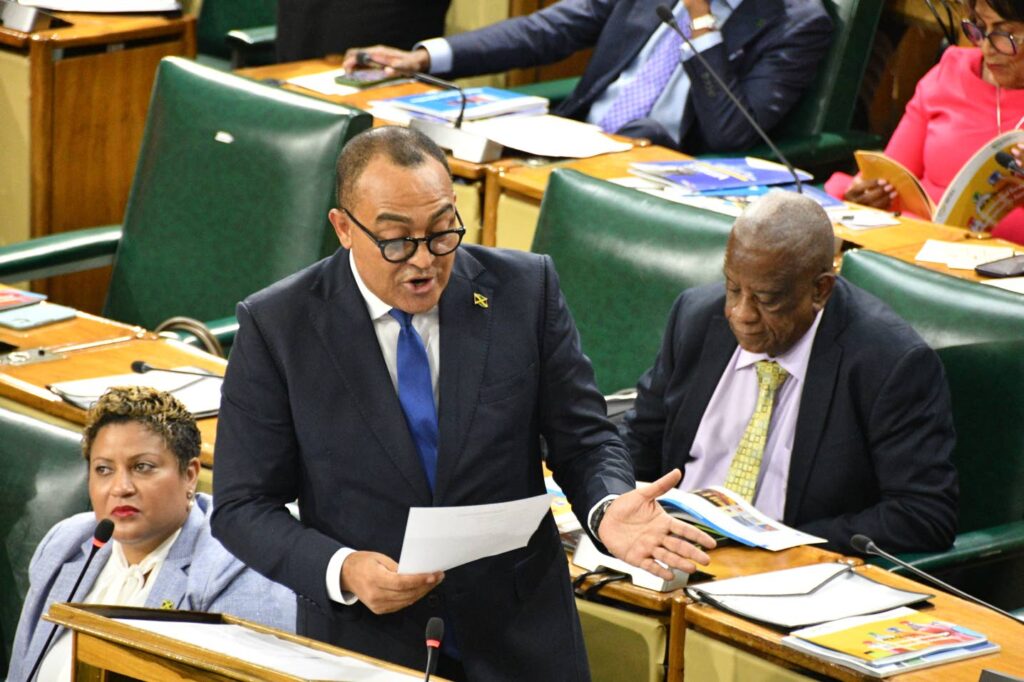
Jamaica is set to embark on a comprehensive, research-backed effort to develop potential age-based regulations for children’s social media use, addressing growing public health concerns about the platform’s harmful impacts on young people’s mental wellbeing. Health and Wellness Minister Dr. Christopher Tufton outlined the initiative Tuesday during his 2026-27 Sectoral Debate address to Jamaica’s House of Representatives.
The full scope of the two-year project falls under the government’s Community Arranged Response Efforts (CARE) Agenda, a $500-million initiative dedicated to addressing pressing family and community health challenges across the island. Beyond social media regulation, the agenda will also tackle other critical public health priorities: a rapidly aging national population, declining fertility rates, and unmet needs in women’s health.
“We will examine the threats and opportunities for new and emerging policies to support holistic health, to protect the vulnerable and enhance quality and longevity of life,” Tufton told lawmakers. “We will start with our CARE Agenda to highlight and influence critical determinants of better family and community health.”
Turning to the specific crisis of unregulated youth social media access, Tufton called on Parliament to first acknowledge the role lawmakers themselves play in amplifying toxic online content. “In this House we encourage it at times. We go on some of these programmes, we promote some of the toxicity that is being promulgated; the hate, the vitriol and, unknowingly, maybe… we’re doing harm not just to ourselves but to those we’re trying to provide leadership for,” he said.
Tufton stressed that the time for inaction has passed, noting that Jamaica currently lacks any coordinated national response to what he frames as a growing public health threat. The first step in the government’s roadmap will be a national study to capture public perceptions of social media regulation for minors. Once that research is complete, the administration will move to develop a formal policy framework, weighing regulatory options and engaging a broad range of key stakeholders—including parents, educators, youth representatives, and major social media platform providers.
“The time has come to use research-based policy formulation to determine age-based regulation, platform accountability, national digital health guidelines, school-based digital wellness education, expanded youth mental health services, public awareness campaigns for caregivers, and a national surveillance system to track usage patterns and mental health outcomes,” Tufton said. “We will translate these evidence-based findings into a clear policy framework… to ensure that any measures introduced are balanced, practical, and in the best interest of our children.”
Citing recent national data, Tufton underscored the urgency of action: social media usage is widespread across Jamaica, with more than 1 million users on Instagram and roughly 1.6 million on Facebook as of late 2025, with usage highest among the 25 to 34 age demographic. While the minister acknowledged that social media has delivered tangible benefits—revolutionizing communication, expanding professional networks, and creating new entrepreneurship opportunities—he emphasized that it has also triggered measurable social and psychological harm, particularly for young Jamaicans.
Local data shows 64% of children aged 0 to 14 report negative impacts on their mental health from social media use, while 47% of 15 to 19 year-old adolescents report similar harms. The risk grows with usage: children spending more than three hours daily on social media are twice as likely to experience mental health challenges. Across the broader Caribbean region, rates of cyberbullying, non-consensual explicit messaging, emotional distress, and suicidal ideation linked to social media have risen sharply, cementing the issue’s status as a regional public health crisis rather than a purely technological concern.
Jamaica’s push for regulation aligns with a growing global trend of government intervention to protect minors online. Multiple countries have already implemented formal age restrictions: Australia requires users to be at least 16, while Denmark, France, and Indonesia have set a minimum age of 15. Other nations including Spain, Greece, Norway, and Austria are currently evaluating similar policies. Broader regulatory regimes, such as the United Kingdom’s Online Safety Act, already mandate that platforms remove addictive design features like infinite scrolling and autoplay, enforce age verification, and actively monitor harmful content, with steep financial penalties for companies that fail to comply.
Right now, however, Tufton described Jamaica’s current social media landscape as a “free-for-all”. Recent 2025-2026 local research confirms a strong causal link between heavy social media use and rising rates of anxiety, depression, and digital addiction, with young people and professional content creators disproportionately affected.
Jamaicans under 24 spend an average of six hours per day on social media—double the average three hours for senior citizens and two hours more than the average for adults. For full-time content creators, the harms are even more pronounced: 42% report clinical anxiety, 38% experience depressive symptoms including persistent low mood and irritability, and 47% suffer from burnout driven by constant pressure to maintain an engaging online persona and secure income through content output.
Tufton also highlighted the cultural harm of unregulated social media in Jamaica: 36% of local content creators produce material centered on physical altercations, while 29% engage in aggressive online behavior, contributing to a national cultural shift toward normalized vulgarity and harmful content.
To move the entire CARE Agenda forward, the Ministry of Health and Wellness will open a call for proposals on June 15, 2026, inviting civil society and research organizations across Jamaica to partner in the initiative to address these growing societal risks.