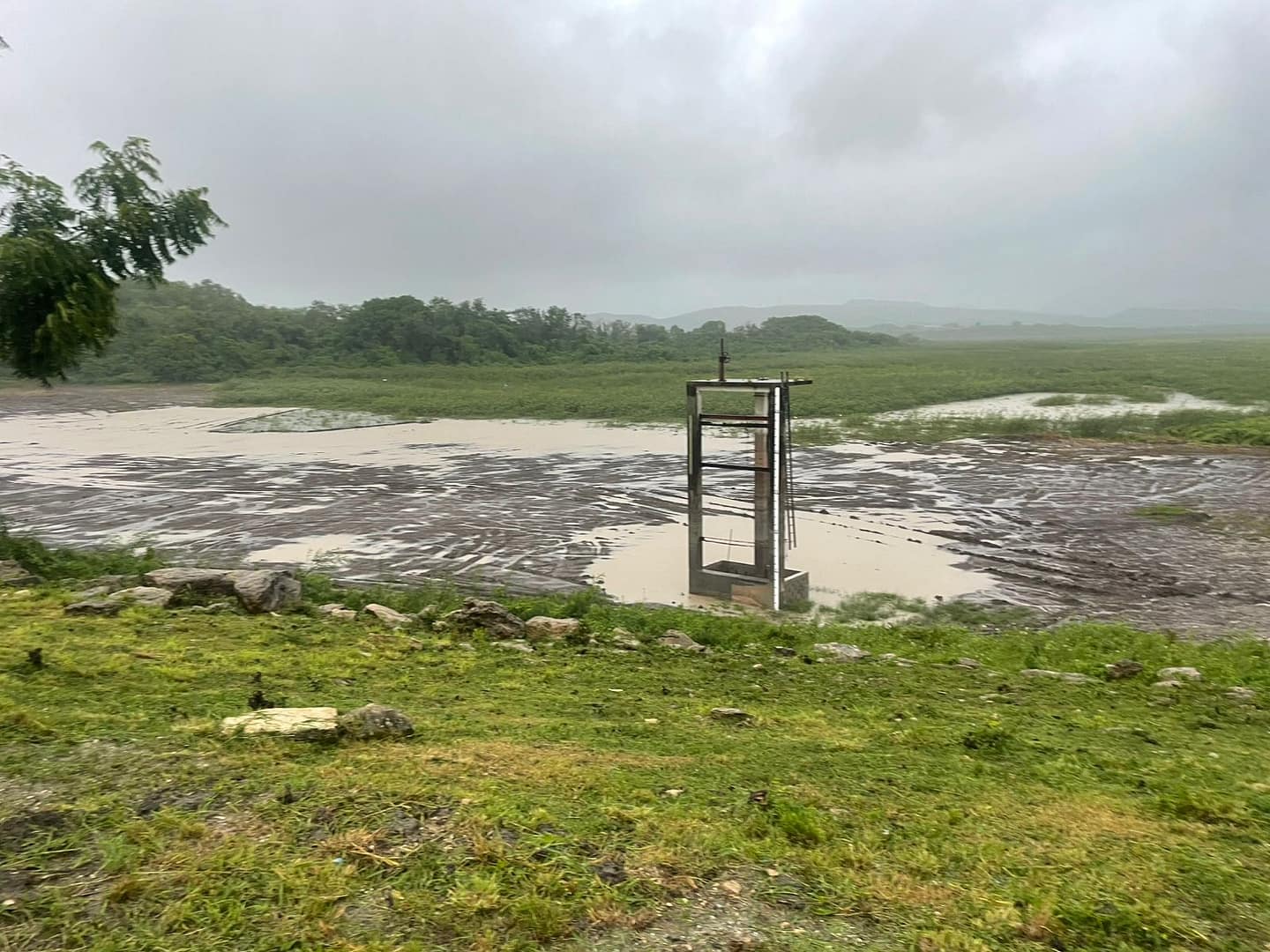
A worsening drought across the island nation has forced the Antigua Public Utilities Authority (APUA) Water Business Unit to suspend all water pumping operations from Potworks Reservoir, the country’s largest surface water catchment, after water levels dropped to critically low thresholds that make continued extraction unsafe and unsustainable.
For months prior to the shutdown, Potworks Reservoir fed the adjacent Delaps Water Treatment Facility, which supplied treated water to dozens of residential communities across the island’s southeastern region. The facility contributed an average of 1.2 million imperial gallons of potable water to the national distribution network daily, making it a key component of the country’s water supply infrastructure. However, months of persistent below-average rainfall and prolonged drought have pushed reservoir levels far below the minimum required for continued extraction.
Southeastern communities that previously relied on the Potworks-Delaps system will now receive water from two existing reverse osmosis facilities: the Crabbs Reverse Osmosis Plant and the Barnacle Point Reverse Osmosis Facility. APUA officials noted that investments in desalination infrastructure over the past 12 months have already bolstered the national water grid’s resilience, allowing the utility to offset the full loss of Potworks’ output without a drastic reduction in overall daily production.
Across all active supply systems — which include reverse osmosis desalination and groundwater extraction — the Water Business Unit still maintains a total daily output of roughly 8.5 million imperial gallons of potable water. Even with this consistent production, the utility warns that rising demand, driven by steady population growth, expanding tourism development, new housing projects, and overall economic expansion, puts continued pressure on the supply network.
During the transition to the new supply routing, some customers may experience temporary disruptions to service, reduced water pressure, or longer gaps between scheduled water deliveries. These issues are most likely to impact customers living in elevated areas of the southeastern region. The full list of affected communities includes American Road, All Saints Road, Belmont, Bethesda, Biggins, Buckleys, Folly Hill, Horsford Hill, John Hughes, Liberta, Ottos New Town, Patterson, Radio Range, St. Clair Heights, Swetes, Wallings, and portions of Falmouth.
To address the long-term gap left by the Potworks shutdown and improve regional transmission capacity, APUA is in the final stages of constructing new transmission lines in the Herbert’s area, which will carry additional water from the Crabbs and Barnacle Point facilities to affected communities. The utility is also on track to commission a brand-new 3.2 million imperial gallon per day reverse osmosis facility before the end of the year, while the organization’s hydrology team continues exploratory work to identify and develop new groundwater reserves through new well drilling initiatives.
APUA emphasized that reliable access to potable water is a foundational requirement for the island’s daily life and economic activity, and has moved to reassure residents that multiple long-term projects to strengthen and expand the national water system remain actively in progress. The organization is encouraging all customers across the island to continue practicing voluntary water conservation and maintain emergency water storage where possible, to help mitigate the ongoing impacts of the drought.
In closing, APUA expressed sincere gratitude to the public for their patience and understanding as utility teams work to adapt to drought conditions and preserve reliable water service for all communities across the island.