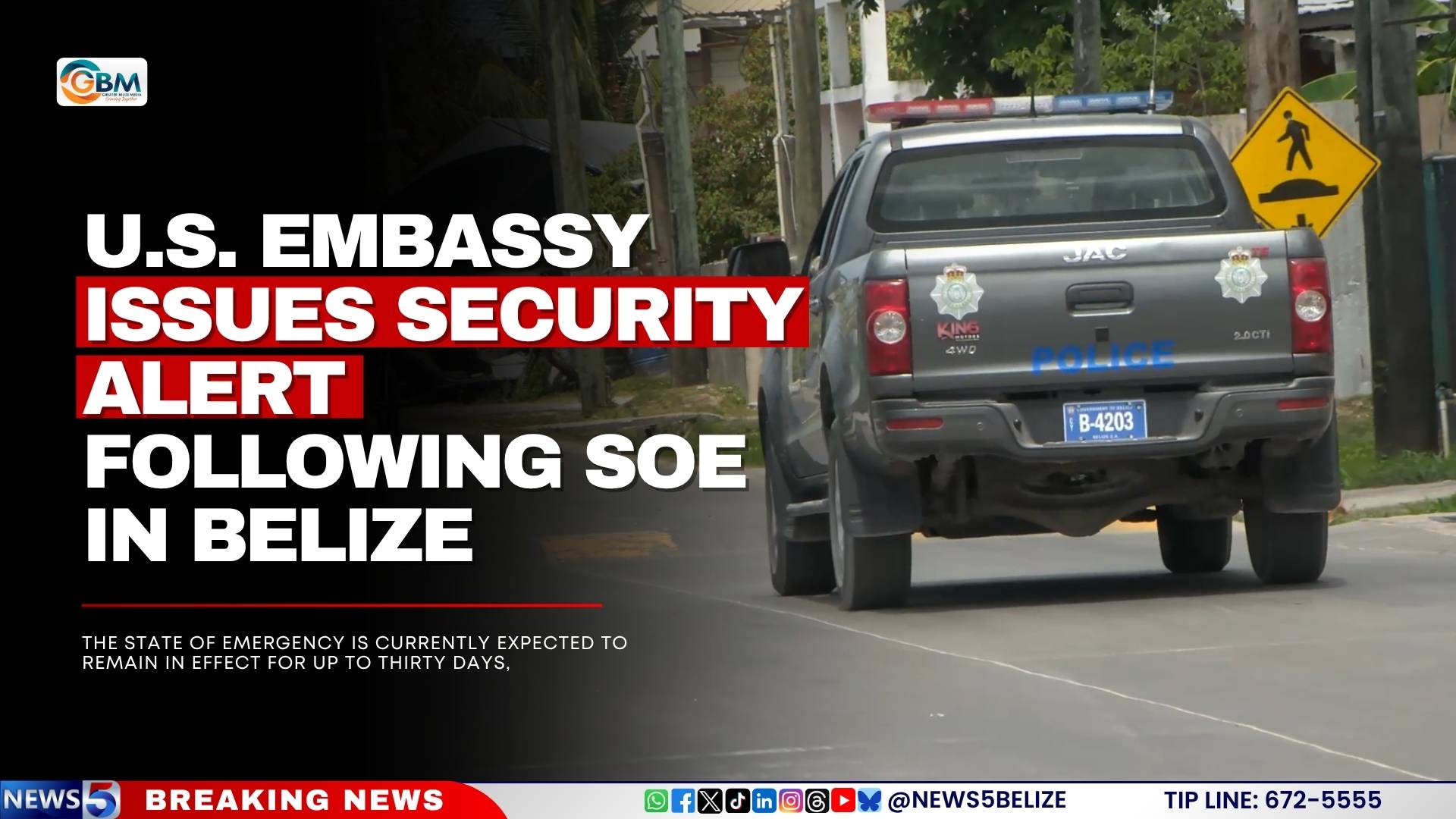
In response to a sharp uptick in violent criminal activity across key areas of Belize, the U.S. Embassy in Belize has issued an official security alert for all U.S. citizens residing in or traveling through the Central American nation. The alert comes days after Belizean authorities declared a 30-day State of Emergency (SOE) on May 8, covering high-crime zones that include both the Northside and Southside of Belize City, plus multiple communities across the broader Belize District: Ladyville, Burrell Boom, Fresh Pond, Buttercup Estates, Bermudian Landing, Lemonal, Isabella Bank, Rancho Dolores, and Double Head Cabbage.
By the first weekend after the SOE declaration, residents across affected areas awoke to a transformed security landscape, marked by heightened patrols from both the Belize Police Department and the Belize Defence Force (BDF), mandatory checkpoints at major transit points, strict curfews, and a suite of enhanced public safety measures. Local officials confirmed the drastic action was triggered by weeks of steadily escalating violence, most of which has been linked to ongoing gang-related retaliatory attacks.
The wave of bloodshed that pushed authorities to implement the SOE began on May 5, when two high-profile local figures, Hubert Baptist and Eric Frazer, were ambushed in a targeted shooting along the Philip Goldson Highway. Remarkably, both men survived the attack. Just days later, 29-year-old Jamal Samuels was gunned down in a killing investigators have classified as a direct retaliatory murder. In an incident that sent further shockwaves through local communities, police report a 16-year-old gunman entered a local bar and fatally shot a 34-year-old mother of three. These high-profile attacks are just four of the multiple shootings and homicides that have destabilized Belize District communities in recent weeks.
Under Statutory Instrument 50 of 2026, the legal framework backing the SOE, Belizean law enforcement and security officials have been granted significantly expanded authority to crack down on crime and reestablish public order. The emergency regulations prohibit a range of activities within the designated SOE zones, including loitering, public alcohol consumption, and any gathering of three or more people. Minors in the affected areas are also required to stay indoors between 8:00 p.m. and 6:00 a.m. local time.
Notably, both police and BDF personnel are now authorized to conduct warrantless searches of private residences, vehicles, watercraft, and individual persons if they have reasonable suspicion of criminal activity or a threat to public safety. Officers can also detain individuals for questioning, seize items classified as dangerous, and make warrantless arrests if they suspect a person has committed, plans to commit, or may facilitate criminal activity. The regulations also allow authorities to hold detained individuals for up to 30 days during the SOE, and permit the closure of any business or location deemed a threat to public safety.
The SOE framework also grants broad new powers to Belize’s Minister of Home Affairs, including the authority to order individuals placed under home confinement, restrict personal movement and social association, and require mandatory regular check-ins with local police.
In its published security advisory, the U.S. Embassy urged all U.S. citizens in Belize to fully comply with directives from local law enforcement, closely monitor official updates from the Government of Belize, and maintain a high level of situational awareness at all times. The embassy also encouraged both U.S. residents and travelers in the country to review the most recent official Belize Travel Advisory and enroll in the U.S. Department of State’s Smart Traveller Enrolment Program (STEP), a free service that provides automatic emergency alerts and updates to U.S. citizens abroad.
As of current official updates, the State of Emergency is scheduled to remain active for a maximum of 30 days. However, senior Belizean officials have not ruled out extending the emergency order or implementing additional strict security measures if violent crime does not subside across the affected zones during the initial 30-day period.