For decades, the world’s most climate-vulnerable nations have been failed by a fundamental flaw in global development financing: a system that judges need solely by national income, leaving highly exposed Small Island Developing States (SIDS) locked out of critical low-interest support when they need it most.
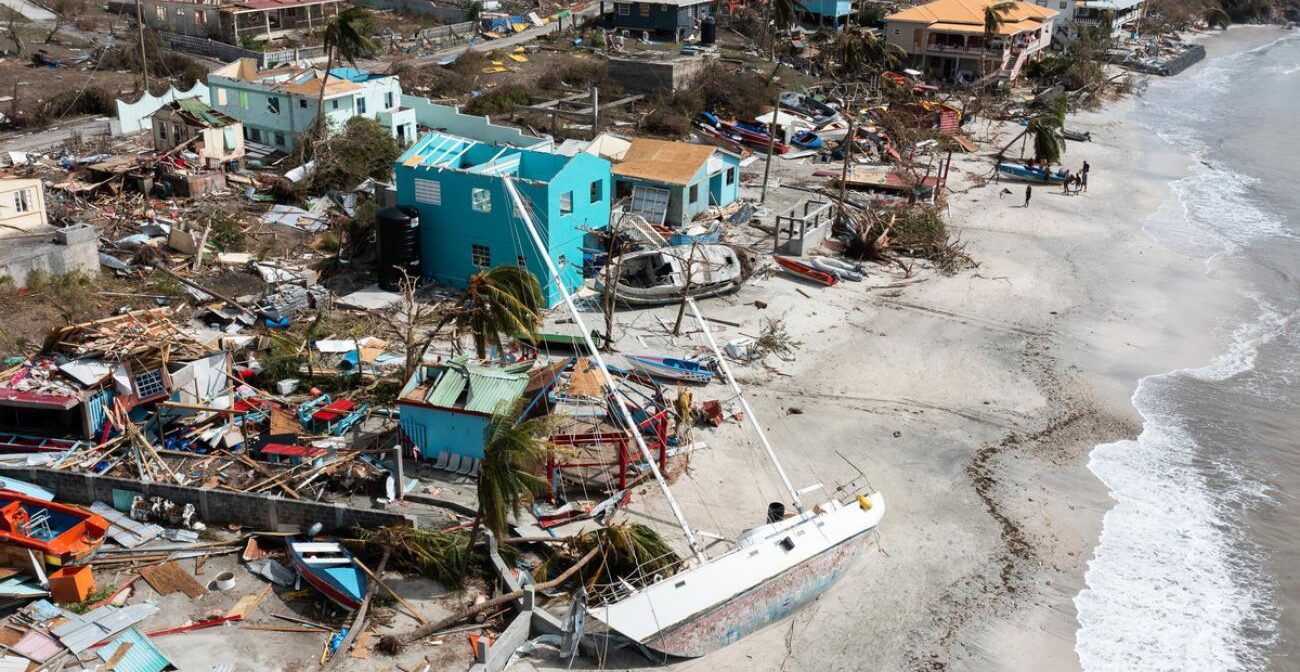
The statistics paint a devastating picture. Between 1970 and 2020, extreme weather events racked up an estimated $153 billion in total losses across SIDS – a sum that dwarfs the group’s combined average annual GDP of just $13.7 billion. Today, 14 of the 20 nations with the highest disaster losses relative to economic size are SIDS. When major storms hit Caribbean SIDS, average losses reach 17% of annual GDP; the 2017 Hurricane Maria alone wiped out 225% of Dominica’s entire yearly GDP. This relentless cycle of destruction has stalled progress on the UN Sustainable Development Goals, with 45% of regional SDG targets either stagnating or regressing. These are not one-off crises – they are permanent, structural challenges that global rules have repeatedly ignored for decades.
The root of this injustice is a decades-long labeling error that SIDS have fought endlessly to correct. Many SIDS are classified as middle- or high-income based solely on average per capita income, a designation that cuts off access to concessional financing exactly when these countries need to invest in climate resilience and disaster recovery. The August 2024 adoption of the Multidimensional Vulnerability Index (MVI) via UN General Assembly Resolution 78/322 marked a historic breakthrough, decades in the making. More than just a new measurement framework, the MVI’s approval represented a global acknowledgment that income alone is a deeply flawed metric for determining development need.
Research confirms that income and vulnerability have no meaningful correlation across SIDS: the two metrics measure fundamentally different realities. A country can boast a high average income yet remain geographically and structurally fragile, with no capacity to bounce back from major climate disasters – a condition the UN terms “double fragility”. The average MVI score for SIDS falls between 55 and 58, compared to a global average of 52.9, a gap that traditional income-based statistics completely hide. When paired with the new Vulnerability Country Profile (VRCP), the MVI finally gives these nations a way to communicate their full risk picture to global donors and financial institutions.
Momentum for the MVI framework has grown rapidly in the months since its approval. The 2025 Sevilla Commitment encourages multilateral development banks and global financing bodies to integrate MVI scores into their policy decision-making, opening the door for vulnerable states to access affordable capital more easily. This marks a major milestone: the MVI now holds recognition beyond the UN system, embedded into the broader global development financing architecture. The Caribbean Development Bank has already begun reviewing how MVI scores can reshape aid eligibility criteria for its member states. Looking ahead, the next critical step is to build on-the-ground data to cement this shift long-term, an effort aligned with the Antigua and Barbuda Agenda for SIDS (ABAS).
Against this backdrop, the January 2026 completion of a UN pilot VRCP project in Saint Kitts and Nevis – a collaborative effort between Caribbean-based UN teams and New York headquarters – represents a giant leap forward for the framework. The pilot produced a replicable roadmap for developing VRCPs that can be adapted for vulnerable nations across the globe. Unlike standard national risk reports, the VRCP structure captures layered risks, from macroeconomic shocks to the specific vulnerabilities faced by individual households – granular details that traditional reports consistently overlook. Critically, the framework aligns with existing national development plans rather than imposing new bureaucratic burdens on already strained local governments. The Saint Kitts and Nevis pilot confirmed the country’s “double fragility”: while national government institutions operate stably, the nation remains acutely exposed to climate, trade and financial shocks, with low-income households bearing the greatest risk – all mapped in clear, actionable detail for the first time.
The funding gap that VRCPs are designed to address is urgent and growing, as recent major hurricanes demonstrate. In 2024, Hurricane Beryl caused $219 million in economic damage to Grenada, equal to 16.5% of the nation’s annual GDP. In Saint Vincent and the Grenadines, the same storm inflicted $230.6 million in direct damage – 22% of GDP – with some small islands losing 80% of all built infrastructure and assets. In Barbados, a Category 3 strike caused an estimated $96.5 million in damage, concentrated in the critical fisheries, tourism and coastal infrastructure sectors. Even after record insurance payouts and targeted debt relief, Grenada recovered only a quarter of its total losses. Just over a year later, in October 2025, Hurricane Melissa made landfall in Jamaica as the strongest storm in the nation’s recorded history, causing $12.2 billion in total losses – 56.7% of Jamaica’s entire annual GDP. This ongoing crisis is not a failure of local planning: it is a failure of a global financing system that refuses to account for inherent climate risk. VRCPs provide the verifiable, granular data vulnerable nations need to demand financing that matches their actual level of risk.
The stakes of completing the remaining three required VRCP pilots before the UN’s 15-member Independent Expert Advisory Panel convenes for its 2026–2030 term cannot be overstated. The General Assembly resolution establishing the panel explicitly requires at least four completed pilot VRCPs to inform its work. These pilots are not just proof of concept: they are the empirical foundation the panel will use to evaluate how the MVI framework operates for vulnerable nations worldwide, refine its indicators, and set operational guidelines for global rollout. With the first pilot successfully completed, every additional pilot finished before the panel meets strengthens the framework’s ability to deliver for vulnerable states. The window for meaningful reform is open now – but it will not stay open indefinitely.
2026 also marks a landmark year for the United Nations, as the organization celebrates its 80th anniversary. The UN80 reform agenda centers on maximizing impact with constrained resources, a critical priority at a time when 68% of global development targets are already off-track. The UN’s credibility depends on deploying tools that accurately identify which nations need support most. VRCPs deliver exactly that: unmeasured vulnerability cannot receive funding. The MVI provides the standardized measurement tool, and the VRCP brings that measurement to life on the ground for vulnerable nations.
As lead authors representing UN economic experts and frontline regional teams, we call on all global development partners and multilateral banks to immediately support the completion of the remaining VRCP pilot projects. The evidence is clear, the methodology is proven, and the global mandate to act is already in place. The only missing piece is collective political will to act. Island nations have waited decades for the global community to see their vulnerability clearly. The tools are ready. The moment for action is now.