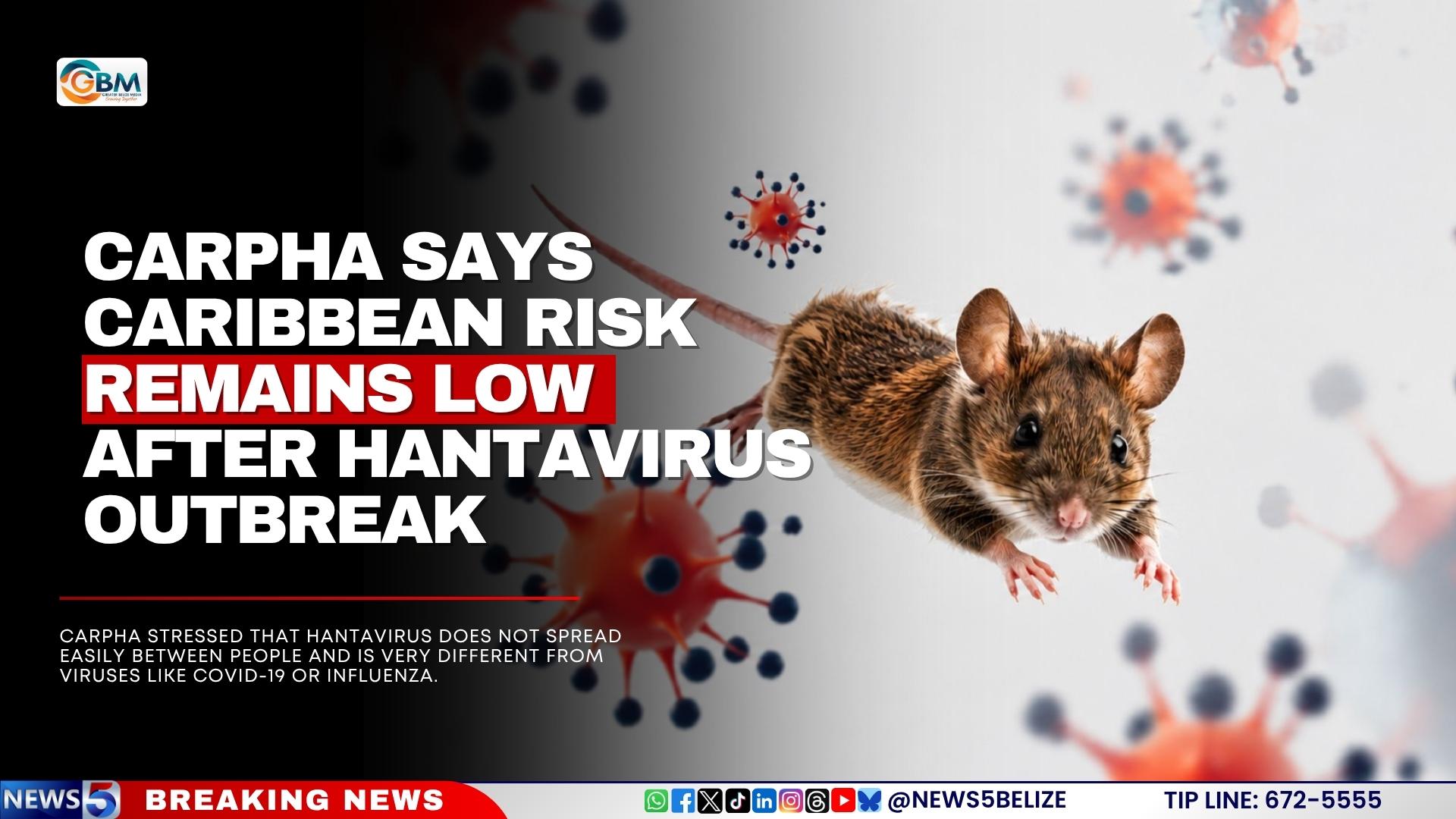
As global health authorities investigate an international hantavirus outbreak tied to the Dutch-flagged cruise ship MV Hondius that has caused multiple deaths, the Caribbean Public Health Agency (CARPHA) has reaffirmed that the overall risk of transmission across the Caribbean region remains minimal, per official statements released on May 11, 2026.
During a press briefing held Monday, CARPHA Executive Director Dr. Lisa Indar outlined that the agency is collaborating closely with the World Health Organization (WHO), the U.S. Centers for Disease Control and Prevention (CDC), and multiple global health partners to track the outbreak and support ongoing international investigations. As of the May 11 reporting cutoff, health officials have documented eight confirmed and suspected hantavirus cases linked to the vessel, three of which have resulted in fatalities. Passengers and crew members aboard the MV Hondius hail from 28 different countries, including the United States, United Kingdom, Philippines, and Netherlands. Multiple infected individuals have already been medically evacuated or repatriated to their home countries, and contact tracing efforts are currently being rolled out across affected nations.
The outbreak timeline traces back to April 1, 2026, when the cruise ship departed from Argentina. A cluster of unexplained severe respiratory illness was reported among people on board, prompting an official notification to the WHO on May 2. Further genetic testing has linked the outbreak to the Andes strain of hantavirus, the only documented hantavirus variant capable of person-to-person spread – though public health experts emphasize this transmission only occurs in rare circumstances, requiring close, prolonged contact between individuals.
Dr. Indar clarified key facts about hantavirus to dispel growing public concern: the pathogen is primarily a rodent-borne illness that is endemic to many regions across the globe, but the specific rodent species that carries the Andes strain is not native to any Caribbean territory. This absence of a local reservoir means there is no sustained source of community transmission within the Caribbean, a core factor driving the low-risk assessment.
Unlike widely circulating respiratory viruses such as COVID-19 and influenza, hantavirus does not transmit easily between humans, Dr. Indar added. “COVID-19 spreads easily between people. Hantavirus does not,” she stated, noting that the probability of large-scale community spread of the pathogen is extremely low. Currently, hantavirus has an incubation period ranging from one to six weeks, and no targeted antiviral treatment or widely approved vaccine exists for the infection. Clinical care for infected patients focuses on supportive interventions, including supplemental oxygen and close intensive care monitoring.
Immediately after receiving formal notification of the outbreak, CARPHA activated its regional public health surveillance infrastructure. Measures implemented include a regional alert issued on May 5, daily risk monitoring across all member states, and ongoing coordination with local health authorities throughout the Caribbean. Following a joint assessment with the WHO, CDC, and UK health authorities, CARPHA has confirmed that the risk to Caribbean populations remains unchanged at low.
To help residents protect themselves, CARPHA is urging the general public to maintain routine basic hand and food hygiene, avoid any contact with wild rodent populations, and only rely on official public health updates for accurate information about the outbreak.