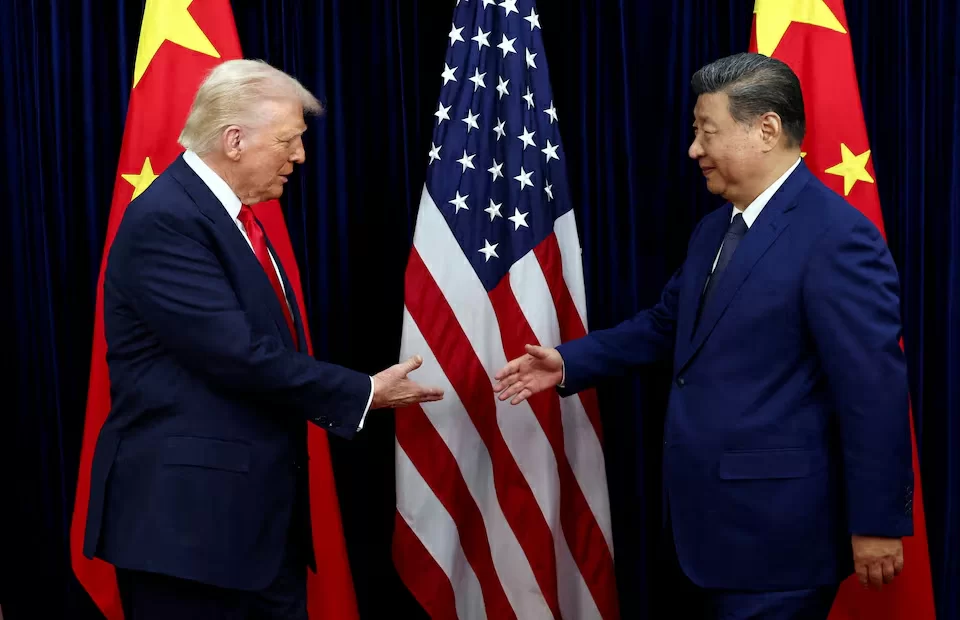
On the eve of a landmark bilateral meeting that could reshape the trajectory of U.S.-China relations, U.S. President Donald Trump and Chinese President Xi Jinping are preparing to sit down for their first in-person talks in more than half a year. The two-day summit, scheduled to kick off Thursday in Beijing, will tackle a sprawling agenda spanning everything from geopolitical hotspots like Iran and Taiwan to emerging global competition in artificial intelligence and global nuclear non-proliferation, according to senior U.S. officials. A top item on the agenda includes a potential extension of a critical trade agreement governing rare earth mineral exports that has kept bilateral trade tensions in check for months.
Trump is set to arrive in the Chinese capital Wednesday, marking his first visit to the country as U.S. president since 2017. The overarching goal of the summit is to stabilize bilateral relations, which have been pushed to their breaking point in recent months by escalating trade disputes, growing friction over the U.S.-Israel conflict with Iran, and a wide range of other lingering policy disagreements.
Diplomatic observers widely expect the two world powers to reach agreement on establishing new bilateral forums designed to boost cross-border trade and direct investment. Chinese officials are also preparing to announce new purchases of U.S. Boeing aircraft, American agricultural goods, and U.S. energy exports, according to sources familiar with the meeting’s planning. Formal unveiling of plans for a dedicated Trade Council and Investment Council is on the table, though the finer details of the new bodies will still require further negotiation after the summit concludes.
One of the most consequential pending issues is the potential extension of the existing rare earth export truce between Beijing and Washington. While a final deal may not be locked in during this week’s talks, U.S. officials have expressed cautious confidence that the current agreement, reached last fall, will be extended to avoid new disruptions to global supply chains that rely on Chinese rare earth exports, a critical input for everything from electric vehicle batteries to defense technology.
Beyond trade and economic cooperation, the summit will dive deep into a series of long-simmering sensitive geopolitical issues that have fueled decades of tension between the two global powers. Iran remains a core point of disagreement: China maintains deep economic and diplomatic ties to Tehran, and is one of the largest importers of Iranian crude oil. The U.S. is pushing China to use its considerable influence to pressure Iran into entering a peace agreement with Washington to end the ongoing conflict that reignited in February following U.S. and Israeli military strikes on Iranian targets.
U.S. concerns over China’s deepening strategic partnership with Russia will also be raised during the talks. U.S. officials have repeatedly raised alarms over reported Chinese shipments to Russia, including dual-use goods that can be repurposed for military applications, and have suggested the possibility of lethal weapons transfers as well.
Taiwan remains one of the most intractable sticking points in the bilateral relationship. Beijing claims the self-governing, democratically ruled island as an inalienable part of its sovereign territory, and has significantly expanded military patrols and exercises in the Taiwan Strait in recent years. The U.S., meanwhile, remains Taiwan’s primary security partner and arms supplier, and U.S. officials confirm that longstanding U.S. policy toward the island will not change during the summit.
Trump’s national security advisors have also raised growing alarms over the rapid development of cutting-edge artificial intelligence systems in China, and are pushing to open a formal bilateral dialogue on AI governance during the summit. The goal of these talks would be to establish clear communication channels to prevent misunderstandings or unintended conflicts stemming from the unregulated development and deployment of advanced AI.
On the issue of nuclear arms control, Beijing has maintained a notably cautious stance. According to a senior U.S. official, the Chinese government has made clear it has no current interest in opening formal nuclear disarmament negotiations with the U.S.
The last in-person meeting between Trump and Xi took place last October on the sidelines of the APEC (Asia-Pacific Economic Cooperation) summit in Busan, South Korea. At that meeting, the two leaders agreed to a temporary pause in the escalating bilateral trade conflict that had roiled global markets. That conflict had seen the U.S. impose sweeping new tariffs on Chinese imports, and sparked Chinese threats to restrict global exports of rare earth minerals, a move that would have caused massive disruption to manufacturing and tech sectors worldwide.
In a separate development earlier this year, the U.S. Supreme Court ruled in February that Trump exceeded his legal authority when imposing many of his global import tariffs. Despite that ruling, Trump has pledged to reimpose many of the tariffs through alternative legal pathways in the coming months.