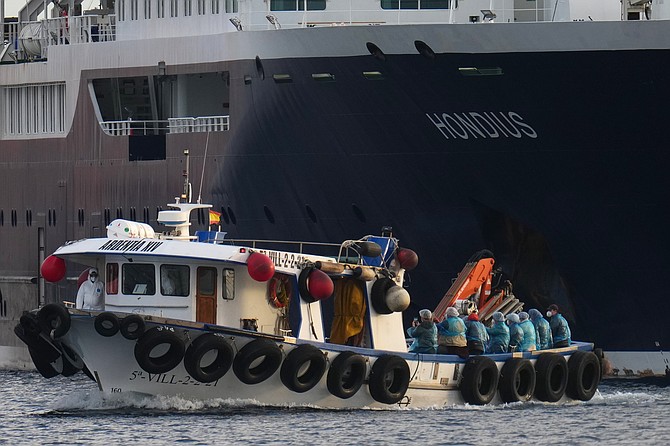
A recent fatal hantavirus outbreak on an international cruise vessel has spurred public health officials across the globe into action, with Bahamian health authorities confirming they are actively monitoring the situation even as no immediate threat to the island nation has been identified. The World Health Organization issued a global alert after the outbreak unfolded aboard the MV Hondius, a cruise ship operating on an itinerary that carried passengers from Argentina through South Atlantic islands to South Africa, along the east African coast. The incident has already claimed three lives, with eight people falling ill and five confirmed cases of infection to date.
Health and Wellness Minister Dr. Michael Darville told reporters Friday that the vessel has no plans to dock in the Bahamas or any other Caribbean ports, ruling out an immediate arrival risk. Cross-checking of passenger and crew manifests also found no Bahamian nationals among those on board, meaning the outbreak has not impacted local populations at this stage. Even so, Darville emphasized that the country’s public health surveillance network remains on high alert, as officials understand the inherent dangers of the virus.
Hantavirus is primarily transmitted to humans when individuals inhale airborne particles contaminated with rodent droppings or urine, and it is not commonly passed between people, per the Bahamian Ministry of Health. International reports note that the strain behind this outbreak is the Andes variant, the only documented hantavirus strain capable of spreading from person to person. Drawing a parallel to leptospirosis, another rodent-borne illness that public health officials in the Bahamas already monitor, Darville noted that two government agencies—the Department of Public Health and the Ministry of Environment—are already working aggressively to cut rodent populations across the country. He added that officials will soon announce new, innovative strategies to control rodent numbers and reduce associated disease risks.
Multiple countries around the world—including Switzerland, the United Kingdom, the Netherlands, France, Singapore, and South Africa—have launched contact tracing operations and are isolating former passengers of the MV Hondius to contain the spread of the virus. The alert reached Bahamian authorities through the Caribbean Public Health Agency, and Darville confirmed that the nation was never asked to participate in contact tracing efforts due to the absence of Bahamian passengers on the voyage.
As a major hub for the global cruise industry, the Bahamas has invested heavily in advanced public health infrastructure to monitor and respond to infectious disease threats. Darville explained that the country maintains local gene sequencing capabilities, and operates a highly sophisticated surveillance and analysis system through its reference lab, which currently tracks HIV, upper respiratory viruses, and a wide range of other infectious diseases.
Public Hospitals Authority Managing Director Dr. Aubrynette Rolle also confirmed that the country’s public hospital system is fully prepared to respond if any cases do emerge, noting that the system has access to functional ventilators and dedicated isolation facilities. While Rolle acknowledged that no country can ever claim to have enough ventilators to match a large-scale surge in severe cases, the public health system maintains working units in emergency departments, intensive care units, and neonatal care wards, with additional backup units available. The system also has dedicated isolation rooms fitted with HEPA filtration and negative pressure technology, and can rely on backup support from private facilities including Doctors Hospital during a public health crisis.