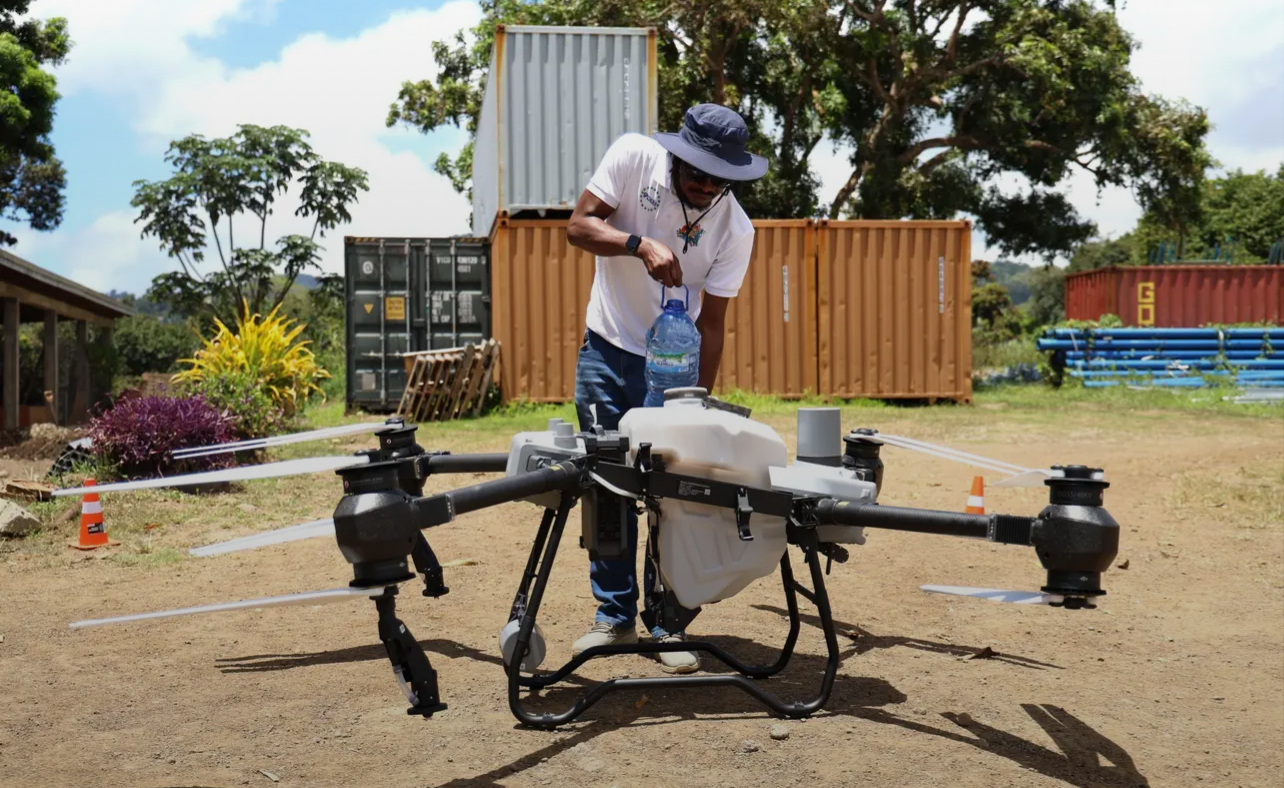
Against a backdrop of global efforts to modernize small-scale agricultural systems, the Caribbean nation of Grenada has launched an ambitious tech-driven transformation of its farming and land management sectors, centered on a new drone training program for agricultural officials. This week, 10 officers from the Ministry of Agriculture, Lands and Forestry wrapped up a week of theoretical instruction on Unmanned Aircraft Systems (UAVs) — led by local technology provider Aerial Vision — before stepping into the field at Mirabeau Agricultural Station for their first hands-on flight testing exercises.
The initiative marks a major milestone in the Grenadian government’s long-term strategy to update the country’s agricultural industry through digital innovation. Officials have invested more than EC$200,000 to acquire 9 new drones, bringing the total fleet of UAVs managed by the Ministry of Agriculture to 12. This pilot program builds on a collaborative UAV initiative first launched in 2023 between the ministry and the United Nations Food and Agriculture Organization (FAO), which was created to integrate cutting-edge aerial technology, big data analytics, machine learning and agriculture-specific artificial intelligence tools into local farming practices.
Beyond boosting crop yields and streamlining production monitoring, the program targets one of the most persistent and costly challenges facing Grenadian farmers: praedial larceny, or the theft of agricultural produce and livestock. For many small-scale producers in the country, losing even a small number of livestock can erase months of hard work and critical income, making anti-theft protection a top policy priority.
To address this gap, the training program includes instruction on a complementary technology: Radio Frequency Identification (RFID) livestock tagging. The system uses electronically coded micro-tags attached to animals to enable real-time identification and tracking, giving farmers and law enforcement a reliable tool to recover stolen livestock. Leon Williams, UAV Officer for the Ministry of Agriculture, explained that the curriculum extends far beyond basic drone operation. Trainees are also introduced to a suite of emerging digital tools designed to improve agricultural data collection, land management and resource allocation across the country’s rural areas.
The uses for the new drone fleet extend well beyond farming and anti-theft work too. UAVs will also be deployed to monitor remote forested areas for illegal logging and other unauthorized activities, track the health of tree populations, and conduct rapid aerial assessments of terrain that would take ground-based officers hours or even days to survey manually.
In the coming weeks, the Ministry of Agriculture will expand the program, holding additional demonstrations for local farmers and extension officers to roll out technology-driven practices across the sector. Government officials believe the integrated approach — combining drone monitoring, digital tracking, and traditional Grenadian farming knowledge — will strengthen the country’s food security, boost operational efficiency, and build greater resilience for the agricultural sector in the face of evolving economic and environmental challenges.