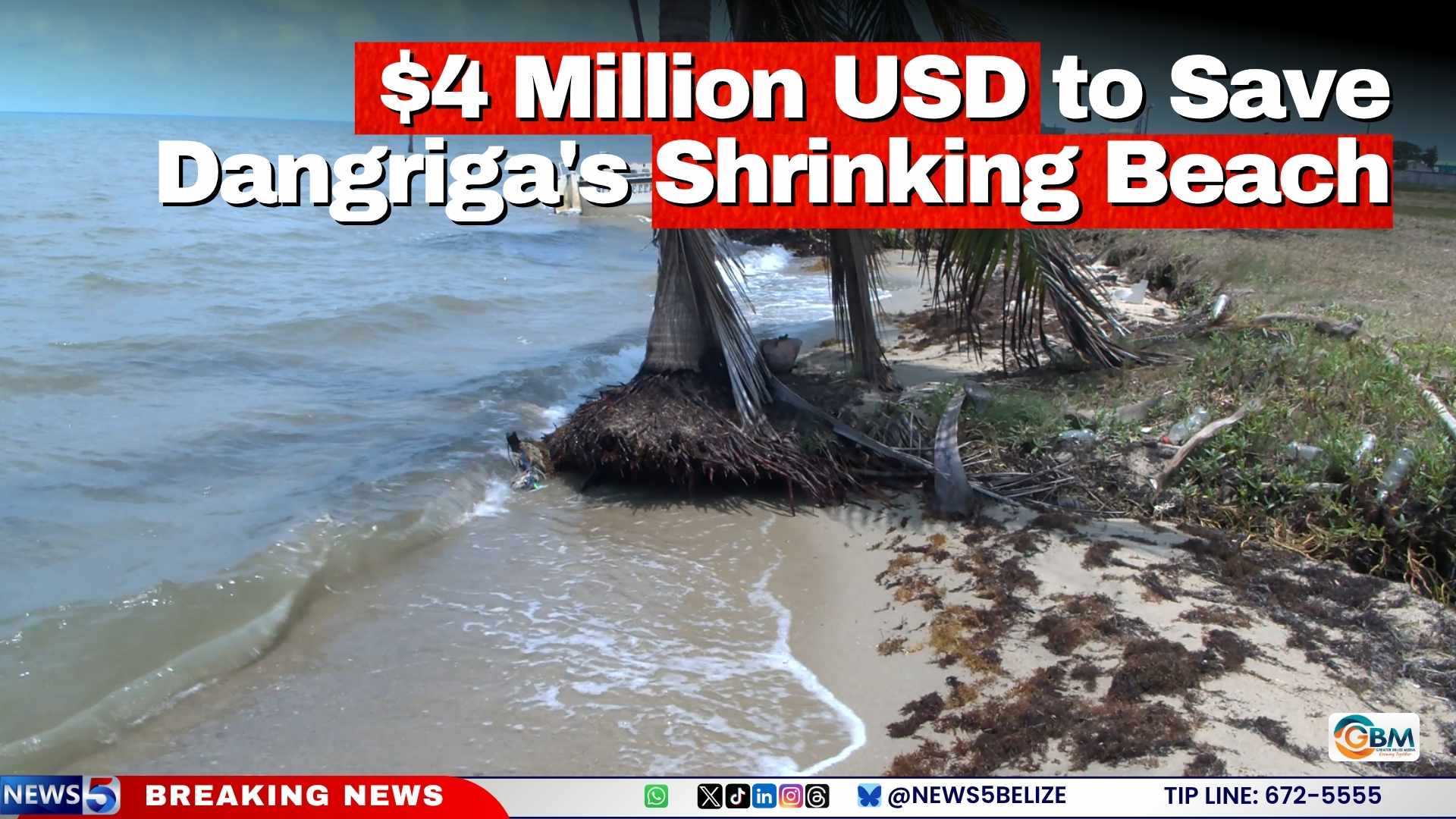
For years, residents of Dangriga, Belize have stood by as rising seas and persistent coastal erosion have steadily gnawed away at their beloved local coastline, with chunks of the once-sprawling beach vanishing into the ocean year after year. Now, a transformative $4 million USD restoration initiative is kicking off to halt this damaging trend before the beach is lost entirely for future generations.
Officially launched this week, the broad coastal resilience project targets 27 coastal communities across Belize that are already grappling with the tangible impacts of anthropogenic climate change, from extreme storm surges to chronic shoreline retreat. In Dangriga, all project focus is centered on the town’s vulnerable northern shoreline, the area hit hardest by erosion in recent decades.
For long-time local resident Melvin Diego, the slow disappearance of the beach is a deeply personal loss. The stretch of sand that once served as his regular outdoor training space has shrunk dramatically, eaten away incrementally by rising sea levels and relentless coastal erosion. “Dangriga is a place where there is a lot of breeze and the sea comes drastically hard. So it worries me that we are not going to have any beach ten years, twenty-five years from now for our children,” Diego shared, voicing a concern shared by many long-time local residents who rely on the shore for recreation, cultural connection, and economic activity centered on tourism and fishing.
Eli Romero, climate finance manager at the Protected Areas Conservation Trust (PACT), explained that preliminary geological surveys have revealed a key detail that makes restoration feasible: the sand eroded from Dangriga’s shoreline has not been swept out to the open ocean permanently, but instead settled in offshore deposits directly in front of the town. The core of the restoration project will center on dredging these offshore sand deposits and redistributing the sediment back onto the eroding shore, rebuilding the beach to its historic width and resilience.
The ambitious initiative is supported by a partnership of three key stakeholders: the Protected Areas Conservation Trust, the global Adaptation Fund, and the Government of Belize, combining international climate finance, local conservation expertise, and national government support to deliver tangible climate adaptation action for vulnerable coastal communities. A follow-up on-site report from News 5 will air later this week, giving audiences an up-close look at the eroding shoreline and introducing a local activist who has spent decades cleaning and advocating for the protection of Dangriga’s coastline.