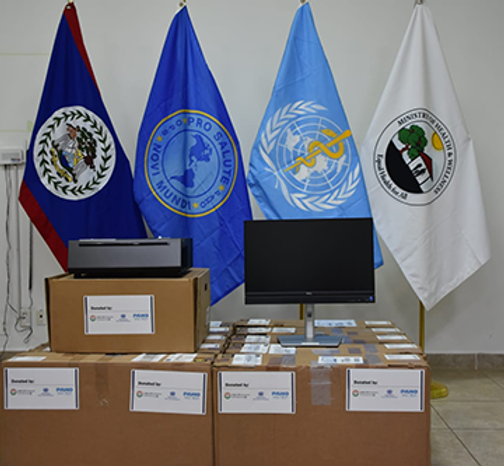
Belize’s Ministry of Health and Wellness has taken a key step forward in upgrading its national maternal and child health systems, after receiving a donation of critical information and communications technology (ICT) infrastructure through a multi-partner international development project. The handover, held as part of the initiative ‘Strengthening the EMTCT Strategy with Maternal and Child Health Services,’ included 10 fully integrated all-in-one desktop computers and a high-resolution video projector, tools designed to address longstanding gaps in digital health capacity across the country’s public health network.
The project draws financial support from the India-UN Development Partnership Fund, administered through the United Nations Office for South-South Cooperation, with on-the-ground implementation led by the Pan American Health Organization/World Health Organization (PAHO/WHO). This collaborative effort aligns with broader global goals to expand equitable access to quality healthcare in low- and middle-income nations, leveraging South-South cooperation to share resources and expertise between developing economies.
PAHO officials outlined that the new ICT equipment will transform core public health functions in Belize, from streamlining patient data management and strengthening infectious disease surveillance to improving laboratory workflow coordination and enhancing cross-team communication among frontline healthcare workers. These upgrades are expected to cut down administrative delays, reduce diagnostic wait times, and enable faster, more responsive care for expectant mothers and children across every region of the country.
Beyond general health service improvements, the initiative directly supports regional and national efforts to eliminate the vertical (mother-to-child) transmission of four high-burden infectious diseases: HIV, syphilis, hepatitis B, and Chagas disease across the Caribbean. For Belize specifically, the donation will allow public health authorities to build on existing progress made in preventing mother-to-child transmission of these conditions, while strengthening the overall capacity of the country’s national public health system.
During the official handover ceremony, stakeholders from Belize’s government, PAHO/WHO, and UN bodies emphasized that cross-sector, international partnerships remain the cornerstone of advancing public health outcomes for vulnerable populations. The event highlighted how targeted investment in digital health infrastructure can create lasting, systemic improvements that protect the health of mothers and children, who are among the most at-risk groups in any national healthcare system.