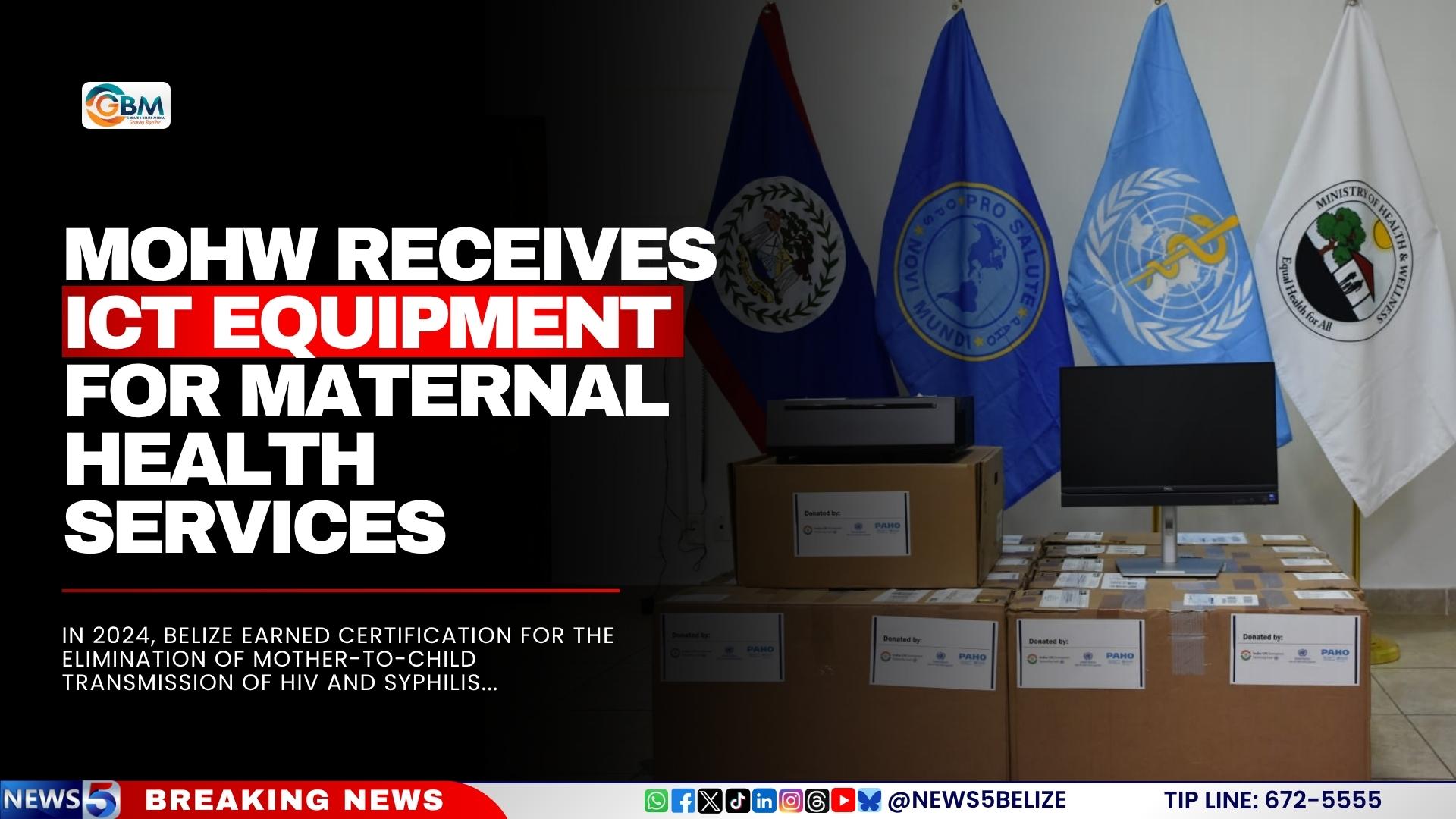
On May 7, 2026, Belize’s Ministry of Health and Wellness took delivery of a new suite of information and communication technology (ICT) equipment, delivered to upgrade maternal and child health services across the small Caribbean nation. This donation is a core component of a regional public health initiative titled “Strengthening the EMTCT Strategy within Maternal and Child Health Services”, which targets the complete elimination of mother-to-child transmission (EMTCT) of four major infectious diseases: HIV, syphilis, hepatitis B, and Chagas disease across the Caribbean region.
As part of the multinational project, Belize received 10 desktop computers and one high-resolution video projector. These tools are designed to upgrade three critical pillars of the country’s public health system: data management, cross-agency disease surveillance, and laboratory coordination. Local health authorities emphasize that the new infrastructure will directly empower frontline healthcare workers, enabling them to deliver more efficient, time-sensitive care to expecting mothers and newborn children across the country.
The cross-regional initiative is financed through the India-UN Development Partnership Fund, managed by the United Nations Office for South-South Cooperation, with on-the-ground implementation led by the Pan American Health Organization (PAHO), which also serves as the WHO’s regional office for the Americas.
Belize has already established itself as a regional leader in EMTCT efforts. In 2024, the country earned official international certification for eliminating mother-to-child transmission of both HIV and syphilis, joining neighboring Caribbean nations Jamaica and St. Vincent and the Grenadines in achieving this landmark public health milestone.
The broader project supports 15 Caribbean countries overall, with three core priorities: strengthening national leadership for maternal and child health, upgrading laboratory diagnostic capacity, and enhancing regional disease surveillance networks. PAHO officials note that reliable diagnostic testing and robust, interconnected health information systems are non-negotiable prerequisites to hitting collective elimination targets across the region.
This investment comes as public health experts across the Americas raise growing concerns over a sustained rise in congenital syphilis cases. PAHO data confirms that reported cases rose sharply between 2016 and 2022, underscoring the urgent need for expanded monitoring and prevention infrastructure across the region.
For Belize, the new ICT equipment will enable real-time data collection and continuous monitoring of maternal health outcomes, allowing the country to maintain its hard-won progress in EMTCT elimination. It will also set a regional benchmark for other Caribbean nations working toward their own official EMTCT certification. Looking ahead, PAHO’s broader 2030 agenda for the Americas aims to eliminate more than 30 communicable diseases and their related public health conditions across the region by the end of the decade.