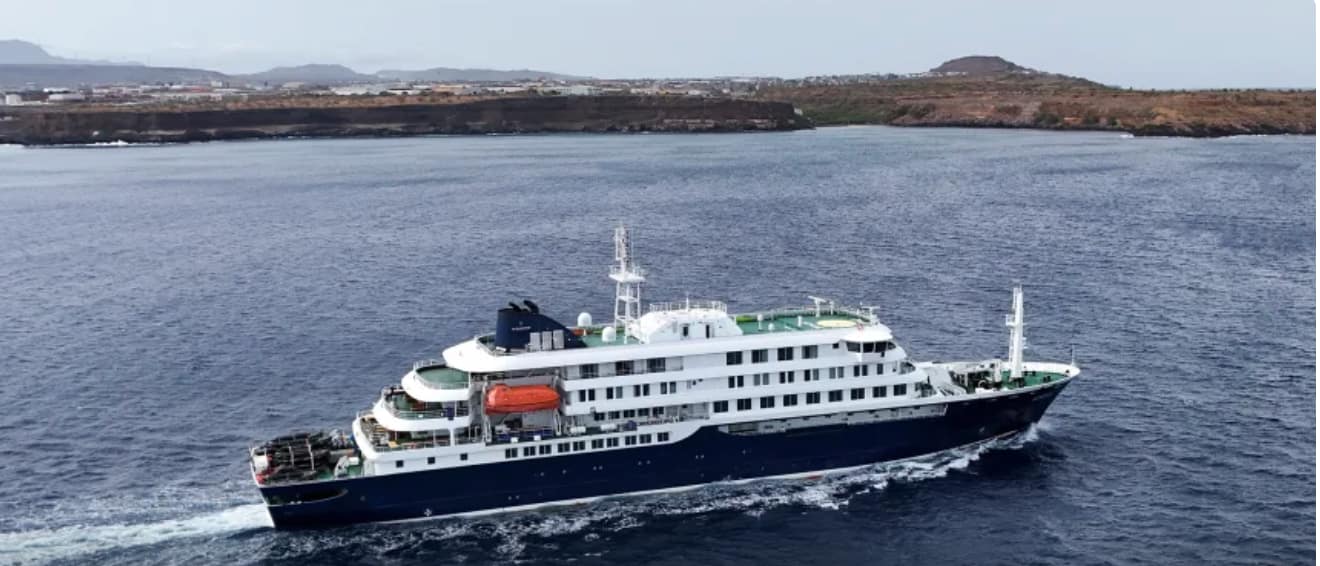
A hantavirus outbreak linked to the expedition cruise vessel MV Hondius has triggered an international public health response, with the World Health Organization (WHO) confirming five confirmed infections among people connected to the ship and three deaths recorded as of Thursday. Health agencies across more than half a dozen countries are racing to trace contacts and contain the spread of the rare Andes strain of the virus, after passengers and crew dispersed globally before the outbreak was fully detected.
The first suspected case emerged in mid-April, shortly after the ship departed Argentina on a cruise late last month. South Africa’s Department of Health confirmed the initial patient was a 70-year-old Dutch man who developed sudden symptoms including fever, headache, abdominal pain and diarrhea while on board, and died on the vessel on April 11. Two more fatalities followed: a second Dutch national and a German citizen.
As of Thursday, 146 people from 23 different countries remain on the MV Hondius under strict precautionary quarantine protocols, according to the ship’s operator, Netherlands-based Oceanwide Expeditions. Roughly 30 passengers disembarked at the remote South Atlantic territory of Saint Helena in late April, and several critically ill patients were airlifted to Europe for urgent medical care earlier this week. The remaining people on board are scheduled to arrive at Tenerife in Spain’s Canary Islands around noon local time Sunday, per updates from Spanish public health authorities. Once they dock, all passengers and crew will be repatriated via chartered flights to their home countries.
Health systems across multiple nations are now managing active monitoring and treatment for people linked to the outbreak. In the Netherlands, three evacuated patients are currently receiving hospital care: a British national, a 65-year-old German citizen, and a 41-year-old Dutch crew member. Two of the three are in serious condition, while the third, who remains asymptomatic, is also under medical observation as a precaution. Separately, a KLM airline crew member is currently undergoing testing at an Amsterdam hospital after potential exposure to a deceased passenger who died in South Africa. If her test returns positive, she will be the first person infected with the virus outside of the ship’s passenger and crew roster. Infectious disease specialists at Amsterdam University Medical Center expect to receive test results by the end of Thursday.
In South Africa, the second confirmed hantavirus case – a British passenger who fell ill on April 27 – remains in intensive care at a private Johannesburg hospital, though the WHO reports his condition is improving. Switzerland confirmed one additional positive case Wednesday: a passenger who returned home from the cruise is currently receiving treatment in Zurich. UK health authorities report seven British nationals disembarked at Saint Helena on April 24, two of which are isolating at home as a precaution, while four remain on the island and contact tracers are still locating a seventh who has not yet returned to the United Kingdom. U.S. public health officials are monitoring three repatriated asymptomatic passengers: two in Georgia and one in Arizona, with additional American passengers reported to have returned to Texas and Virginia. Singapore’s Communicable Diseases Agency confirmed two Singaporean men in their 60s who were on the cruise are self-isolating and undergoing testing, one with a mild runny nose and the other with no symptoms.
The situation has drawn widespread international attention, with many observers drawing comparisons to the early, unmanaged spread of COVID-19, as passengers had already dispersed across the globe before the full scope of the outbreak was understood. Oceanwide Expeditions confirmed Thursday it is working closely with global health authorities to map the full travel history of all passengers and crew who boarded or disembarked the MV Hondius at any stop after March 20.
Public health officials have stressed that the outbreak is tied to the Andes strain of hantavirus, a rare pathogen that can spread between humans through close prolonged contact, though it does not easily transmit at a population level. While the WHO acknowledges additional cases are likely to emerge in the coming weeks as contact tracing continues, the organization stressed it does not expect a large-scale global epidemic similar to COVID-19, and there is currently no evidence of widespread community transmission risk.
Investigators are still working to pinpoint the origin of the outbreak, but the WHO is working under the leading hypothesis that the two deceased Dutch passengers were infected before they ever boarded the MV Hondius, during pre-cruise sightseeing in Argentina. WHO Director-General Tedros Adhanom Ghebreyesus told reporters Thursday that the first two infected patients completed a bird-watching tour through Argentina, Chile and Uruguay that included stops at locations where rat species known to carry hantavirus are endemic. Because hantavirus has an incubation period of between one and six weeks before symptoms appear, public health officials explain that patients often become infected weeks before they start showing signs of illness.