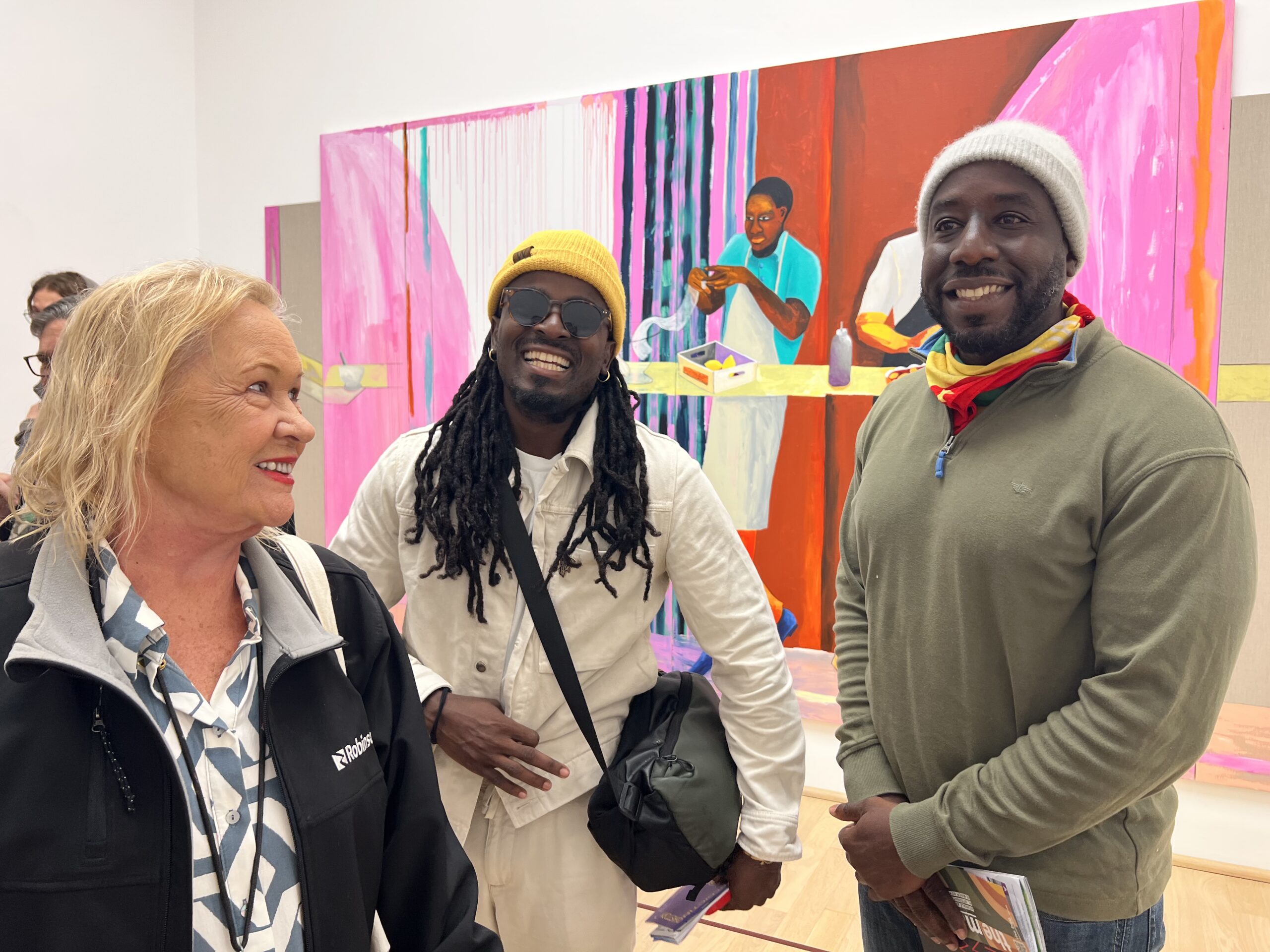
On the second day of pre-opening explorations at the 60th La Biennale d’Arte di Venezia, the Grenada national delegation toured more than 25 national pavilions hosted in the Giardini, the festival’s historic central venue. Four displays—from Great Britain, France, Germany, and Japan—emerged as the most thought-provoking stops, sparking hours of lively debate and personal reflection among the visiting group ahead of the Grenada Pavilion’s official opening this Friday.
At the Great Britain Pavilion, Turner Prize-winner Lubaina Himid CBE RA fills the entire venue with vividly colored, large-scale multi-panel canvases that command immediate attention. Standout pieces including *Boatbuilders*, *Gardeners*, and *Chefs* resonated deeply with the Grenada delegation. The works center the overlooked labor of working-class people, framing everyday contributions as sacred, culturally significant work worthy of prominent public space. Delegation members shared personal connections to the themes of the work, deepening their collective engagement with Himid’s practice.
Over at the French Pavilion, artist Yto Barrada presents *Comme Saturne*, an immersive exhibition rooted in the mythology and imagery of Saturn, the Roman god associated with time, melancholy, and transformation, who also shares his name with the distant sixth planet from the Sun. One of the exhibition’s most memorable sections, the *Melancholy Room*, showcases a striking celestial arrangement of layered color across circular fragments of aged silk, goatskin leather, and repurposed fabric. Though the work draws on the long-held association between Saturn and melancholy—framed both as creative paralysis and a wellspring of artistic genius—the space radiates creativity and dynamic energy, feeling far from somber or mournful.
Germany’s Pavilion, titled *Ruin*, features a layered, immersive installation by artist Henrike Naumann that draws on the stark architectural aesthetic of abandoned Soviet Army barracks across East Germany. Naumann exaggerates the barracks’ iconic mint-green interior palette to create an unsettling, recognizable environment. Cut chair formations within the installation unexpectedly evoked the ancient petroglyphs of Grenada for the visiting delegation, while frayed damaged curtains and walls layered with discarded everyday objects transform the pavilion into an unconventional museum of lived experience. The work reads as a meditation on ordinary life, exploring how communities adapt and persist amid rapid social and political upheaval. A particularly compelling centerpiece is an upholstered mural depicting everyday workers, a contemporary reimagining of a 1960 mural created by Naumann’s own grandfather.
The most unforgettable presentation of the day, for many delegation members, came at the Japanese Pavilion, where Ei Arakawa-Nash presents *Grass Babies, Moon Babies*. The sprawling installation features dozens of baby dolls dressed in hand-stitched garments sewn by the artist’s mother and her community of friends, scattered throughout and beyond the pavilion’s walls. Visitors are explicitly invited to pick up, hold, and interact with the dolls, fostering an immediate atmosphere of soft tenderness and collective care. At first glance, the work evokes the warmth of family and the empathy of parental connection, but this gentle comfort is complicated by a hidden, layered detail: beneath every doll’s diaper, a QR code links to a poem written as a gift and a reflection for a future generation. This small discovery recontextualizes the entire installation, shifting it from a playful intimate experience to a haunting, thoughtful meditation on the future we leave for coming generations.
For the Grenada delegation, this cross-section of contemporary artistic practice—moving fluidly between themes of history, collective memory, labor, family, and social change—sparked far-reaching discussion about the role of art in centering overlooked narratives, challenging dominant historical accounts, and forging unexpected emotional connections between artists and audiences. Across all four pavilions, ordinary materials and everyday lived experiences were elevated into profound reflections on the human condition, reinforcing the idea that contemporary art is most powerful when it invites both personal reflection and open collective conversation.
With these inspiring explorations complete, the delegation now turns its attention to the official opening of the Grenada Pavilion this Friday, with much more of the Biennale still left to discover.