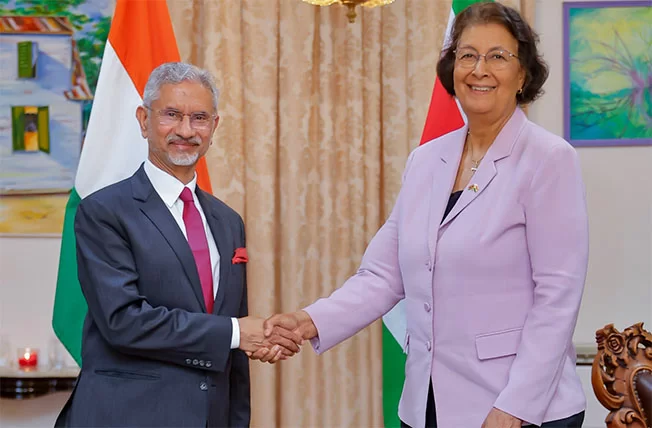
On May 7, a landmark diplomatic meeting between Suriname and India reached a series of tangible agreements to advance bilateral cooperation across four key sectors: energy, agriculture, infrastructure, and investment. The talks, held during the 9th session of the Joint Commission between the two nations, marked the first ever official visit to Suriname by India’s Minister of External Affairs Subrahmanyam Jaishankar, a milestone Suriname’s Minister of Foreign Affairs, International Trade and Cooperation Melvin Bouva described as a historic moment for bilateral ties.
The visit began with bilateral talks between the two top diplomats at Suriname’s foreign affairs ministry, followed by a full joint session of delegations from both countries. Bouva opened the discussions by highlighting the deep, centuries-long roots of the relationship between Suriname and India, tracing their connection back to the arrival of Indian contract workers in Suriname in 1873. He emphasized that what began as a bond rooted in shared history has evolved into a dynamic, modern strategic partnership that aligns with the development priorities of both nations. During the visit, Jaishankar also paid a courtesy call to Suriname President Jennifer Simons, as agreed in the diplomatic schedule.
Speaking at the commission meeting, Jaishankar framed the bilateral Joint Commission as the “engine room” of the Suriname-India relationship, where abstract diplomatic discussions are transformed into actionable, on-the-ground collaboration. He reaffirmed India’s commitment to supporting Suriname’s ongoing national development trajectory, positioning India as a reliable partner focused on shared growth and mutual prosperity. The talks prioritized expanding bilateral trade and investment flows, with targeted focus on extending cooperation into energy, agriculture, infrastructure, and digitalization. Both sides agreed that the private sector will play a central role in driving innovation and technological advancement across these priority areas.
In addition to high-level strategic discussions, the delegations reviewed progress on concrete projects stemming from earlier diplomatic agreements. These include small-scale “quick impact projects” designed to deliver immediate benefits to local communities, such as a new passion fruit processing facility in Suriname. The two sides also explored financing options for larger infrastructure and public health projects through concessional lending from India, and discussed plans for capacity building programs in agriculture, tourism, and entrepreneurship development.
Cultural ties, a foundational pillar of the bilateral relationship, were also reaffirmed during the visit. Jaishankar paid his respects at three key monuments in Suriname: the statue of Mahatma Gandhi, the Baba and Mai Monument, and the Fallen Heroes Memorial. The two nations also announced a shared intention to sign a formal Memorandum of Understanding focused specifically on expanding energy sector cooperation in the coming months.
On the multilateral front, the delegations discussed aligned cooperation between India and the Caribbean Community (CARICOM), as Suriname prepares to assume the presidency of the CARICOM Council for Foreign and Community Relations (COFCOR). Bouva concluded that the 9th Joint Commission meeting and the historic visit will pave the way for deeper integration between the two nations, advance sustainable development goals, and deliver tangible mutual benefits to people in both Suriname and India.