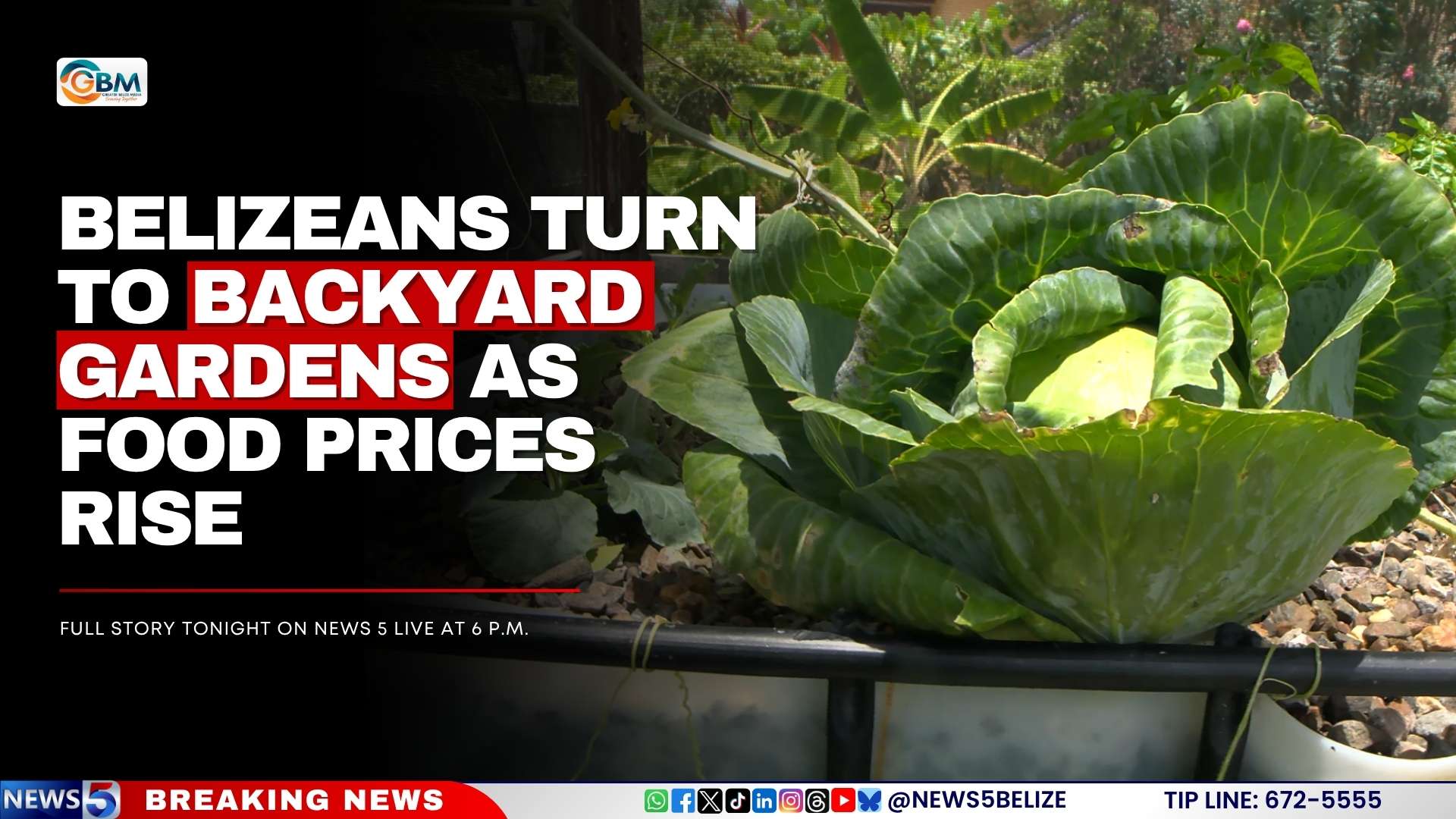
Against a backdrop of steady, widespread increases in national food costs, a quiet grassroots movement is taking hold across Belize: growing numbers of local residents are transforming unused home spaces into personal backyard food gardens to cut household expenses and shore up access to affordable fresh produce.
In Belize’s largest urban center, Belize City, even small, underused yards and empty lot plots are getting new life as productive growing spaces. Residents are planting a wide range of fruits, leafy greens, culinary herbs, and vegetables that their families would typically purchase from local grocery stores and outdoor markets. For many households, this shift has delivered dual benefits: shrinking monthly grocery spending while expanding daily access to nutrient-dense, freshly harvested food.
Michelle Sampson, a long-time resident of the Belize City community of Buttonwood Bay, says turning her backyard into a community-focused garden has fundamentally changed her household’s financial outlook. “You can’t beat that feeling of stepping out your back door and harvesting exactly what you need for dinner,” Sampson explained, gesturing to her lush plot brimming with ripe tomatoes, crisp sweet peppers, leafy lettuce, bunches of fresh herbs, and ripening banana stalks. She noted that growing her own produce has allowed her to skip buying many of the market items that have jumped in price over recent months, taking significant pressure off her monthly budget.
The movement toward local, small-scale food production is also spreading to educational institutions, where schools are integrating sustainable growing practices into their curricula to build long-term food literacy. At Sadie Vernon High School, students operate an innovative aquaponics program that raises fish alongside vegetable crops, creating a closed-loop sustainable production system that doubles as a hands-on learning opportunity. The program introduces young people to practical, eco-friendly food growing techniques that they can bring home to their own families.
Joselin Sanchez, a student participating in the program, says the project demonstrates how accessible, circular growing systems can offer a tangible solution to the country’s rising food cost crisis. “This system shows we don’t have to rely only on expensive store-bought food — we can grow our own in a way that wastes nothing and feeds our communities,” Sanchez said.
Program educators add that the initiative also works to reframe agriculture as a valuable life skill, rather than just an industry, highlighting how small-scale growing can deliver shared benefits for entire local communities. This full report will air tonight on News 5 Live at 6 p.m.