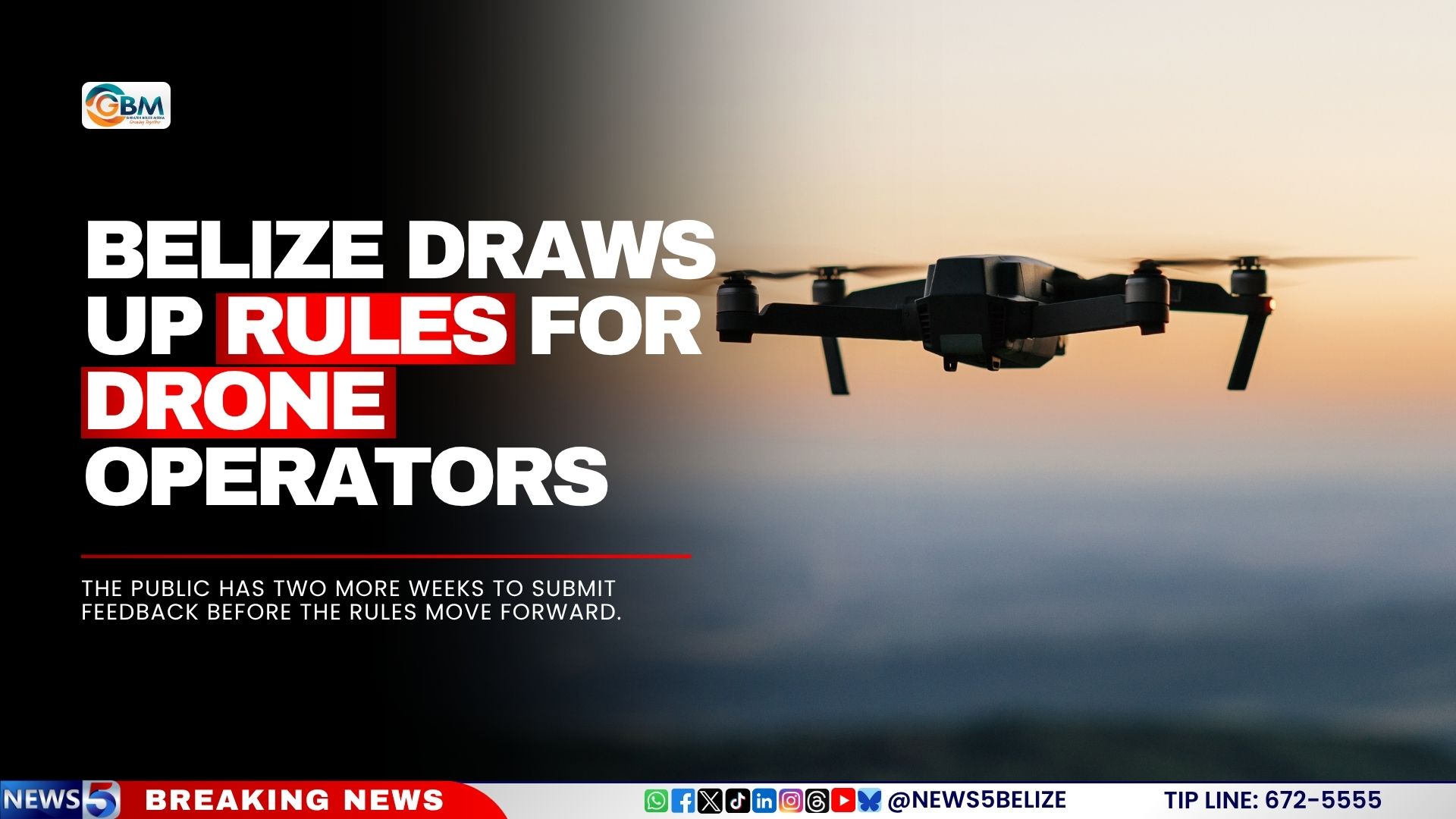
As unmanned aerial vehicles, more commonly known as drones, become increasingly integrated into daily life across Belize — appearing at major public events, agricultural operations, and even residential neighborhoods — the lack of formal oversight for the fast-growing industry has emerged as a pressing policy challenge. By far the most critical unaddressed issue is the overwhelming number of drone operators currently flying without mandatory registration, creating gaps in accountability that put public safety and personal privacy at risk.
To close this regulatory gap, Belize’s Civil Aviation Department has launched a public consultation process for a comprehensive new set of drone rules, unveiled this week in a 55-page draft regulatory proposal. The opening of the public comment period drew a diverse crowd of stakeholders, including recreational drone hobbyists, commercial service providers, and industry representatives, all eager to weigh in on the framework that will shape the future of the country’s drone sector.
The high turnout for the initial consultation underscores a reality many observers have noted: Belize’s drone industry has expanded far faster than the government’s ability to update governing policies. Civil Aviation Department Director Nigel Carter emphasized that the new rules are a proactive step to prevent crises before they occur, rather than reacting to tragedies after the fact. “We don’t want to wait for there to be accidents involving manned aircraft,” Carter explained. “We also don’t want to continue receiving growing numbers of complaints from members of the public whose privacy has been violated, with reports of drones peeking through residential windows.”
The proposal has received a generally warm reception from commercial operators that have long operated in a regulatory gray area, though many have called for key adjustments to ensure long-term stability. Carlin Strite, a drone operator with Agrobotics — a firm that has used agricultural drones for crop spraying across Belize for four years — noted that the push for formal, clear rules is a long-awaited win for the industry. At the same time, he stressed that consistent, stable regulation is critical for businesses planning long-term investments. “The biggest problem we have had with informal rules to date is that they’re constantly shifting, and officials have never published a definitive, fixed set of requirements we need to follow,” Strite explained. “That constant uncertainty makes planning very confusing for commercial operators.”
Under the current draft proposal, both registration and licensing for drone operators are set at roughly $30 per credential. Following the opening of public comment this week, members of the public and interested stakeholders have an additional two weeks to submit written feedback before the Civil Aviation Department moves forward with revising and finalizing the regulations.