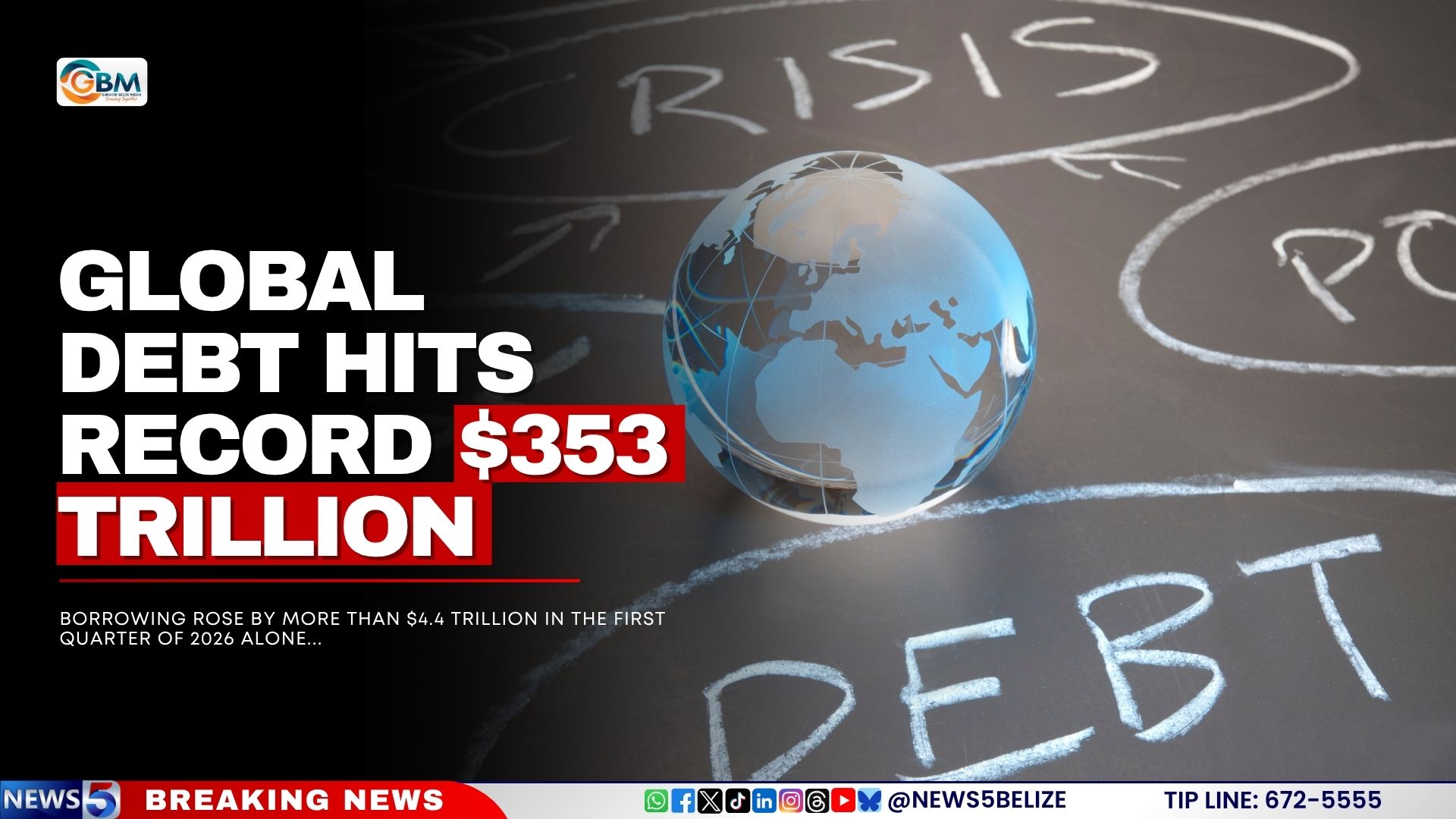
In its latest quarterly Global Debt Monitor report released May 6, 2026, the Institute of International Finance (IIF) has revealed that total global debt has climbed to an unprecedented record of nearly $353 trillion, marking one of the fastest quarterly expansions in global borrowing in nearly a year.
Between January and March 2026, total global borrowing grew by more than $4.4 trillion, the sharpest quarterly increase recorded since the second half of 2025. The United States emerged as the single largest contributor to this jump, driven primarily by ballooning federal government borrowing, while China also recorded a notable surge in non-financial corporate debt over the same period.
Alongside the headline debt figure, the IIF’s analysis tracked shifting investor behavior in global sovereign bond markets. While demand for U.S. Treasury securities has not collapsed, the report identifies early, gradual signs of diversification among global investors, who are increasingly increasing their holdings of Japanese and European government bonds. IIF analysts emphasized that this slow shift does not pose an immediate threat to the $30 trillion U.S. Treasury market, the largest sovereign debt market in the world.
The global debt-to-GDP ratio, a key metric for measuring debt sustainability relative to economic output, held steady at approximately 305% in the first quarter of 2026. However, the report highlights a clear growing divergence between advanced and emerging economies: many developed nations have recorded gradual declines in overall debt levels, but emerging markets have continued to see sustained debt growth, with total emerging market debt hitting a new record of $36.8 trillion.
Long-term structural risks continue to cast shadow over global debt sustainability, the IIF warns. Under current policy frameworks, U.S. national debt is projected to keep growing on its current trajectory. Broader global structural pressures—including aging populations across most major economies, rising spending commitments for defense and energy security, and massive capital investment required for AI and cybersecurity infrastructure—will likely push total global debt even higher in the coming years.
Geopolitical instability adds an additional layer of upward pressure on borrowing needs. Ongoing conflicts in the Middle East and other unresolved geopolitical flashpoints are expected to increase government spending and borrowing costs for nations across the globe, further exacerbating debt trends.
Contrary to common misconceptions, the $353 trillion global debt burden does not represent an amount owed to a single external creditor. The vast majority of global debt is held within the international financial system, borrowed from domestic and cross-border banks, pension funds, insurance companies, investment vehicles, sovereign governments, and private investors. As the IIF clarifies, global debt is largely a system of “mutual obligation”—one entity’s liability is almost always another entity’s asset and investment, both within national borders and across global markets.