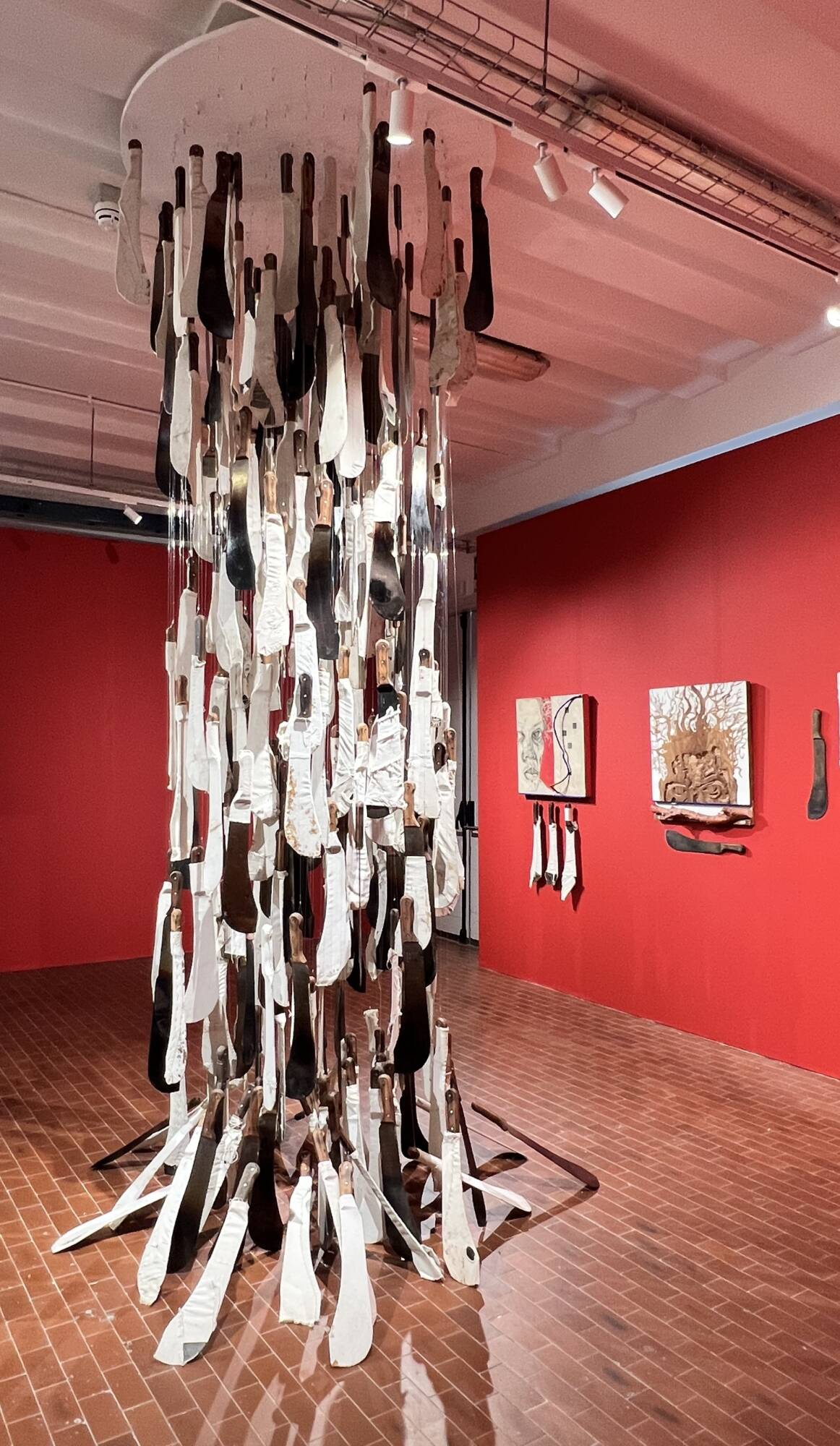
On May 4, a delegation from Grenada accepted a special invitation from Krista Thompson, PhD, curator of The Bahamas national pavilion, to tour the exhibition *In Another Man’s Yard* at the 2026 Venice Biennale. The visit marked a powerful demonstration of cross-regional creative solidarity within the Caribbean, bringing attention to a show that honors late celebrated Bahamian artist John Beadle (1964–2024) and features dynamic new work from contemporary artist Lavar Munroe, rooted in decades of collaborative practice. This return to the Biennale marks the first Bahamian national participation in 13 years, a milestone that organizers hope will lay the groundwork for consistent, sustainable national representation at the global art event going forward. The 2015 attempt to stage a Bahamian pavilion centered on Beadle collapsed after funding fell through, and it was not until the artist’s passing 18 months ago that a collective of supporters rallied to resurrect the project as a posthumous tribute. Thompson emphasized that the exhibition offers a rare global platform to showcase two of The Bahamas’ most influential contemporary creators, whose work is deeply anchored in the country’s distinct visual cultural identity. Both Beadle and Munroe draw creative inspiration from Junkanoo, the iconic Bahamian national cultural festival that was added to the UNESCO Representative List of the Intangible Cultural Heritage of Humanity in 2023. The exhibition’s works center the long history of collective creation that defines Junkanoo tradition, framing that collaborative spirit as a foundational influence on contemporary Caribbean art. A defining feature of the show is its use of repurposed, everyday materials found across the Caribbean: discarded cardboard, old newspaper, and reclaimed sails from abandoned Haitian sloops are transformed into immersive installations that reimagine Junkanoo for a global audience. The exhibition operates on multiple levels: it highlights the depth of The Bahamas’ thriving contemporary art ecosystem, serves as a moving commemoration of Beadle’s decades-long influence as an artist and mentor, and functions as a love letter to his legacy. “This is a love letter, a grieving, a celebration of John and the driving force and energy of the pavilion, honouring one of our own,” Thompson explained of the show’s core mission. Staged with official support from The Bahamas’ Ministry of Youth, Sports and Culture, the exhibition also carries long-term educational goals for domestic audiences. Thompson has expressed hope that the show will eventually tour across The Bahamas, sparking new conversations among local students about Junkanoo’s dual identity as both living heritage and contemporary artistic practice. For emerging artists and students across the Caribbean, Thompson offered a key takeaway: seek out the visual traditions and cultural forms rooted in your own local context, as these can serve as enduring sources of creative inspiration to shape a unique individual artistic voice. The message resonates particularly strongly for visitors from Grenada, which boasts its own rich tapestry of intangible cultural heritage: ShortKnee, Moko Jumbie, and Carriacou’s Shakespeare Mas – the latter of which was featured at the 2022 Venice Biennale and added to the UNESCO intangible heritage list in 2024. The raw, resourceful materiality of the exhibition’s works is one of its most striking characteristics. Every piece transforms materials that are often overlooked or discarded into meaningful, thought-provoking art. Munroe’s 2020 piece *WWJD*, for example, incorporates an eclectic array of everyday items: acrylic and spray paint, sneakers, balloons, staples, an extension cord, cardboard, boxer shorts, fabric, blunts, and toys, assembled into a collage on cut canvas. Beadle’s work equally embraces repurposing: his 2003 *Inverted Tree — Man for Hire* and 2006 *In Another Man’s Yard* reimagine machetes, a ubiquitous agricultural tool across the Caribbean, as core artistic elements. Beadle’s 2020 *Live Load*, constructed from cardboard, salvaged wood and rope, centers a seven-foot boat rudder to explore histories of trade and migration across the Caribbean. His 2020 *Mobile Housing Scheme*, recreated for this exhibition by artists Amanda Crain and John Cox after the original was destroyed by termites, depicts a small cardboard house mounted to a wheelbarrow – a form that echoes the common practice of relocating homes on the back of trucks that many Grenadians have witnessed firsthand. Following the tour, Susan Mains, commissioner of the Grenada pavilion, extended formal congratulations to Thompson and her team, reaffirming the Caribbean region’s shared strength through collective solidarity. “The Grenada delegation wholeheartedly supports the efforts of The Bahamas pavilion. Showing up as a region only gives us strength,” Mains stated. This article was originally published by Grenada-based outlet NOW Grenada, which notes that it is not responsible for the opinions or content shared by contributing writers, and invites readers to report any abusive content via official channels.