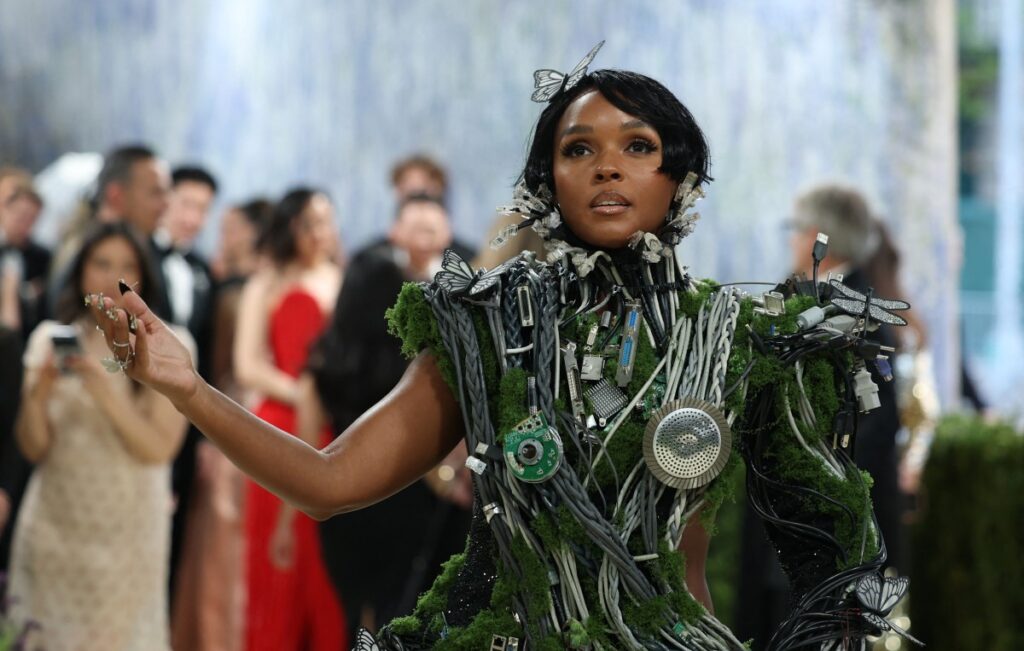
MANHATTAN, N.Y. — A-list celebrities from Hollywood, global music, professional sports and high fashion gathered under the bright lights of Manhattan’s iconic red carpet on Monday for the annual Met Gala, one of the world’s most high-profile charitable fashion events that this year centers the long-running conversation between the fashion and fine art industries.
Hosted annually by Vogue and the Metropolitan Museum of Art’s Costume Institute, the 2026 event carries the official theme “Fashion is Art”, which aligns with the institute’s newest flagship exhibition, simply titled *Costume Art*. Invited guests were specifically requested to craft their red carpet looks around the theme, blurring the lines between wearable couture and gallery-worthy fine art.
The gala has not been without its share of public drama this cycle: after e-commerce and aerospace billionaire Jeff Bezos and his wife Lauren Sanchez Bezos were named the event’s lead sponsors and honorary co-chairs, progressive activist groups launched a public campaign calling for a boycott of the gala, decrying the couple’s involvement as a symbol of extreme wealth inequality. Anti-billionaire group “Everyone Hates Elon” — which originally formed to critique Tesla CEO Elon Musk but has expanded its advocacy to target other high-profile billionaires — plastered campaign advertisements across New York City’s street billboards and subway cars in the lead-up to Monday’s event, framing the gala as an indulgent display of excessive riches amid widespread economic hardship for working Americans. Vogue global editorial director Anna Wintour, who has led the Met Gala’s curation and organization for 30 years, pushed back on the criticism Monday, noting that the Bezos’ commitment to the event demonstrates a sincere dedication to philanthropic giving for the arts.
For fashion fans and celebrity watchers across the globe, however, the Met Gala remains one of the most anticipated red carpet events of the year, unmatched in its concentration of A-list star power. The 2026 event counts three official public co-chairs: tennis legend Venus Williams, Oscar-winning screen icon Nicole Kidman, and global pop superstar Beyoncé, who made her first Met Gala appearance in a decade at this year’s event. Williams and Kidman were among the first high-profile guests to arrive on the red carpet, turning heads with their theme-aligned couture looks. Kidman wowed onlookers in a form-fitting, shimmering red long-sleeve column gown from Chanel, finished with dramatic oversized feather cuffs at the wrists. Williams opted for a black crystal-encrusted gown from Swarovski, complete with an ornate sculptural neck plate; the 45-time Grand Slam champion told Vogue her look drew direct inspiration from a portrait of her housed in the U.S. National Portrait Gallery.
Other celebrity attendees brought similarly bold, theme-inspired looks: rapper and host committee member Doja Cat turned out in a draped latex design from Saint Laurent, which featured a modest high neckline cut with a dramatic high slit extending up to her waist. Multiple A-list guests including singer Jon Batiste, pop star Katy Perry, and model Dree Hemingway also walked the red carpet, showcasing couture looks that played into the night’s fine art theme.
Beyond the red carpet spectacle, the Met Gala serves as the single largest annual fundraiser for the Costume Institute, and this year the event hit a new milestone: Met CEO Max Hollein confirmed to reporters early Monday that the 2026 gala has already raised a record-breaking $42 million for the institute, up from the $31 million raised at the 2025 event.
In addition to its philanthropic purpose, the Met Gala has evolved into a global social media phenomenon, with celebrities crafting over-the-top, attention-grabbing looks to generate viral buzz and dominate online conversation in the hours after the event kicks off. This year’s *Costume Art* exhibition, which opens to the public at the Met on May 10, places couture designs in direct conversation with classic fine art works, breaking down traditional hierarchies between different artistic mediums. Curators have paired iconic couture pieces with famous paintings and sculptures: a classic Saint Laurent design hangs alongside Vincent van Gogh’s *Irises*, while a John Galliano gown for Maison Margiela is displayed alongside a classical antique statue.
Andrew Bolton, the Costume Institute’s head curator, told reporters that the exhibition’s core thesis centers on equal status for all artistic forms. “When I think about the show, if there’s one word to describe it, I suppose it would be equitability or equivalency, equivalency between artworks,” Bolton explained. “So there’s no hierarchy between sculpture, painting, fashion, photography and no hierarchy between bodies, between the classical body or the disabled body.”
First launched in 1948, the Met Gala operated for decades as an exclusive, low-key gathering for New York’s old money high society, until Wintour revamped the event in the 1990s to transform it into the high-wattage celebrity and fashion showcase that it is today. Last year’s Met Gala centered the subversive cultural history of Black dandyism, marking a rare focus on men’s and masculine fashion in the event’s modern history.