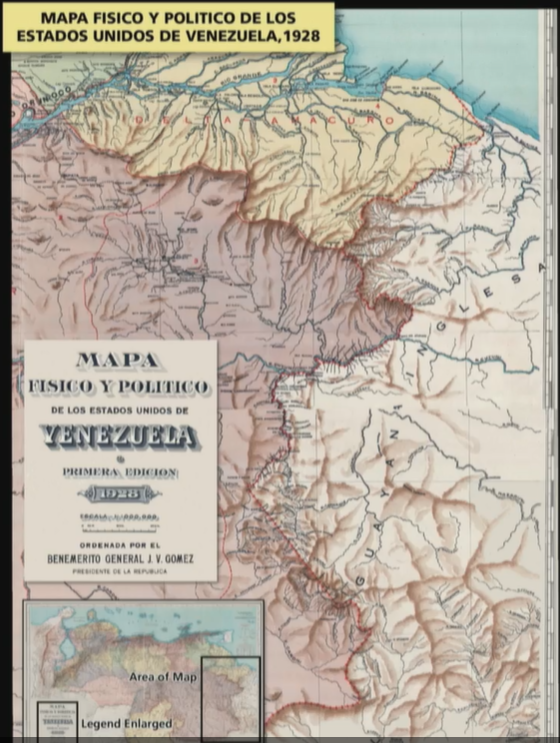
On Monday, May 4, 2026, Guyana launched the merits phase of its long-running border dispute case at the United Nations’ highest judicial body, the International Court of Justice (ICJ), by presenting what it calls irrefutable, decades of documentary proof that Venezuela accepted the 1899 Arbitral Tribunal Award establishing the two nations’ land boundary for more than six decades, without raising a single formal objection.
Leading Guyana’s opening arguments before the court, Nilufer Oral, Director of the Centre of International Law at the National University of Singapore and a prominent international law expert, laid out a comprehensive case that contradicts Venezuela’s current claims challenging the award’s legal validity. Oral emphasized that the historical record is unequivocal: from the moment the 1899 ruling was issued 127 years ago, all the way through 1962, Venezuelan authorities consistently acknowledged, abided by, and enforced the boundary set out in the award.
Oral pointed out that despite Venezuela’s current denials, historical records confirm the country was fully aware of any potential legal grounds to contest the award at the time of its passage. Far from opposing the outcome, top Venezuelan officials repeatedly publicly stated their satisfaction with the ruling, even framing it as a strategic victory that granted Venezuela control over the most strategically valuable portion of the contested territory: the mouth of the Orinoco River.
To back these claims, Oral presented the ICJ judges with a wide range of authenticated primary sources, including official Venezuelan government maps, formal diplomatic correspondence, and public statements by high-ranking Venezuelan leaders. One key example she cited was a 1929 boundary protocol between Brazil and Venezuela, which explicitly recognized the 1899 award’s demarcation of the tripoint where the borders of Brazil, Venezuela, and what was then British Guiana converge.
Oral also highlighted a specific incident that underscores Venezuela’s historic commitment to the award: when one official boundary marker along the border was destroyed by natural forces, Venezuelan authorities demanded the marker be replaced at the exact location specified in the 1899 ruling. She emphasized that Venezuela has long insisted the award be implemented precisely to its terms, rejecting even minor adjustments to the agreed boundary.
Further, Oral referenced Venezuela’s 1948 Organic Federal Territorial Law, which formally defines the eastern boundary of the country’s Delta Amacuro Federal Territory as “the border between Venezuela and Great Britain” — the exact border established by the 1899 award. She also displayed an official map Venezuela itself submitted to the United Nations that clearly draws the Guyana-Venezuela border in line with the 1899 demarcation.
Oral questioned the credibility of Venezuela’s current argument that it was forced into the 1900–1905 joint boundary demarcation process with British Guiana against its will. During that five-year process, Venezuelan surveyors and commissioners worked alongside British counterparts to demarcate the 825-kilometer border. Throughout the entire undertaking, Oral noted, Venezuelan officials never recorded a single objection, reservation, or protest regarding the alignment laid out in the 1899 award. In fact, Venezuelan representatives to the joint commission, who reported directly to Venezuela’s Ministry of Foreign Affairs, carried out their work with meticulous attention to detail and full commitment to upholding the terms of the 1899 ruling when the commission’s work concluded.