For years, a hidden, highly organized criminal network operating across Trinidad and Tobago has systematically exploited thousands of women, trafficking their non-consensual intimate images in underground pornography rings that have evaded meaningful legal intervention. These networks, which operate across encrypted group chats and anonymous cloud storage platforms, see explicit content sorted by victim name, traded among members, and even auctioned off for profit, with participants actively encouraged to source more non-consensual material to add to the collective pools.
The images at the center of these rings are often stolen directly from victims’ personal devices or leaked without permission after being taken privately. For those targeted, the harm extends far beyond a one-time violation of privacy: multiple victims have reported sustained extortion, relentless harassment, stalking, and threats from ring members, with many telling reporters they have endured lasting psychological trauma, reputational ruin, and irreversible disruption to both their personal relationships and professional careers.
Recent legal action has already exposed systemic failures in addressing this crisis. The Humanitarian Foundation for Positive Social Change (HFPSC) brought a constitutional challenge over the ongoing existence of these rings and the lack of effective police action, and the Court of Appeal recently ruled that Trinidad and Tobago Police Service (TTPS) failed to uphold its duty to protect a child pornography victim whose intimate images were widely circulated across these platforms. While the TTPS has pledged to launch a broader investigation into the phenomenon and the networks have been pushed further into the dark web, a critical gap in national legislation remains: the non-consensual sharing of adult intimate images by local abusers is not classified as a criminal offense. As a result, countless adult victims are turned away by law enforcement when they report the abuse, and are instead advised to pursue costly, slow civil claims against their abusers that few can afford.
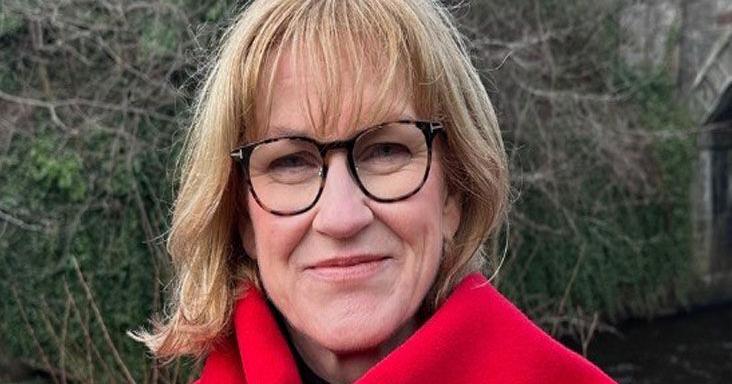
To unpack the scope of this crisis and outline paths forward, the Sunday Express recently spoke with Clare McGlynn KC (Hon), a leading global expert on gender-based violence and legal regulation of image-based abuse and a law professor at Durham University in the United Kingdom. A highly respected voice in the field, McGlynn coined the term “image-based sexual abuse” to reframe this harm beyond a simple privacy violation, positioning it as a distinct form of sexual violence. She currently serves on the Council of Europe’s Committee on Combating Technology-Facilitated Violence against Women, the UK’s Judicial Appointments Commission, and contributed to the drafting of the UK’s landmark Online Safety Act 2023, which requires major tech platforms to implement strict protections for users, especially children, against harmful content. She has also worked with European institutions to strengthen the EU’s binding directive on gender-based violence.
In the interview, McGlynn emphasized that addressing image-based sexual abuse requires a coordinated, whole-society response that combines stronger platform regulation, meaningful legal accountability for perpetrators, and widespread public education and awareness campaigns to prevent abuse before it occurs.
When asked about the biggest barriers to legal reform, McGlynn pointed to a persistent global failure to recognize the severity of harm caused by online, technology-facilitated abuse. “Online abuse can have a devastating impact on every part of your life, from your personal life, to professional life, your economic security, and your trust in society. It ruptures your life as you knew it, with survivors often dividing their lives into before and after,” she explained, noting that policy makers still tend to prioritize physical violence over ongoing, chronic online abuse that follows victims every day.
On the question of how to persuade governments to enact stronger protections for women in contexts where the sexualization of women and girls and unregulated pornography are normalized, McGlynn argued that the core of reform must center on the principle of consent. She explained that even when a woman voluntarily chooses to take or share intimate images for a private purpose, this does not equal consent for those images to be distributed publicly or traded without her permission. She added that the hypersexualization of women and girls, amplified by mainstream pornography that frames women as constantly available for any sexual act, normalizes abuse and erodes understanding of consent, making the problem far more difficult to address.
Asked about the risk of widespread exposure to non-consensual explicit content shaping younger generations’ attitudes toward sex and women, McGlynn warned that regular exposure to image-based abuse legitimizes and normalizes non-consensual sexual violence, and that the public still vastly underestimates both the prevalence and harm of this abuse. Commenting on France’s strict age verification laws to block minor access to pornography, she noted that such measures only work if they are actively enforced, but argued that the bigger problem is the violent, misogynistic content of mainstream pornography itself. “We would not be so bothered about a young person, a 14-year-old, accessing pornography if it were not so sexually violent, misogynistic and racist. So, I think we need to focus on changing the content of mainstream porn, rather than age assurance,” she said.
With rising reports of teen suicide linked to sextortion, McGlynn called for far more open public discussion about this crisis, noting that most victims are teenage boys who often feel ashamed and alone. She urged parents to talk openly with their children, emphasizing that sextortion is never the victim’s fault, and that help is available. She also highlighted the growing risk of deepfake abuse, where perpetrators can create explicit fakes of a young person without them ever sharing an intimate image, leaving victims afraid that no one will believe the content is fabricated. Crucially, she added, even when a young person has shared a real intimate image, parents and society must avoid condemnation: many are coerced or duped by organized criminal gangs, and shame only pushes victims further into crisis.
Reflecting on the impact of this abuse on survivors, McGlynn shared the story of a young woman she has worked with closely over the past two years, identified only as Jodie to protect her privacy, who discovered that one of her closest friends had created and distributed deepfake explicit images of her. The experience was devastating, but Jodie has since become a passionate advocate for legal reform to protect other women from facing the same harm.
McGlynn explained that her own work in this field is driven by the survivors she has collaborated with, who have bravely shared their stories to demand change. She noted that younger women are disproportionately affected by online abuse, yet their voices are often ignored or dismissed in policy spaces. “I would like readers to understand that online and tech abuse is life-shattering. It is also harmful to our societies as a whole, as women remove themselves from public life due to their experiences of harassment and abuse, and fear of further abuse,” she said. McGlynn ended by emphasizing that technology itself is neutral; the root of the crisis lies in systemic gender inequality and misogyny that must be addressed head-on. “There is a lot of work ahead! But we must work every day to try to make the changes that will mean that women and girls can live their lives without the constant fear of harassment and abuse.”