Even with nearly five years of uninterrupted economic expansion, Barbados remains far from insulated from growing global economic headwinds, the country’s main opposition Democratic Labour Party (DLP) has cautioned. The party highlights slowing growth momentum, overreliance on two key sectors, and unanswered questions about national fiscal strategy as the Caribbean nation prepares to enter negotiations for a new International Monetary Fund (IMF) financing arrangement.
Last Wednesday, Central Bank Governor Dr. Kevin Greenidge announced that Barbados has recorded 20 straight quarters of positive economic growth, and also confirmed the country will soon open discussions with the IMF for a standby arrangement. This type of agreement is designed to give countries quick access to emergency funding if external economic shocks disrupt growth and stability.
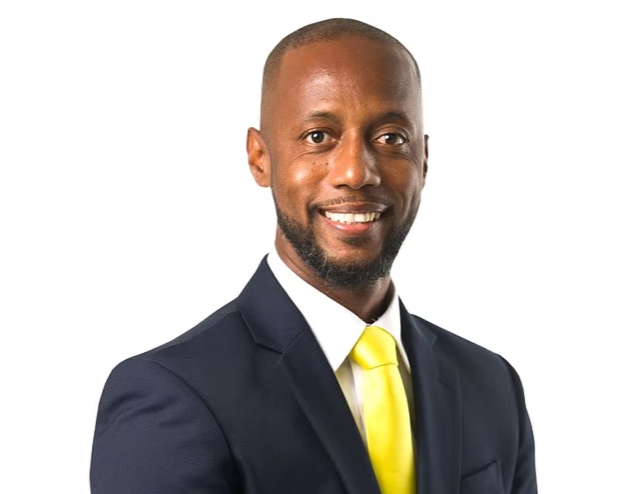
But in an official response to Greenidge’s announcement, DLP Shadow Finance Minister Senator Ryan Walters flagged what he calls a clear contradiction at the heart of the government’s economic messaging. “On one hand, officials claim the economy is performing excellently,” Walters noted. “On the other, the government is already moving to secure a contingency financing line with the IMF.”
Walters pointed to concrete data showing a clear deceleration in growth between the first quarter of 2025 and the same period this year. While the 1.7% expansion recorded in Q1 2026 extends the unbroken growth streak, that figure marks a noticeable drop from the 2.6% growth seen in the first quarter of 2025. This slowdown, Walters argued, reinforces a long-held concern: without intentional, targeted diversification, Barbados’ economy will remain heavily exposed to external shifts, since growth is almost entirely driven by tourism and construction.
The opposition leader warned that overreliance on these two sectors creates disproportionate vulnerability. Though tourist arrival numbers have now surpassed pre-pandemic levels, Walters said the country has not seen a corresponding rise in tourism-related foreign revenue. This indicates that average visitor spending has actually fallen, even as the government celebrates record arrival numbers. He also raised questions about the widely promoted domestic construction boom, noting that most projects appear to be funded by local financing rather than the foreign direct investment that would strengthen the broader economy.
To build long-term resilience, Walters stressed that Barbados must reduce its dependence on tourism and construction by expanding into new high-potential sectors. He called for strategic investment in agro-processing, renewable alternative energy, and the creative economy, with a particular focus on film production, digital media, and local content development. “These sectors offer tangible opportunities to widen our economic base and build the shock resistance we need to sustain growth through global volatility,” he said.
Beyond diversification, Walters demanded greater transparency from the ruling administration, calling on officials to provide a full, public breakdown of the latest economic data and ongoing government projects. He pointed to significant public capital allocations for delayed or underperforming projects that have not been restructured or reevaluated, noting that without clear information about public spending, it is impossible for policymakers or the public to accurately assess the long-term sustainability of current fiscal and economic trends.
Walters also raised urgent concerns about the country’s fiscal sustainability and debt management framework. To date, he said, the government has not released a clear, credible strategy to meet upcoming debt obligations to lenders and the IMF, including an estimated $72.11 million in payments due in 2026. It remains unclear whether the government will cover these costs through existing fiscal reserves, improved tax revenue collection, or high-interest new borrowing, a path Walters called deeply concerning.
Repeated refinancing of existing debt through new loans, he warned, will only put additional strain on the national economy. “Reliably rolling over old debt with new loans increases our exposure to global interest rate shocks, erodes international confidence in our fiscal management, and risks locking Barbados into a dangerous cycle where debt grows faster than the economy can generate the revenue needed to service it,” Walters explained.
In closing, he emphasized that while steady headline growth is welcome, it has not translated to widespread benefits for most Barbadian households or improved public services. “Growth that comes without transparency, economic diversification, and tangible improvements to daily life and national development cannot be considered secure or sustainable for the long term,” he said.