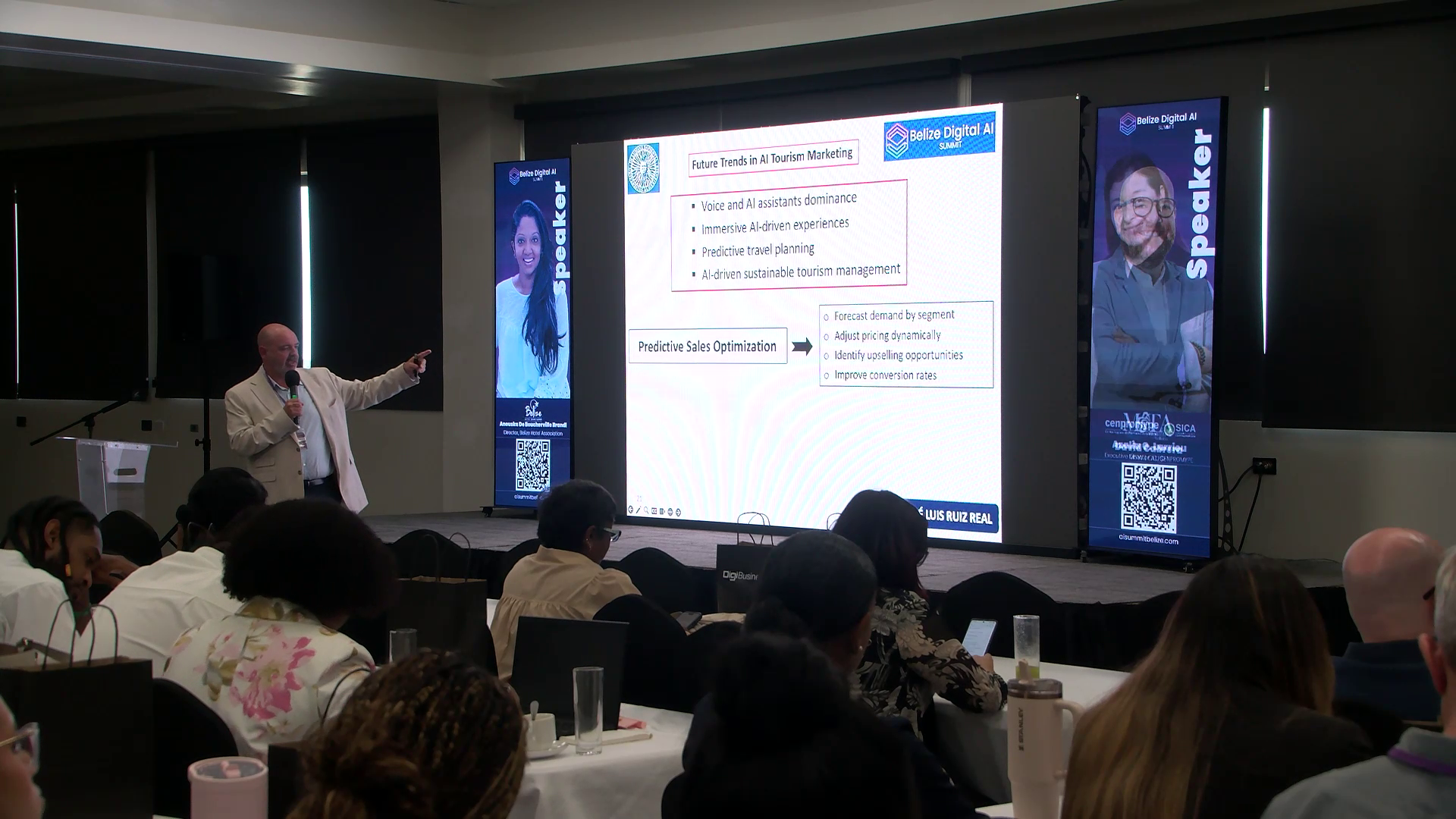
Set to take place on April 30, 2026, Belize’s second annual national Artificial Intelligence Summit has marked a critical turning point for the small Central American nation’s engagement with emerging technology: the conversation has moved beyond whether to adopt AI, to how to deploy it responsibly and effectively at scale. Titled “Efficiency at Scale”, this year’s gathering brought together 12 regional and global AI experts from Europe, the United States, and local Belizean specialists to connect industry leaders, government officials, and curious members of the public with actionable knowledge about the transformative technology.
Organizers frame the summit’s shifting focus as a natural progression from last year’s inaugural event, which centered on introducing AI concepts to local audiences. This year, discussions zeroed in on building practical skills, from crafting effective AI prompts to integrating tools into existing business workflows across sectors. Maynor Larrieu, Managing Director of event organizer Avant Garde, emphasized that the event’s core mission is to demystify AI for Belize’s general public and equip local communities to leverage the technology rather than be left behind by it. “AI is not going to replace you, but AI is going to empower you to be more efficient, to be more effective,” Larrieu told attendees, noting that the summit creates a rare opportunity for Belizeans to learn directly from leading practitioners and push their own productivity boundaries.
The shift from theoretical discussion to practical implementation is not unique to Belize, speakers highlighted: across the entire Central American Integration System (SICA) region, which includes eight member states plus Belize and the Dominican Republic, AI adoption has accelerated far faster than initial projections. David Cabrera, Executive Director of the Central American MSME Development Agency CENPROMYPE, presented new work rolling out AI tools to boost productivity for small and medium-sized enterprises (MSMEs) across the region. Just 12 months ago, Cabrera noted, regional stakeholders were only debating the importance of AI integration; today, governments and development bodies are already rolling out AI training as a core productivity skill for local businesses.
For Belize’s most economically critical sector, tourism, AI integration is already reshaping how visitors discover and plan trips to the country. Efren Perez, President of the Belize Tourism Industry Association, told the summit that local hoteliers and tourism operators must adapt quickly to the new AI-driven travel landscape. Travelers now regularly use generative AI tools such as ChatGPT to build custom travel itineraries, Perez explained, meaning AI platforms rely on existing online content from local operators—including blog posts, high-quality imagery, and social media updates—to craft accurate, appealing itineraries for visitors. “While we’re not looking particularly at bringing in robots to the hoteliers, we are encouraging them to utilize the platforms, to utilize the tools for them to be able to really expand into new markets,” Perez said. He added that AI is not a threat to Belize’s tourism workforce, which draws its strength from the country’s unique culture, people, and personalized visitor experiences: rather than replacing jobs, AI will empower local workers to make better strategic decisions, collect market data, and showcase Belize’s offerings to a global audience more effectively.
As adoption grows, summit discussions also addressed legitimate concerns around emerging risks of AI, from deepfake misinformation to rising AI-fueled online scams, and the need for appropriate regulatory guardrails. Tremett Perriott, Change Management Manager at Belize’s Ministry of E-Governance, told attendees that the government is already updating its digital policy and legal frameworks to address these risks as part of its 2025-2030 digital agenda. Perriott noted that all new technologies carry both potential benefits and risks, and the government will build flexible regulatory frameworks that can adapt as AI technology evolves to protect users while enabling innovation.
The summit closed with a clear takeaway: AI is already becoming an embedded part of Belize’s business landscape, and the country is actively moving to keep pace with rapid technological change. At the same time, the work to build widespread AI skills, establish effective regulatory safeguards, and develop a long-term national AI strategy is still in its early stages. Reporting for Belize’s News Five, Zenida Lanza contributed to this report.