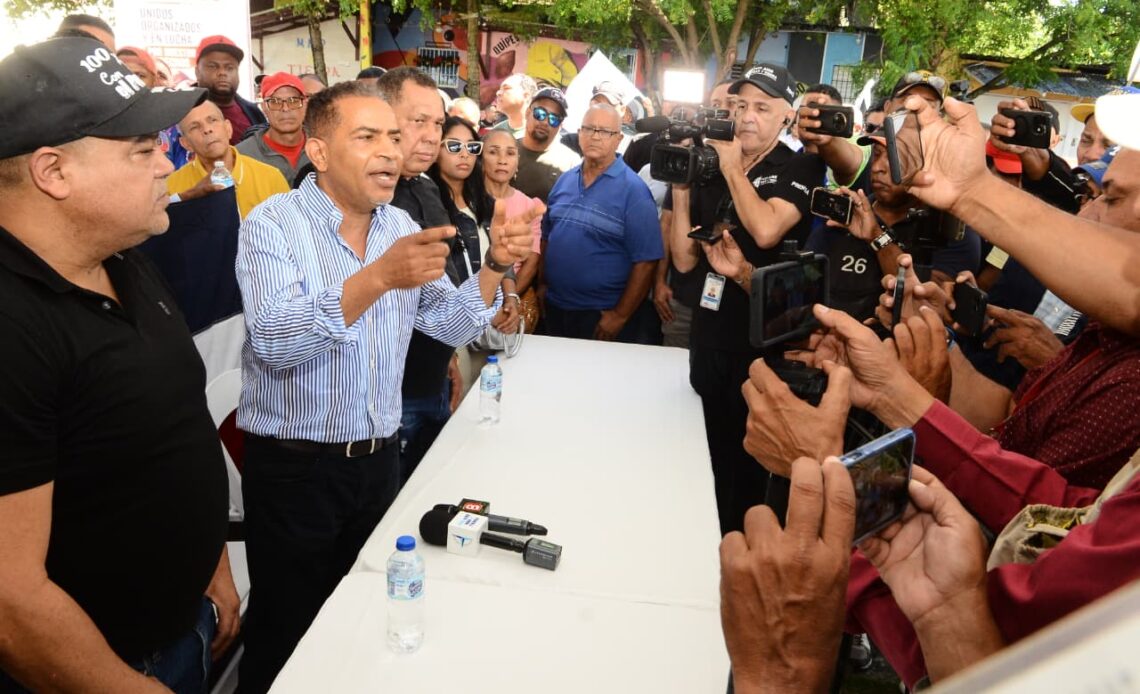
On the occasion of International Workers’ Day, the top leader of the Dominican Republic’s largest transport workers’ organization has drawn public attention to a worrying discrepancy behind the country’s nominal employment gains over the last two years. Juan Marte, president of the National Confederation of Transport Workers (CNTT), revealed that total employment across the nation has expanded by roughly 5 percent since 2022 – but the overwhelming majority of these new positions have been created in the unregulated informal sector, not in formal, protected work arrangements.
Marte specifically highlighted unregulated motorcycle taxi services as one of the single biggest drivers of informal job growth in the country. A large portion of the Dominican Republic’s registered and unregistered motorcycles are now deployed for commercial passenger transport, he explained, absorbing tens of thousands of workers who cannot find formal employment opportunities. Beyond motorcycle taxis, Marte outlined that the entire domestic transport sector – including licensed taxis, urban public transit, intercity bus routes, freight logistics, and other passenger services – generates approximately 200,000 total jobs across both formal and informal segments of the economy.
A key point of concern raised by Marte is the rapidly growing share of immigrant workers filling informal transport roles, especially in the motorcycle taxi segment. He added that this pattern of over-reliance on informal immigrant labor extends beyond the transport sector, noting that core Dominican industries including agriculture, construction, and commercial food production have increasingly turned to non-domestic workers to fill labor gaps left by the absence of formal, attractive working conditions for local citizens.
In his remarks centered on International Workers’ Day, Marte launched sharp criticism of the Dominican government for failing to implement targeted policy measures to protect formal workers and expand the number of regulated formal employment opportunities. He argued that systemic gaps in state support and labor regulation have pushed thousands of low-income Dominican citizens into unstable, high-risk informal work that offers little to no social protection or labor rights. Marte’s public comments echo widespread concerns shared by labor analysts and advocacy groups across the Dominican Republic, where informal labor has long persisted as one of the most defining structural characteristics of the national workforce.