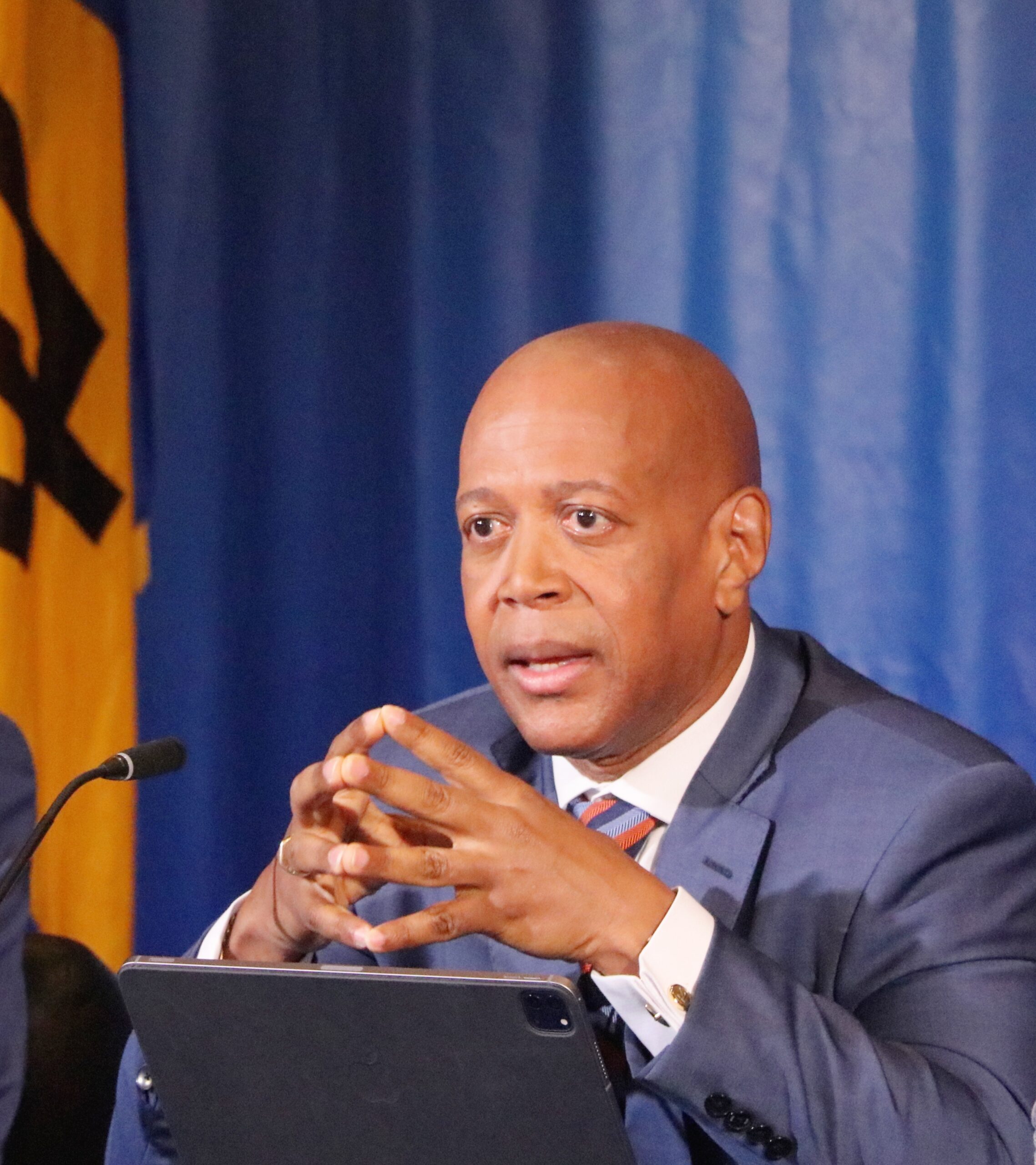
Barbados is gearing up to launch negotiations with the International Monetary Fund in the coming weeks on a new standby arrangement, a pre-approved financial buffer designed to deliver immediate access to funding when unexpected economic or climate shocks hit, the island nation’s central bank governor Dr. Kevin Greenidge has confirmed.
This new step comes roughly one year after the Mia Mottley-led administration wrapped up its previous two IMF programs: the Extended Fund Facility (EFF) focused on medium-term economic structural reform and the Resilience and Sustainability Facility (RSF) aimed at long-term climate adaptation. After completing those initiatives last June, the government has repeatedly stated its goal of keeping the IMF “on speed dial” for rapid emergency support, a promise that is now moving into active negotiation.
Speaking exclusively to local media outlet Barbados TODAY, Greenidge outlined that the formal discussions are scheduled to kick off between next week and the following week, with the parties set to hash out the specific parameters of the new agreement. Unlike the traditional, rigorous program structures of past IMF arrangements such as the EFF, this standby arrangement is framed as a proactive insurance policy rather than a bailout for existing economic instability, Greenidge explained.
The core advantage of the pre-negotiated setup is the drastically reduced waiting period for accessing funds, he noted. In the event of an unexpected crisis such as a major hurricane – a constant risk for small Caribbean island states – a pre-approved arrangement would allow Barbados to access financing in days rather than the three to four months required for a new, from-scratch program. The framework will involve ongoing policy dialogue between Barbadian authorities and IMF teams, with minor self-set targets that, when met, earmark funds for the country to draw on immediately if a shock occurs.
“This is part of a layered emergency funding strategy,” Greenidge emphasized, pointing to the multiple complementary buffers Barbados has built to respond to crises. In addition to the proposed IMF standby arrangement, the country can access rapid payouts from the Regional Catastrophe Fund, pre-allocated emergency bonds from the World Bank, and built-in deferral clauses in its climate debt agreements that allow the government to pause debt payments for one to two years to free up critical funding during emergencies. The overarching goal of the strategy is to secure immediate access to capital while minimizing outgoing government spending in the immediate aftermath of a crisis, so response and recovery efforts can launch without delay.
The previous IMF programs, wrapped up in June 2023, concluded with the disbursement of a final $116 million loan tranche, marking the successful completion of Barbados’ Building Economic Resilience Transformation (BERT) 2.0 reform program. The prime first announced the “speed dial” plan for ongoing IMF engagement back in May 2023, ahead of the conclusion of BERT 2.0, saying that structural reform efforts would continue regardless of the end of the previous lending arrangements.
Prime Minister Mottley has framed the next phase of national economic development, labeled BERT 3.0, around two core priorities: upgrading the country’s skills base and modernizing national governance structures. Addressing the skills gap, Mottley noted that while the government prioritizes hiring Barbadian nationals for all open positions, the country has repeatedly been forced to recruit skilled workers from overseas due to shortages in critical fields. This makes expanded skills development a central pillar of long-term economic growth, she said.
Alongside the ongoing economic resilience work the standby arrangement supports, governance modernization will also be a core focus of the BERT 3.0 agenda, as Barbados works to become more agile, competitive and adaptable for the challenges of the 21st century, Mottley added. The central bank also confirmed that the country has recorded 20 consecutive quarters of economic expansion, with continued growth recorded in the first quarter of this year, demonstrating the success of past reform efforts and creating space to proactively build future shock buffers.