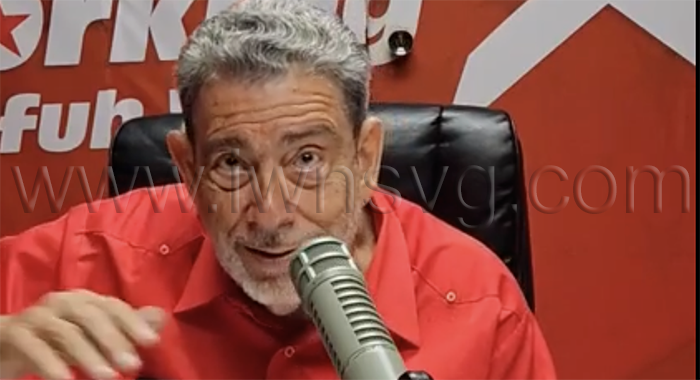
Five months after the Unity Labour Party (ULP) ended its 24-year consecutive rule over St. Vincent and the Grenadines (SVG), veteran opposition leader and former prime minister Ralph Gonsalves is leveraging a newly released International Monetary Fund economic assessment to mobilize his base and push for an early reversal of the electorate’s decision. The 80-year-old leader, who remains head of the ULP despite the party’s historic electoral defeat, laid out his political campaign in an hours-long broadcast on the ULP-owned Star Radio’s popular “Morning Comrade” show Wednesday.
In the December 2024 general election, the New Democratic Party (NDP) secured the most lopsided electoral victory in SVG since 1989, beating the ULP by more than 10,000 popular votes. The election saw a dramatic shakeup within the ULP: while Gonsalves retained his own parliamentary seat, both his son Camillo Gonsalves, the former finance minister, and Saboto Caesar, former agriculture minister and a leading contender to succeed the elder Gonsalves, lost their seats. With former deputy leader Montgomery Daniel, 70, retiring from politics last year, the ULP has not yet filled the deputy leadership position after delaying a vote at its 2022 convention.
On Tuesday, one day before Gonsalves’ broadcast, sitting Prime Minister Godwin Friday upheld his pledge to government transparency by hosting a joint press conference with the Washington-based IMF team to announce the preliminary findings of the fund’s annual Article IV Consultation, a routine assessment SVG completed during every ULP administration. Friday confirmed that while the IMF identified a need for targeted economic reform, his NDP government will develop a locally led economic stabilization program that centers national ownership of the recovery process. He also emphasized that policy adjustments will prioritize protecting the country’s most vulnerable vulnerable populations from hardship. The full IMF staff report and executive board concluding statement are expected to be published at a later date, with additional detail on the fund’s full assessment and policy recommendations.
Gonsalves seized on the consultation results to frame the new government’s economic approach as illegitimate, arguing that voters made a mistake when they ousted the ULP after more than two decades in power, and now have a political duty to correct that error as quickly as possible. He positioned the conflict as a clear clash of competing economic visions: rejecting what he called the IMF and NDP’s “austerity message,” he argued that the ULP’s platform prioritizes prudence, enterprise, and inclusive growth that benefits all segments of SVG society. Gonsalves called on all ULP party bodies, from constituency councils to national leadership, to activate immediately, announcing that a national council meeting is scheduled for next month to lay the groundwork for the ULP’s return to power.
This is not the first time in less than a month that Gonsalves has leveraged a current policy debate to rally ULP supporters. Earlier in February, he mobilized opposition to a proposed constitutional amendment put forward by the NDP, framing the change as a self-serving “insurance policy” the governing party introduced to counter the ULP’s ongoing election petitions, which challenge the eligibility of Friday and Foreign Affairs Minister Dwight Fitzgerald Bramble over their dual Canadian citizenship. Friday responded that the amendment will be referred to a parliamentary select committee, and no floor vote or debate will be held until broad public consultation is completed.