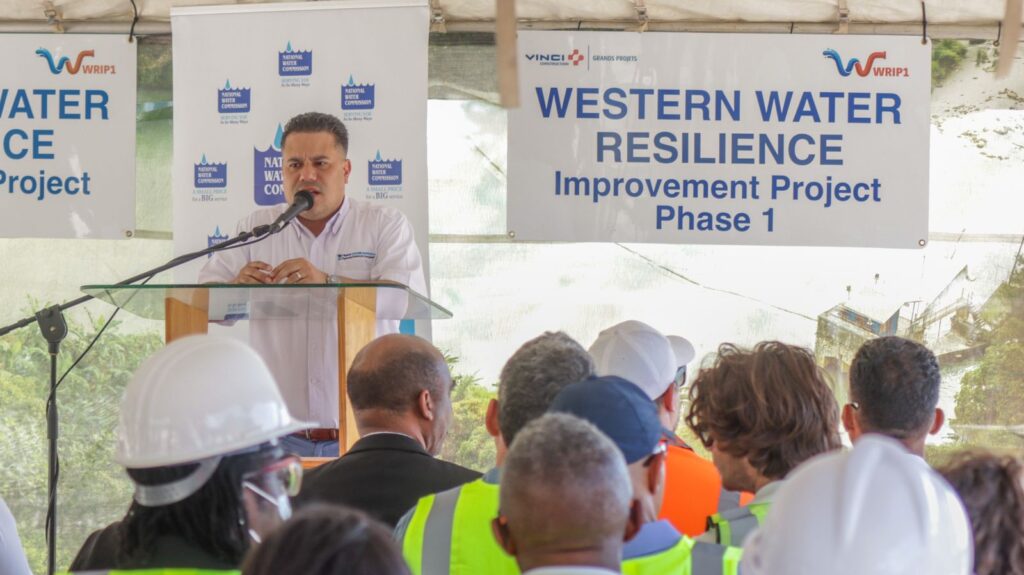
KINGSTON, Jamaica — On a Wednesday inspection stop in Freeport, Montego Bay, St James, Jamaica’s Minister of Water, Environment and Climate Change Matthew Samuda reviewed pre-deployment potable water pipes and custom fittings earmarked for the groundbreaking first phase of the Western Water Resilience Improvement Project (WWRIP-1), a transformative infrastructure initiative aimed at shoring up water security across western Jamaica.
According to an official government release published the same day, the first phase of the project carries a $170 million price tag, and centers on the design and installation of 65 kilometers of new ductile-iron potable water transmission mains. These purpose-built pipelines will replace the most vulnerable segments of the region’s aging water network, tackling long-standing systemic issues that have plagued communities and businesses for decades: crumbling outdated infrastructure, sky-high non-revenue water losses that waste millions of gallons of treated water annually, and growing pressures from accelerating climate variability.
Minister Samuda clarified that the first phase’s $170 million investment is only the initial chunk of the full program, which will total $450 million in infrastructure spending across all phases. He framed the cross-cutting initiative as far more than a standard utility upgrade, calling it a core nation-building effort and a generational investment that will open new avenues for economic activity and entrench long-term social stability for decades to come.
WWRIP-1 represents a massive technical and logistical undertaking, developed explicitly to lock in long-term water access for the four parishes that make up western Jamaica. The project is designed to boost interconnected hydraulic systems and expand storage capacity, ensuring the region’s water infrastructure can structurally keep pace with the rapid economic and tourism growth that has positioned western Jamaica as a key driver of national economic output.
Three critical water transmission corridors will be upgraded concurrently under the first phase. The work includes major renovations to the existing Martha Brae and Great River Water Treatment Plants, as well as the construction of a brand-new water treatment facility in Roaring River, Westmoreland.
The new transmission pipelines installed under the project will range from 500 to 800 millimeters in diameter, a size upgrade that will dramatically increase the transmission capacity of the Northwest Interconnected Water System. To cut down on environmental disruption and reduce the amount of private and public land that needs to be acquired for the work, project planners have intentionally aligned all new pipeline routes with existing highway and road corridors.
Samuda highlighted that the National Reconstruction and Resilience Authority (NaRRA) is the optimal governing body to deliver the complex project on an accelerated timeline, noting that the authority’s structure allows it to deliver the required infrastructure within the 20-month target delivery window. He stressed that without the expanded executive authority enshrined in NaRRA’s founding legislation, the government would fail to deliver the project Jamaican citizens need, derailing plans to put the country on a sustainable path of growth, help residents achieve their long-term goals, and secure national prosperity.
The full project is structured as a multi-year works order contract aligned with the Jamaican government’s long-term fiscal planning framework, with the first phase scheduled for completion by the 2026–2027 fiscal period. VINCI Construction Grands Projets is leading implementation on behalf of the National Water Commission (NWC), working in close coordination with the National Environment and Planning Agency (NEPA), National Works Agency (NWA), and Jamaica Constabulary Force (JCF) to safely manage construction activities across high-traffic urban centers and popular tourism zones.