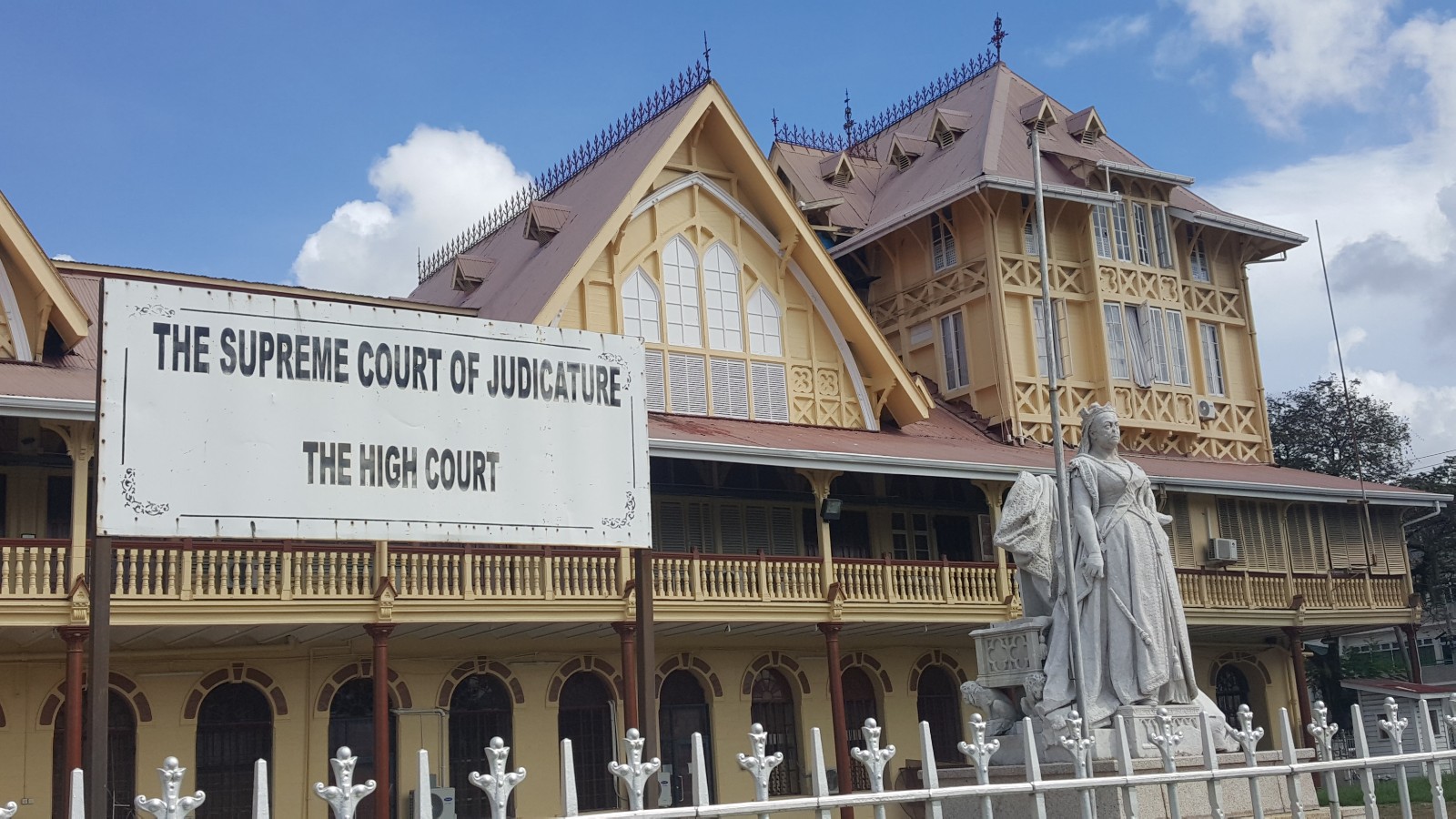
As of Wednesday, 29 April 2026, a prominent Guyanese city businesswoman has initiated a landmark constitutional challenge against a key provision of the country’s 2018 Cybercrime Act, arguing that the clause violates fundamental free speech protections enshrined in Guyana’s constitution and runs counter to the nation’s international human rights commitments.
Ann Narine, represented by experienced legal counsel Nigel Hughes and Dr. Vivian Williams, filed her fixed-date application with the High Court on 14 April 2026, asking the court to formally strike down Section 19(2) of the 2018 Cybercrime Act on multiple grounds. Narine’s legal team argues the provision is unconstitutional, null and void due to three critical flaws: inherent vagueness, overbroad scope, and disproportionate impact on protected civil liberties. The challenge specifically targets the clause’s violation of Article 146 of the Guyanese Constitution, which explicitly guarantees the right to freedom of expression.
At the core of the challenge is Narine’s argument that Section 19(2) fails to meet basic legal standards for clarity when criminalizing speech-related conduct. The provision does not provide a defined, consistent meaning for key terms including “humiliation,” fails to clarify the scope of “electronic data” as applied to this section, and sets no clear threshold to separate criminal activity from expression that is legally protected under the constitution. Without these clear definitions, Narine contends the clause cannot be applied consistently or predictably, creating a risk that legitimate speech will be incorrectly criminalized. This inherent ambiguity alone, the application argues, renders the provision unconstitutional under Article 146.
Narine further argues that the clause lacks the narrowly tailored limits required for restrictions on free speech in democratic societies. International legal standards hold that any limitation on freedom of expression must meet three cumulative requirements: it must be clearly defined by law, pursue a legitimate public aim, and be reasonably justifiable and proportionate to the goal it seeks to achieve. Section 19(2), Narine’s application maintains, fails to meet all three of these requirements.
The challenge also invokes Guyana’s binding international human rights obligations under the International Covenant on Civil and Political Rights (ICCPR), whose own Article 19 protects the fundamental right to freedom of expression. A broad, uncurbed interpretation of Section 19(2) that criminalizes protected expressive activity would put Guyana in direct breach of this international treaty, the application notes, adding that Guyana’s constitution must be interpreted in alignment with the country’s international human rights commitments.
Beyond the facial challenge to the provision itself, Narine is also attacking the specific application of the law to her case as unconstitutional. She argues that the criminal charge brought against her suffers from multiple fatal procedural defects that violate her constitutional right to a fair trial. The charge, she notes, fails to identify the specific published content at the center of the allegation, the digital platform where the content was allegedly shared, any recipients of the alleged publication, and the specific actions that took place within the cited time period. By failing to outline these basic details, the prosecution effectively criminalizes unspecified speech and denies Narine the ability to know what case she must answer, violating both Articles 144 and 146 of the constitution, according to the application.
Further procedural flaws are cited in the challenge: the summons filed against Narine did not specify which exact section of law she is alleged to have broken. Additionally, the sworn information included in the court file was dated after Narine’s initial court appearance, was never served on her legal team, and was not presented to the court when she was first required to respond to the charge and raise objections. Narine argues these omissions deprived her of adequate notice of the allegations against her and the opportunity to prepare a full defense, denying her the fair hearing protections guaranteed under Article 144 of the constitution.
Narine is also seeking a High Court declaration that her entire prosecution is unconstitutional, unlawful, and constitutes an abuse of court process. Citing Article 187 of the Guyanese Constitution, which enshrines the principle of prosecutorial independence, Narine argues that allowing a prosecution led by an attorney retained, paid, and taking direct instructions from the private complainant in the matter directly violates the constitutional requirement for independent prosecution. As part of this claim, she is asking the court to rule that the fiat granted by the Director of Public Prosecutions (DPP) to prosecuting attorney Mikel Puran is unlawful, unconstitutional, null, void, and has no legal effect.
The application requests multiple court orders: a formal order quashing the DPP’s fiat to prosecute, an order barring any continuation of the criminal charge against Narine, a stay of all proceedings related to the charge until the constitutional challenge is heard and determined. In the alternative, Narine asks the court to issue a permanent stay of the criminal charge on the grounds that it amounts to an abuse of the court’s process.