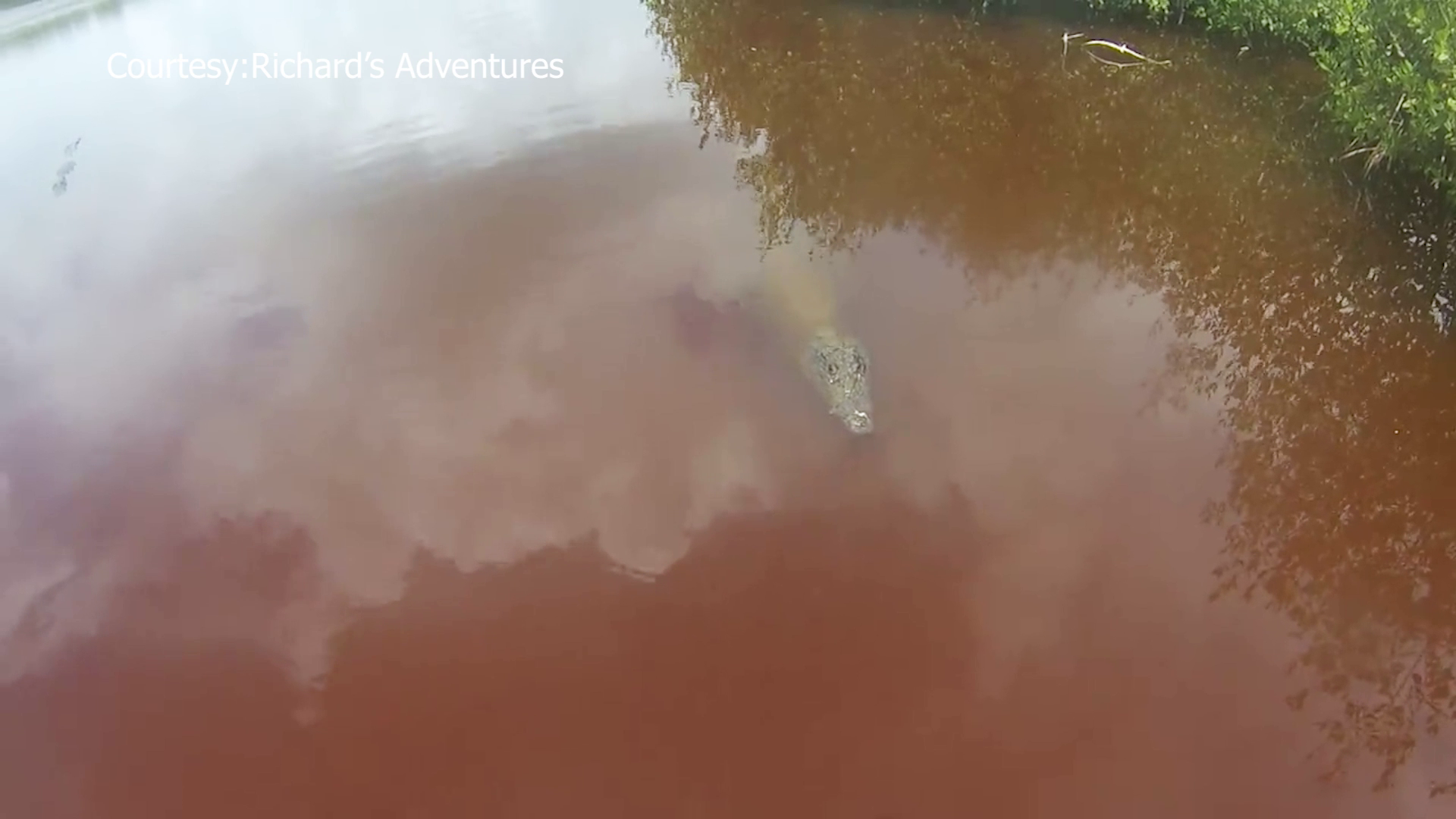
A pre-dawn crocodile attack on Caye Caulker that left an American tourist with severe arm injuries has ignited fierce public backlash, with local residents demanding the animal be captured and killed immediately. However, a leading crocodile researcher is pushing back against these calls, arguing that the incident was a defensive reaction rather than unprovoked aggression, and that human behavior is the root cause of the conflict.
The attack, which occurred in early morning hours before sunrise, sent the 52-year-old American woman to a local hospital for urgent treatment of serious arm wounds, as confirmed in initial reports published Monday evening. In the wake of the frightening incident, frustrated residents have launched growing pressure on local authorities to track down and eliminate the crocodile, framing the reptile as a dangerous threat to community safety.
But Dr. Marissa Tellez, executive director of the Crocodile Research Coalition, is stepping forward to defend the animal and educate the public on crocodile behavior ahead of any drastic action. Tellez emphasized that the attack was not an attempt by the crocodile to hunt or kill the swimmer, but rather a defensive warning driven by two key seasonal and environmental factors.
“When an attack happens, usually the root of the problem is not the bad behavior of the crocodile, it is usually the bad behavior or maybe some misinformation or miseducation by some humans,” Tellez explained in an interview following the incident. She pointed to key differences between a predatory attack and a defensive bite to back up her assessment: American crocodiles, which hold the strongest bite force of any animal on Earth, do not release their prey if they intend to kill. In this case, the crocodile bit the woman and immediately let go, a clear sign it was only issuing a warning to protect itself or its nest.
Tellez noted that this time of year brings a predictable increase in human-crocodile conflicts across the Caye Caulker region, as it falls squarely in the American crocodile’s nesting season. Female crocodiles become far more defensive during this period as they guard their nests and newly hatched young, and historical research on Caye Caulker’s crocodile population confirms that the northern stretch of the island — where the attack occurred — is a primary nesting site for local females.
A second contributing factor, Tellez added, aligns with the timing of the incident: crocodiles naturally hunt and feed during the pre-dawn hours, the exact same time the American woman entered the water to swim. This overlap in activity increased the likelihood of an unexpected encounter between the reptile and the human swimmer.
Tellez’s public comments come as Belize grapples with ongoing tensions between coastal development, ecotourism, and the conservation of native predator species like the American crocodile, which is listed as a vulnerable species by the International Union for Conservation of Nature. Her call for public education and coexistence contrasts with widespread public anger over the attack, which has put local wildlife officials in a difficult position between conservation goals and community safety demands.
This report is adapted from a transcribed evening television newscast originally published online following the attack.