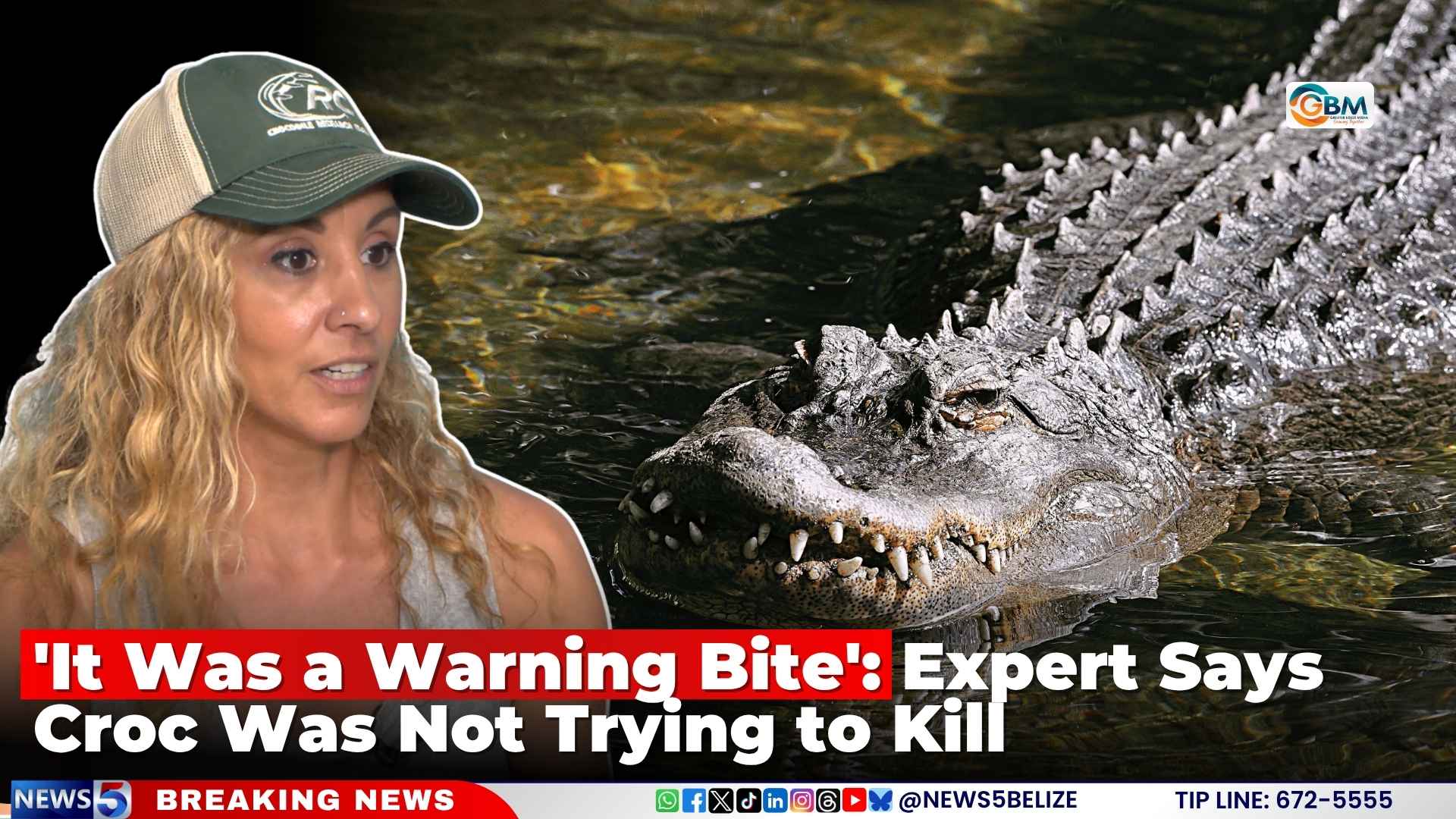
A late-night swimming incident left an American woman injured in a crocodile attack off the coast of Caye Caulker earlier this week, and a leading reptile expert is now breaking down why the encounter unfolded, pushing back against common assumptions about unprovoked crocodile aggression.
Marisa Tellez, executive director of the Crocodile Research Coalition and a seasoned crocodile behavior specialist, says the Monday attack was not an attempt by the animal to kill or consume the swimmer. Instead, she categorizes the incident as what she calls a “warning bite” — a defensive reaction triggered by overlapping environmental and biological factors, not unprovoked malicious behavior from the reptile.
Local law enforcement confirmed the attack took place shortly after 3:30 a.m., when the victim entered the water for an unplanned late-night swim. Tellez emphasizes that this timing was far from coincidental. “This is crocodile feeding time,” she explained. “This is when they are naturally more active, and when they hear splashing from a person in the water, they may initially mistake the movement for prey. The bite is an investigative reaction, not a killing strike.”
Beyond feeding time, a second seasonal factor amplified the risk of an encounter, Tellez notes. The attack occurred during peak nesting season for local crocodiles, a period when female crocodiles become highly defensive of their nesting sites. Tellez’s own long-term research in the Caye Caulker area confirms that the exact spot where the woman was swimming is a well-established common nesting ground for female crocodiles protecting their eggs and upcoming hatchlings.
In the wake of the incident, Tellez is calling on tourists and local residents alike to avoid casting the crocodile as an aggressive villain, pointing out that most crocodile attacks can be traced back to human behavior, lack of awareness, or widespread misinformation about crocodile biology rather than inherent violence from the animals.
She also issued a key public safety warning: feeding wild crocodiles in the area is an extremely dangerous practice that conditions the reptiles to associate human activity with feeding opportunities, which drastically increases the risk of future negative encounters between people and crocodiles. Tellez’s comments come as local community leaders prepare to update public safety signage around popular swimming areas to highlight the risks of swimming during peak crocodile activity periods.