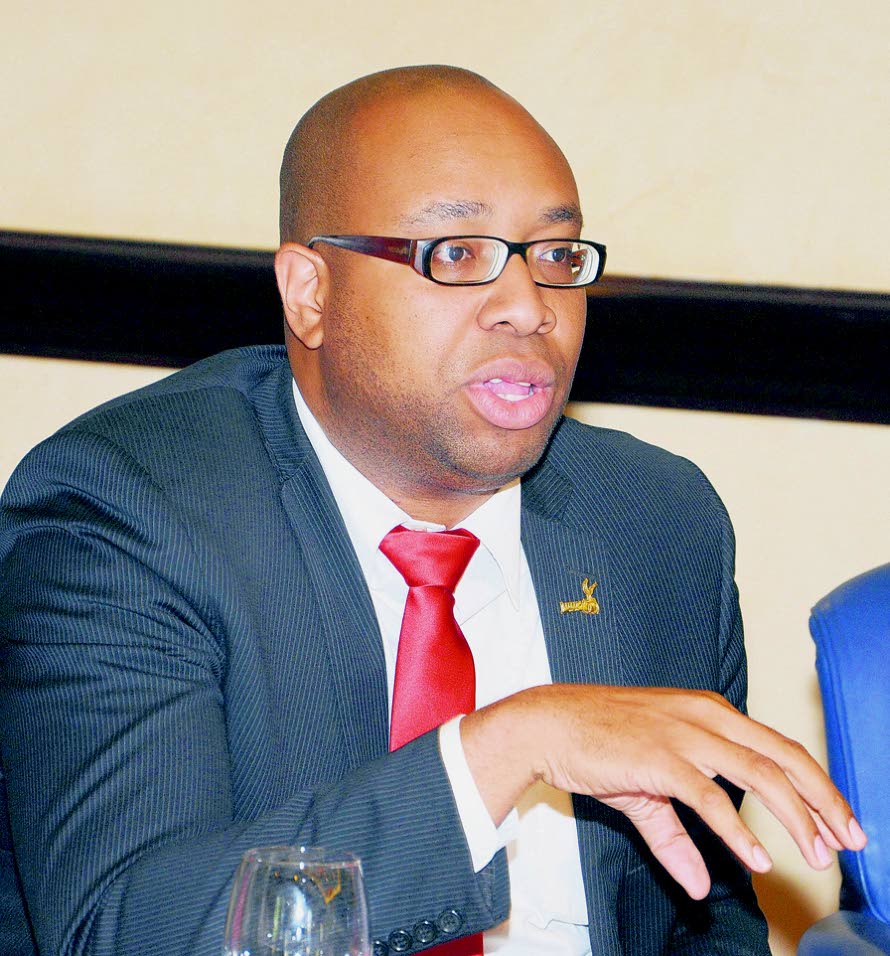
KINGSTON, Jamaica — As Jamaica’s House of Representatives prepares for a critical Tuesday evening vote on the National Reconstruction and Resilience Authority (NaRRA) Bill, a senior government legislator is pushing back hard against criticism that the proposed legislation contains fundamental structural flaws.
Delano Seiveright, Member of Parliament for St Andrew North Central and Minister of State in the Ministry of Industry, Investment and Commerce, says the bill is equipped with robust guardrails and formal oversight structures designed to guarantee full transparency and accountability for all disaster recovery work. The legislation is intended to streamline post-hurricane reconstruction efforts, nearly three months after Hurricane Melissa devastated multiple Jamaican communities.
While Seiveright emphasized that public review and robust parliamentary debate of the bill are not only necessary but welcome, he warned against allowing legitimate policy discussion to descend into crippling delays at a moment when coordinated recovery action is an urgent national priority.
“I welcome the scrutiny. This is exactly the kind of legislation that should be debated seriously,” Seiveright stated in remarks Monday. “But we must be careful not to confuse accountability with paralysis. Jamaica cannot afford to talk itself into delay while communities are still recovering. We are good at talking issues to death.”
To counter claims that the new authority would operate with unchecked executive power, Seiveright walked through a series of binding provisions outlined in the bill’s text. First, all projects undertaken by NaRRA must be selected from a pre-approved national project list, and all formal programs and implementation plans require explicit sign-off from the Cabinet before any work can begin, as laid out in Clause 17 of the legislation.
“That alone defeats the idea that this is some unrestrained body operating on its own,” he added.
Seiveright next highlighted Clause 9, which mandates that NaRRA maintain accurate, up-to-date financial accounts and operational records, and requires the authority to complete annual independent audits conducted by a registered public accountant. He noted that the bill explicitly grants Jamaica’s Auditor General the power to audit and examine NaRRA’s records at any time, with no advance notification required.
“In addition, Clauses 10 and 11 require annual performance reports and audited financial statements to be submitted to the responsible government minister and formally laid before Parliament, ensuring direct, ongoing legislative oversight,” Seiveright explained.
Transparency measures are further strengthened under Clause 20, which requires NaRRA to maintain a publicly accessible electronic registry of all approved projects. This tool will allow any Jamaican citizen to track which projects have been greenlit and monitor ongoing work, eliminating the hidden decision-making that has plagued past recovery efforts, according to Seiveright.
“If people are concerned about corruption, then they should also look at the actual safeguards in the Bill,” he said. “Cabinet approval, full independent audit, auditor general access, reporting to Parliament, a public project register — these are not small things. This is the most scrutinized reconstruction framework Jamaica has ever put forward.”
Seiveright also defended the bill’s expedited approval provisions laid out in Clauses 21 through 24, which opponents have framed as a bypass for standard governance checks. He countered that the streamlined processes are necessary to avoid the bureaucratic gridlock that has slowed disaster recovery in previous disaster events across the globe, noting that the provisions do not eliminate accountability — they restructure it to enable timely action. The bill requires all accelerated decisions to be accompanied by written documentation, expert guidance, public notice, and opportunities for stakeholder input before any approval is finalized, he added.
“These clauses do not remove governance; they structure urgency. There must be written directions, expert advice, notice, and opportunity for representation before any escalation. That is not lawlessness. That is disciplined execution,” he said.
Another key point Seiveright emphasized is that NaRRA is designed as a temporary, time-bound body, with formal dissolution requirements explicitly included in Part IV of the legislation. The authority will not become a permanent expansion of government bureaucracy, as some critics have claimed, he said.
Drawing on lessons from major international disaster recoveries, Seiveright pointed to high-profile examples including Haiti following the 2010 earthquake, New Orleans after Hurricane Katrina, and Puerto Rico after Hurricane Maria. In each case, he noted, billions of dollars in pledged recovery funding was held up for years by fragmented leadership, overlapping bureaucracy, and a lack of centralized coordination, leaving vulnerable communities waiting for critical support.
“The lesson globally is clear: recovery usually does not fail because of a lack of money. It fails because governments cannot organize themselves to deliver,” he said.
Seiveright added that Jamaica’s existing broader democratic ecosystem adds additional layers of oversight that will keep NaRRA accountable. These include parliament’s Public Accounts Committee, chaired by Opposition MP Julian Robinson, the Public Administration and Appropriations Committee led by Opposition MP Peter Bunting, the national Integrity Commission, the independent judiciary, law enforcement, the free press, and the independent Jamaica Reconstruction and Resilience Oversight Committee chaired by Stanford University economist Professor Peter Blair Henry.
While he acknowledged that no large-scale reconstruction framework can ever be perfectly crafted before launch, Seiveright said adjustments can be made as implementation progresses, and delaying the bill in search of perfection would only harm Jamaican communities waiting for recovery.
“No major reconstruction framework will ever be perfect. There will be adjustments and improvements along the way. But perfection cannot become the enemy of progress. The urgency of now requires us to move, carefully, transparently, but decisively,” Seiveright declared.