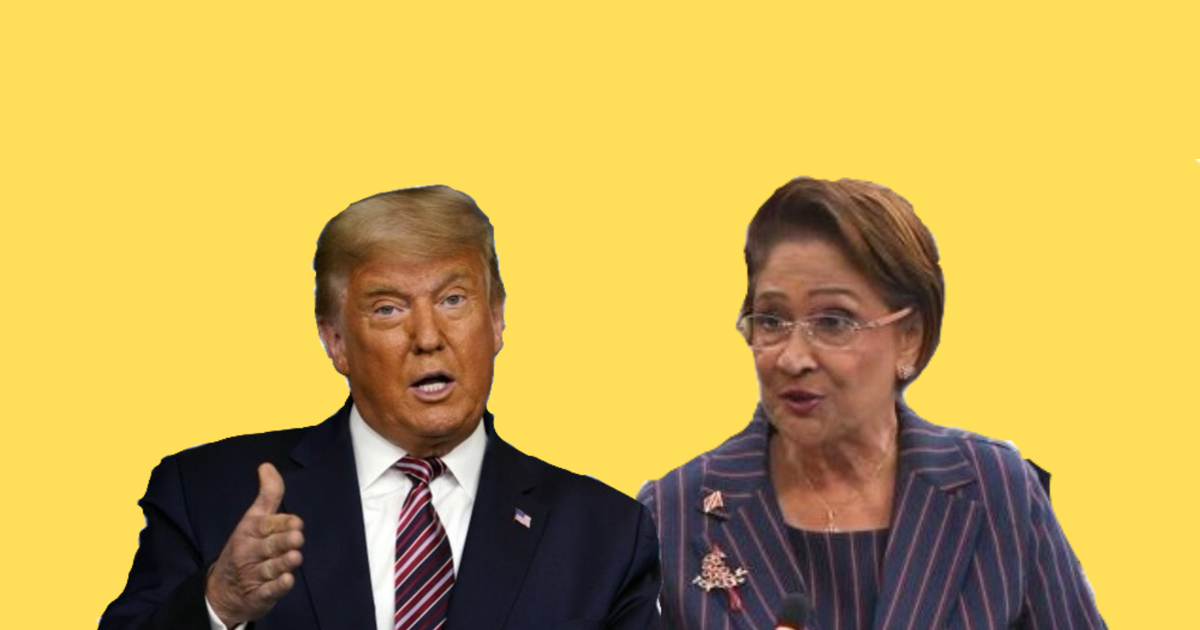
It has now been 12 months since the United National Congress (UNC) won a decisive electoral victory in Trinidad and Tobago, and the small Caribbean nation has undergone a quiet but transformative geopolitical realignment, moving steadily into alignment with United States foreign policy while breaking with longstanding regional norms and historic ties to neighboring Venezuela. Since Prime Minister Kamla Persad-Bissessar took office on April 28, 2025, her administration has embraced American security strategy, echoed Washington’s domestic political rhetoric, and repeatedly backed some of the U.S.’s most divisive global actions, creating growing tensions across the Caribbean and Latin America.
This ideological alignment predated the UNC’s assumption of power: during the 2025 election campaign, Persad-Bissessar’s party already mirrored the policy priorities of U.S. Republican Party and former president Donald Trump, including anti-immigrant rhetoric framing migration as an “invasion” and a pledge to reintroduce religious instruction into public schools. Echoing Trump’s 2016 “America First” platform that propelled him to the White House, Persad-Bissessar centered her campaign on a “T&T-first” agenda, a slogan that would later become the title of her administration’s inaugural national budget. Following the NRA’s endorsement of Trump, the UNC also expanded its proposals for broad “Stand Your Ground” self-defense legislation and enshrined the “right to bear arms” as a core priority in its electoral manifesto.
Since taking office, the pro-U.S. shift has only accelerated, particularly in relation to key geopolitical flashpoints. The Persad-Bissessar administration has repeatedly voiced open support for Trump administration military operations both in Venezuela, which sits just seven miles from Trinidad and Tobago at its closest point, and across the Middle East, regularly labeling governments in Caracas and Tehran as “dictatorial regimes.” The government has even moved to adopt Washington’s global terror designation list outright, branding Venezuelan criminal group Tren De Aragua and Iran’s Islamic Revolutionary Guard Corps (IRGC) as terrorist organizations in lockstep with the U.S.
The most public demonstration of this new alignment came in late 2025, when the U.S. military launched a series of air and sea strikes targeting vessels it claimed were trafficking narcotics to American shores across the Caribbean Sea. The campaign, which grew into Operation Southern Spear, saw the U.S. reposition at least eight warships and thousands of troops to the region, increasing military pressure dramatically on Venezuela. Persad-Bissessar openly praised the buildup, issuing a public statement welcoming the first strike on September 2 that killed 11 people the U.S. labeled “narco-terrorists” from a Venezuelan coastal town. In the statement, she declared that “all drug traffickers should be killed violently” — a position she has refused to back away from, even as international legal experts have raised questions about the legality of the extrajudicial kinetic strikes.
Shortly after the strikes began, the prime minister issued a direct warning to neighboring Venezuela, a longstanding regional ally, warning that any incursion into Guyanese territory would grant the U.S. “unflinching access” to Trinidad and Tobago’s land and territorial waters. When the guided-missile destroyer USS Gravely docked in Port of Spain for joint military exercises hosted by Trinidad and Tobago, the Maduro-era Venezuelan government responded by cutting all natural gas trade ties with the nation and declaring Persad-Bissessar persona non grata, while state-backed protests filled the streets of Caracas to condemn her policies. Maduro himself repeatedly accused the prime minister of intentionally damaging regional stability and destroying decades of constructive bilateral relations, warning that any hostile action originating from Trinidad and Tobago would be met with a proportional military response. Undeterred, Persad-Bissessar dismissed Venezuelan retaliation as inconsequential to both her personally and the national economy.
After the U.S. launched Operation Absolute Resolve, the January 3, 2026 military operation that removed Nicolas Maduro from his Caracas presidential compound, Trinidad and Tobago went a step further, permitting the U.S. to install a advanced military-grade air defense radar system on the island of Tobago and granting U.S. military aircraft access to the nation’s civilian and military airports. The administration has repeatedly denied any direct role in the raid on Maduro or attacks on Venezuelan civilians, but has continued to back U.S. policy in the country in public forums. At a recent Caricom Heads of Government meeting, Persad-Bissessar labeled Maduro a “narco-dictator” and claimed that both Trinidad and Tobago and Guyana face direct security threats from Venezuela.
In response to the comments, the interim Venezuelan government led by Delcy Rodriguez, who has cooperated with the U.S. following Maduro’s ouster, issued a formal communique criticizing Persad-Bissessar’s stance. When the U.S. eased sanctions on Venezuelan energy projects, granting OFAC authorization to major energy firms including Shell to resume cross-border gas development, Persad-Bissessar hailed the move as a major economic win for Trinidad and Tobago, and announced a government delegation would travel to Caracas to negotiate new energy deals. No public update on the talks has been released to date, and Rodriguez notably skipped Trinidad and Tobago on her first foreign tour earlier this month, only visiting Grenada, telling reporters “we have positive relations with Grenada” when asked why she omitted Port of Spain.
This pro-U.S. shift has not been limited to Venezuela. Following Maduro’s ouster, the Trump administration ramped up pressure on Cuba, blocking shipments of sanctioned Venezuelan oil that have long served as the island’s primary energy source, triggering widespread fuel shortages and deepening a growing humanitarian crisis. At the February 2026 Caricom summit, Persad-Bissessar again aligned with Washington, declaring that Trinidad and Tobago would not back Cuba’s “dictatorial regime.” “We cannot advocate for other people to live under communism and dictatorship while we enjoy democracy and capitalism in our Caricom region,” she said. “That is an oxymoron, a plain contradiction.”
Weeks later, when the U.S. launched Operation Epic Fury in Iran that killed former Supreme Leader Ayatollah Ali Khamenei and ignited a multi-week regional war in the Persian Gulf, Trinidad and Tobago again issued a statement backing U.S. action. The Ministry of Foreign Affairs said the country supported U.S. efforts “to prevent oppressive regimes from acquiring nuclear weapons capabilities that would jeopardise international peace and security,” noting that nuclear proliferation remains a critical threat to the global community. On March 19, Trinidad and Tobago joined the U.S., United Kingdom, France, Germany, Italy, Japan, Canada and other nations in a joint statement condemning Iranian military actions and the closure of the Strait of Hormuz. Last week, the government formally added Hezbollah, Hamas and the IRGC to its national list of designated terrorist organizations, matching the U.S. designation.
This new foreign policy marks a stark break from Trinidad and Tobago’s decades-long stance of regional neutrality. As a founding member of the 15-nation Caribbean Community (Caricom), previous Trinidad and Tobago administrations have long upheld the bloc’s collective commitment to maintaining the Caribbean as a conflict-free “Zone of Peace.” But under Persad-Bissessar, the government has rejected this longstanding regional consensus. Last year, the administration reserved its position on a formal Caricom declaration reaffirming the Zone of Peace, and Persad-Bissessar later rejected the concept as a “false ideal” during a speech to the United Nations General Assembly.
Tensions between Port of Spain and the Caricom secretariat have escalated sharply in recent months. In late December 2025, Persad-Bissessar warned regional nations against criticizing the U.S., pointing to Antigua and Barbuda and Dominica, which faced U.S. visa restrictions under the Trump administration after publicly opposing Washington’s policies. In a post to her X account, she accused Caricom of disproportionately siding with the former Maduro government, repeated calling the Zone of Peace “fakery,” and made clear Trinidad and Tobago wanted no part of the regional consensus.
At the February 2026 Caricom Heads of Government meeting in St. Kitts, Persad-Bissessar went further, calling the regional bloc an “unreliable partner” and questioning why it had not condemned what she framed as Venezuelan threats to Trinidad and Tobago and Guyana. The dispute spilled into a wider conflict over the reappointment of Caricom Secretary General Carla Barnett, who is set to begin a second five-year term in August 2026 following a vote by Caricom heads at a closed retreat in Nevis.
Trinidad and Tobago’s foreign minister Sean Sobers, who took over the country’s delegation after Persad-Bissessar left the summit a day early, issued a formal objection to the reappointment, claiming the process violated the Treaty of Chaguaramas because Trinidad and Tobago was not consulted and the vote was not added to the official meeting agenda. Caricom Chairman Terrance Drew responded that the vote was held at a properly announced retreat, and Sobers was invited but declined to attend, citing seasickness. Sobers rejected that claim, and announced Trinidad and Tobago would suspend participation in Caricom meetings until the government received all correspondence related to Barnett’s reappointment.
Last week, Persad-Bissessor escalated the dispute further, releasing a public statement alongside screenshots of a WhatsApp group chat showing that a “heads-only” retreat was scheduled for February 26, after she had already left the summit. She accused Caricom’s leadership of lying, and labeled the bloc’s leadership dysfunctional, dishonest and incompetent, while also criticizing regional foreign ministers for failing to defend Sobers amid the dispute.
Political analysts who have tracked the UNC’s first year in office note that the new foreign policy has emerged as the most distinct shift of the administration, drawing mixed reactions from the Trinidad and Tobago public and regional stakeholders. While analysts acknowledge that overt alignment with the U.S. could deliver short and medium-term economic and security benefits for the small island nation, they caution that the long-term consequences for regional stability and Trinidad and Tobago’s standing in the Caribbean remain unclear.