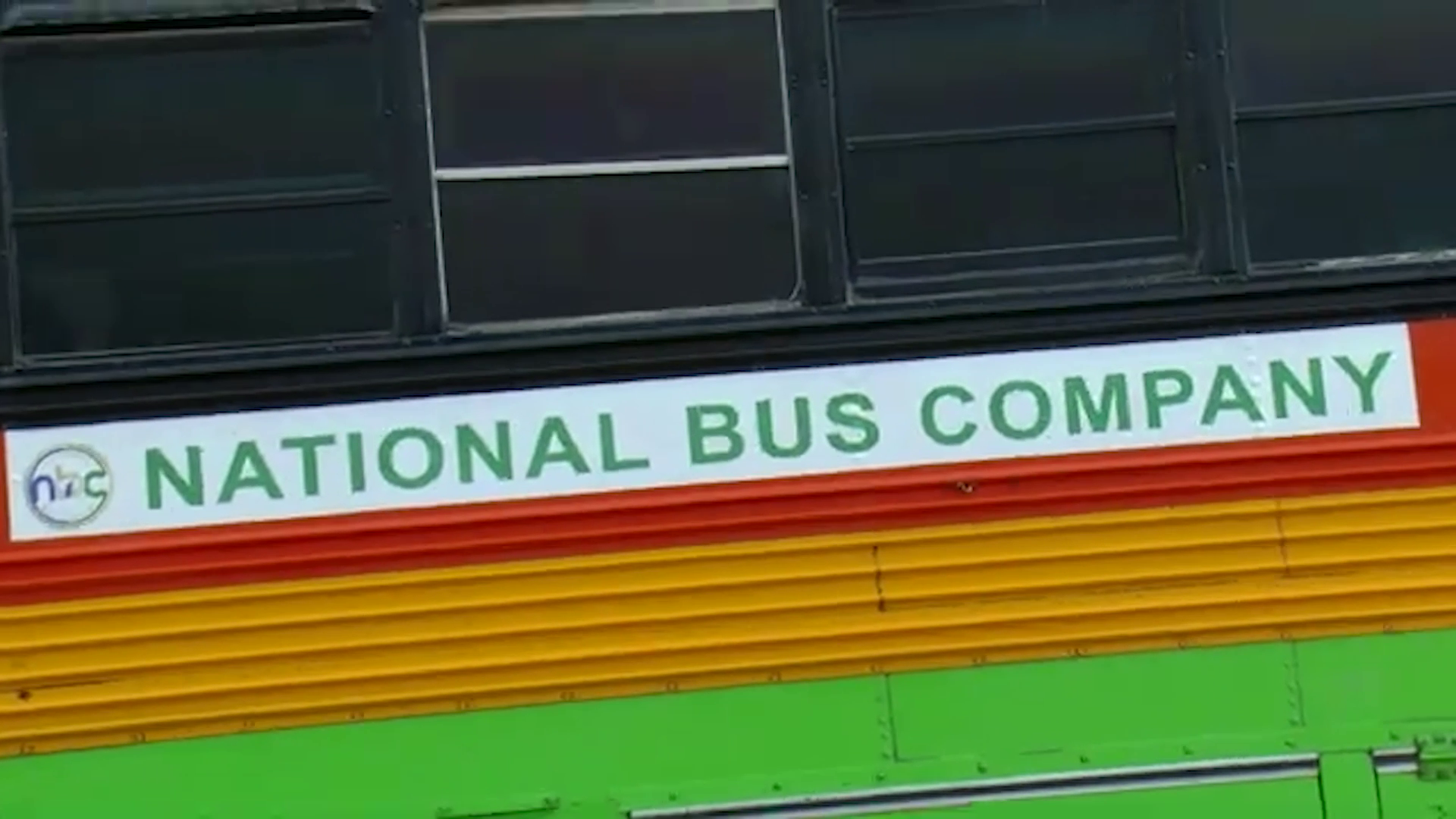
A sharp public controversy over the ownership and governance of Belize’s National Bus Company (NBC) is intensifying, as industry stakeholders, government officials, and law enforcement navigate competing claims, disrupted traffic, and conflicting narratives around fare pricing.
The conflict moved to a new level last week when the Belize Bus Association (BBA) leveled formal conflict of interest allegations against Belize’s Minister of Transport, Dr. Louis Zabaneh, tying his leadership of the transport sector to undisclosed influence over the state-linked bus operator. As the claims gained public traction, reporters pressed the minister for clarity during a Saturday press conference, asking pointedly: who ultimately owns and operates the National Bus Company?
Dr. Zabaneh offered a clear breakdown of the venture’s structure, framing it as an ongoing public-private partnership designed to expand reliable public transit across the country. He confirmed that as of current operations, the Government of Belize holds a 60% majority stake in NBC, while existing bus operators hold the remaining 40% equity, with potential future participation from institutional investors still pending. As the government’s representative on the project, the Minister of Transport appoints all government-nominated board members, a roster he outlined to confirm transparency: government seats are held by board chair Louge, Genelle Neal, former Senator Elena Smith, and prominent trade unionist Miriam Paz. Operator representatives include Sergio Chuc (owner of Westline), Jamie Williams (owner of James Bus Line), and a Codd, who represents the collective interests of small operators holding a 10% combined stake. The company’s chief executive officer is Vanzie, a former co-owner of Floria Bus Line.
The controversy extends far beyond ownership, however, spilling over into a bitter dispute over fare pricing that has divided the BBA and the Ministry of Transport. The BBA has pushed for widespread fare increases, arguing it must match the per-mile rates charged by NBC, which the association claims reach as high as 19 cents per mile. Dr. Zabaneh rejected that claim outright, pushing back on the BBA’s narrative and noting that any move by NBC to raise fares to the maximum allowed rate would directly contradict the government’s public commitment to shielding consumers from rising living costs.
“It would have been bordering on hypocrisy if the NBC had gone and increased their prices right up to the maximum when I as minister had been saying we do not want to increase prices,” he explained. “We want to ensure we mitigate the impact of higher prices on our people.” The minister confirmed that NBC’s highest actual fare is just 16 cents per mile, applied only on the western route. He also added a key clarification to address circulating rumors: the NBC receives no operating subsidies from the government, with all expenses covered by the company’s own revenue as a public-private operating entity. “It is just like if government was to send a check with any private business out there, something would be very wrong with that. It would be corruption,” he noted.
With negotiations over broad fare hikes stalled, the conversation around Belize’s public transit sector has now shifted to the longstanding demand for government fuel subsidies. Frustrated by the deadlock, bus operators blocked the busy Phillip Goldson Highway on the morning of the protest, bringing traffic to a complete standstill and forcing law enforcement to manage a tense public standoff.
Acting Superintendent Stacy Smith, a police staff officer, explained that law enforcement planners had monitored the planned protest for days and deployed a de-escalation focused strategy to balance the right to peaceful protest with the public’s right to free movement. “We recognize the issue that was raised affects all Belizeans and we want to afford persons who are disgruntled the ability to protest,” Smith said. “We have recognized the need to maintain law and order to ensure citizens are able to move and get to their respective location at their liberty.”
The police approach focused on avoiding violent confrontation, with uniformed officers deployed along the highway to maintain order and prevent clashes between protesters and other community members. According to Smith, the strategy succeeded: the protest concluded without major incidents, with only three people detained and issued minor violation tickets before being released. No injuries or significant property damage were reported.
This report is adapted from a transcript of a televised evening news broadcast, with all statements preserved for accuracy and context.