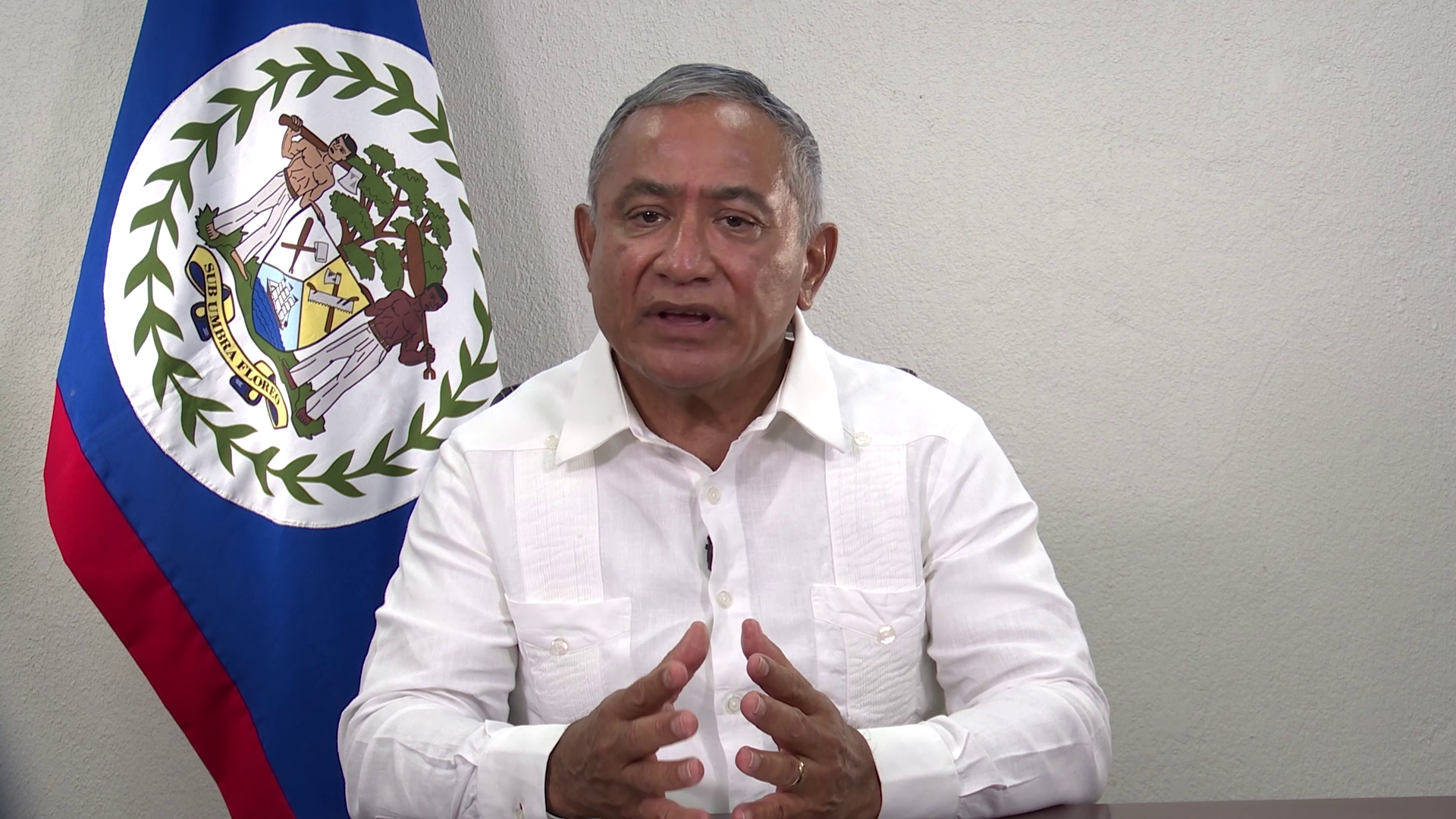
As skyrocketing global crude oil prices send pump costs soaring and squeeze household budgets across Belize, Prime Minister John Briceño has delivered a nationally televised video address outlining his administration’s full response to what he calls an unprecedented external economic shock, just hours before local evening news broadcasts on April 27, 2026.
Briceño opened his address by contextualizing the crisis: over the past two months, international benchmark oil prices have jumped 76%, climbing from roughly $60 per barrel to $105 per barrel. Despite the volatile global market, the prime minister moved quickly to reassure the public that there is no immediate threat to Belize’s domestic fuel supply, noting that the country’s current monthly fuel import volume, valued at approximately $5 million, remains fully secured. He did acknowledge, however, that further retail price adjustments at the pump, as well as corresponding cost increases for fuel-linked goods and services across the economy, are unavoidable as global acquisition costs rise.
To offset the burden for consumers, Briceño highlighted that Belize’s fuel excise tax is structured as a fixed per-unit levy, not an ad valorem tax that would increase alongside acquisition costs. Already since the onset of the price crisis, his administration has cut excise taxes sharply: 68 cents per gallon for regular gasoline, and $1.55 per gallon for diesel. Combined, these tax cuts will cost the national budget an estimated $4.7 million per month, totaling $60 million for the full 2026 fiscal year. Briceño confirmed that if crude prices continue their upward trajectory, the Cabinet stands ready to approve additional tax adjustments to soften the blow for motorists and households.
Turning to the domestic transportation sector, which has been hit particularly hard by rising fuel costs, Briceño addressed ongoing tense negotiations with the Belize Bus Association. The newly formed National Bus Company will freeze current fares for the immediate future, the prime minister confirmed. For private bus operators that have pushed for fare hikes to offset fuel expenses, the government has approved a targeted three-month subsidy that will cover 100% of the incremental fuel cost increases. Private operators will receive a $3 per gallon fuel subsidy over the next quarter, a measure designed to prevent any sudden large fare increases for commuters traveling across districts.
Beyond fuel-specific relief, Briceño announced sweeping government austerity measures to free up budget space for consumer relief and protect core social safety net spending, emphasizing that the government must bear its fair share of sacrifice amid the economic strain. The three-pronged austerity plan includes a $30 million deferral of planned capital expenditure projects scheduled for the current budget year, a $25 million cut to goods and services spending across all government ministries and departments, and sharp reductions in international travel, with all non-essential international meetings shifted to virtual formats to cut down on fuel, transportation and accommodation costs. The government will also cut its own internal fuel bill by restricting non-essential use of government vehicles.
Briceño stressed that despite these tough cost-saving adjustments, all spending on Belize’s social safety net programs will remain fully intact and uninterrupted. He added that the Cabinet will conduct a full review of the government’s fiscal position and the effectiveness of current measures at the end of the first quarter of 2026, to determine whether additional policy adjustments are needed to support the Belizean public if economic pressures persist. If global oil prices continue to climb, Briceño noted that the government may need to implement even more substantial cost-saving measures to maintain fiscal stability while protecting households.