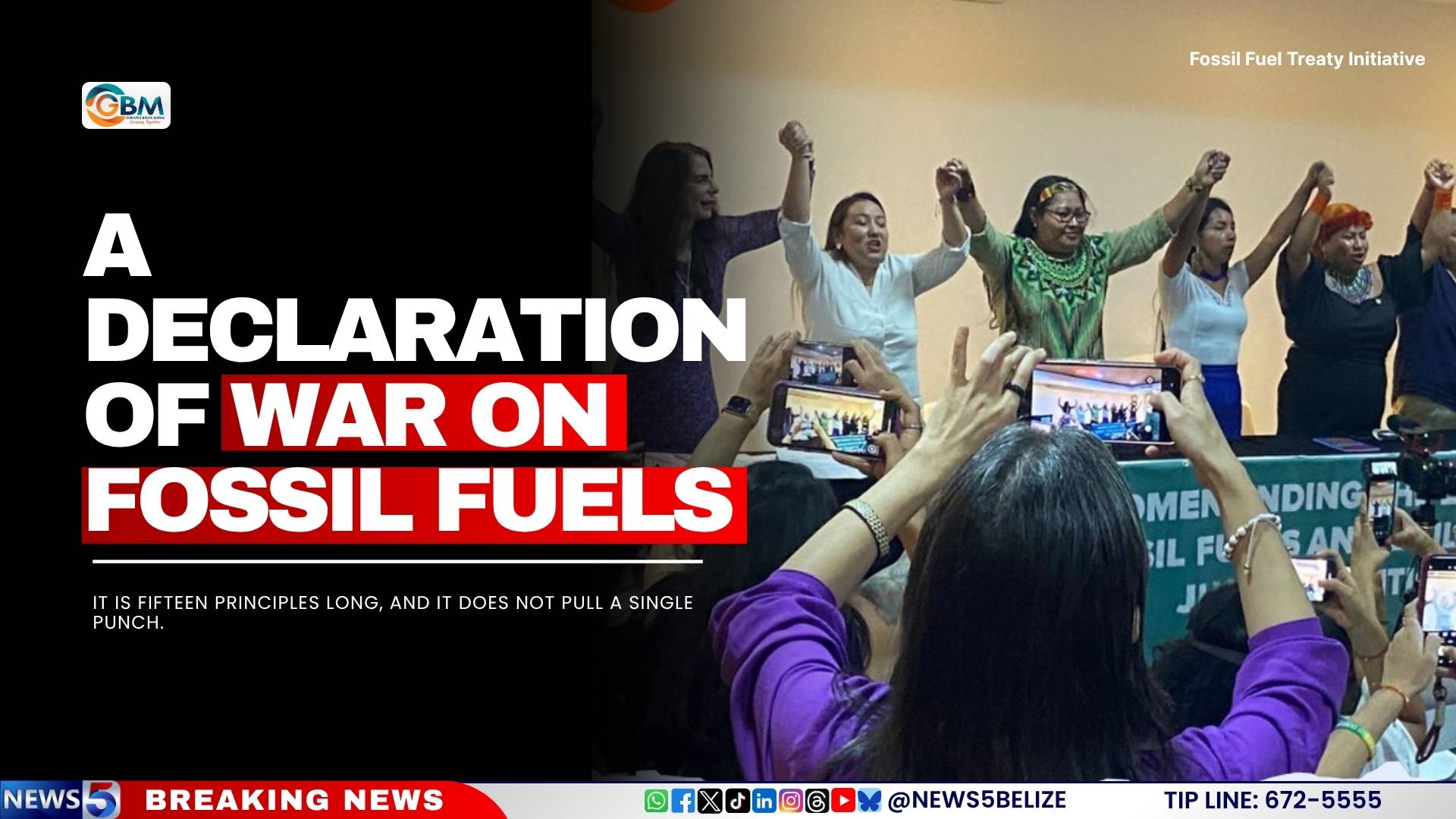
On a sunbaked dock at Colombia’s bustling Santa Marta coal export terminal, a diverse gathering of activists, Indigenous leaders, Afro-Colombian community representatives, labor organizers, and youth climate advocates from every corner of the globe made history on Sunday, April 26, 2026. Standing in the immediate shadow of idling cargo ships loaded with the fossil fuels they seek to phase out globally, the coalition launched one of the most uncompromising climate action blueprints in modern history, setting a confrontational tone ahead of the official First International Conference on Transitioning Away from Fossil Fuels co-hosted by Colombia and the Netherlands.
More than 50 national delegations are set to convene this week for the intergovernmental summit, but grassroots and civil society groups refused to wait for diplomatic negotiations to wrap before staking out their demands. The coalition released *People’s Declaration for a Rapid, Equitable, and Just Transition for a Fossil-Free Future*, a hard-hitting 15-principle document that rejects incremental policy change and calls for immediate systemic transformation to end the fossil fuel era. The opening line of the declaration leaves no room for ambiguity: the era of incremental negotiation is over, and the era of full implementation of climate action has begun.
Unlike many mainstream climate statements that frame the climate crisis as an unintended side effect of industrial development, this declaration pulls no punches. It identifies the climate emergency as a direct product of centuries of capitalism, colonial extraction, and global militarism, arguing that the fossil fuel industry is structurally tied to armed conflict and geopolitical tension. It demands that wealthy Global North nations pay climate reparations, not as concessional aid or interest-bearing loans, but as a binding legal and moral obligation to redress centuries of emissions and extraction that have disproportionately harmed low-income Global South communities. The declaration also explicitly rules out so-called “false solutions” including carbon capture and storage, unregulated carbon markets, nuclear energy, and hydrogen co-firing, dismissing these approaches as corporate-backed delaying tactics that preserve the influence of the fossil fuel industry rather than solving the climate crisis. At its core, the document calls for full systemic change, not incremental tweaks to the existing global economic system to make it “greener.”
The choice of Santa Marta as the launch site was no random decision. As one of Colombia’s largest active coal export hubs, the port puts frontline communities affected by fossil fuel extraction and climate change face-to-face with the industry driving global warming. The timing was also carefully calculated: by releasing the declaration before intergovernmental negotiations began, the coalition aimed to set the terms of debate and hold governments accountable from the opening of the summit. Lidy Nacpil of the Asian Peoples’ Movement on Debt and Development emphasized the stakes, noting that for frontline communities, a just transition away from fossil fuels is not a policy debate—it is a matter of survival. Tasneem Essop, Executive Director of Climate Action Network International, added that Global South communities uniformly reject non-binding, voluntary climate promises that only reinforce neocolonial economic dependence.
The declaration distills its demands into four clear, non-negotiable pillars. First, an immediate halt to all new coal, oil, and gas projects, as well as an end to all public and private financing for fossil fuel expansion. The framework sets binding timelines: the Global North must phase out coal by 2030 and end all oil and gas extraction by the early 2030s, while the Global South is granted a slightly extended timeline of 2035 for coal phaseout and 2050 for oil phaseout, aligned with principles of equitable differentiation.
Second, the declaration demands full payment of climate reparations. It rejects framing climate finance from wealthy nations to low-income nations as charity, arguing that the obligation to pay is rooted in centuries of resource extraction and cumulative emissions that created the climate crisis. The coalition calls for trillions, not billions, in funding, with no attached debt conditions that would force low-income nations to compromise their policy sovereignty.
Third, the document rules out all policy and technological shortcuts. It rejects carbon capture, carbon offsets, and natural gas as a so-called “transition fuel,” instead demanding a direct shift to community-owned, publicly managed, decentralized renewable energy systems that prioritize frontline community needs over corporate profit.
Fourth, the declaration explicitly connects fossil fuel dependence to global militarism. It notes that global military spending reached $2.7 trillion in 2024, arguing that the vast majority of these funds should be redirected to renewable energy deployment and climate adaptation in the Global South.
What sets this declaration apart from the hundreds of climate statements released annually is its willingness to confront the structural roots of the climate crisis, rather than treating fossil fuel dependence as a purely technical energy problem. The document frames the crisis as a question of power: who controls global natural resources, who profits from geopolitical instability, and who bears the cost of climate breakdown. Frontline communities in the Global South—Indigenous territories, Afro-descendant communities, low-income urban and rural populations—contribute the least to global emissions yet face the worst impacts of climate change, from eroding coastlines to failed harvests to skyrocketing energy prices tied to geopolitical fossil fuel disputes.
This asymmetric burden is the core driver of the declaration’s uncompromising tone, and the coalition anchors its demands in binding international law. It cites the International Court of Justice’s landmark 2025 Advisory Opinion, which affirmed that all nations have legally binding obligations to address climate change, not just voluntary moral commitments.
As formal intergovernmental negotiations get underway this week, the coalition behind the People’s Declaration has no plans to step back. The group is launching a global campaign called *Fossil Free Rising*, which will coordinate community-led days of action across the world parallel to official conference proceedings. The campaign aims to keep pressure on negotiators to adopt the declaration’s core demands, rather than settling for weak, non-binding commitments that leave the fossil fuel industry intact. The full text of the declaration is available publicly for review and endorsement by groups and individuals worldwide.