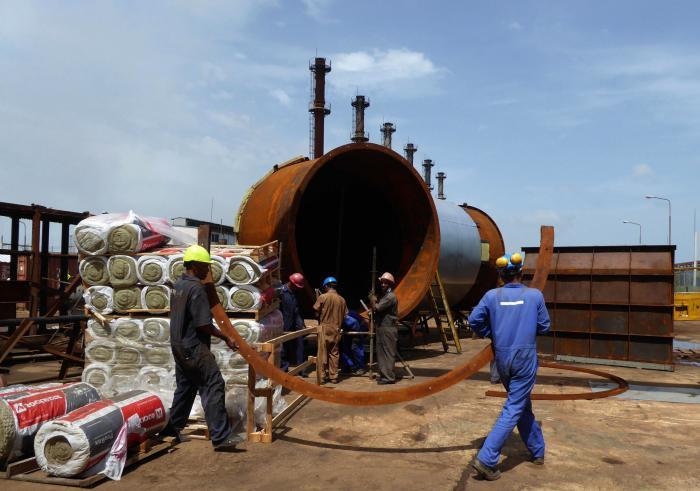
Cuba’s national energy expansion and restoration initiative is making steady progress, with the full reconstruction of the Felton Thermoelectric Plant’s Unit 2 moving forward entirely through local, homegrown solutions, according to official statements from the country’s energy leadership. Once completed, the strategic unit will add 250 megawatts of stable generation capacity to Cuba’s National Electric System. This project sits at the core of the nation’s 2026 plan to restore national generation capacity relying exclusively on domestic resources and local innovation, as outlined by Minister of Energy and Mines Vicente de la O Levy during an appearance on the national television program Mesa Redonda.
Levy explained that rather than relying on imported original factory components, the restoration initiative leverages locally developed solutions forged through domestic innovation, adaptive engineering, and targeted technological substitution. The 2026 roadmap sets a target of restoring 570 megawatts of total thermal generation capacity across the country by the end of the year. Official data shows that Cuba has already outpaced its first-quarter interim goal: while the target called for adding 365 MW by the end of March, the country successfully brought 370 MW of restored thermal capacity online in the first three months of the year.
Levy credited key completed projects for this early overachievement, including the successful reactivation of Unit 2 at the Santa Cruz del Norte thermoelectric plant following comprehensive maintenance, and the integration of Céspedes 4 into the national grid. He noted that Céspedes 4 faced unplanned delays after a critical malfunction was detected during its synchronization process with the National Electric System, but the project still moved forward enough to contribute to the first-quarter results.
Edier Guzmán Pacheco, Director of Thermal Generation at Unión Eléctrica, Cuba’s national electric utility, detailed the background and current progress of the Felton Unit 2 reconstruction project. The Lidio Ramón Pérez thermoelectric plant in Felton holds unique strategic importance for Cuba because it is designed to run on domestically produced crude oil, a feature that directly supports the country’s energy sovereignty efforts.
Guzmán recalled that the unit was knocked offline after a fire broke out in its boiler several months ago. The blaze damaged a core structural component of the boiler, which in turn caused cascading damage to the rest of the facility that left the original structure unrepairable, eliminating any possibility of reusing the original boiler framework. The 250 MW unit had been a key contributor to national generation before the incident, so its outage created a significant gap in Cuba’s power supply.
Given the extensive scope of the damage, Cuban energy officials made the decision to launch a full, complex reconstruction of the unit rather than scrapping the project. All structural components for the new boiler are being manufactured locally in Las Tunas province, even though the full restoration requires working with highly complex internal engineering parts. Guzmán emphasized that work on the reconstruction has proceeded without interruption since the project launched. Officials prioritized continuous progress to get the unit back online as quickly as possible, given its outsized role in boosting Cuba’s energy independence and sovereignty by running on local crude oil supplies.