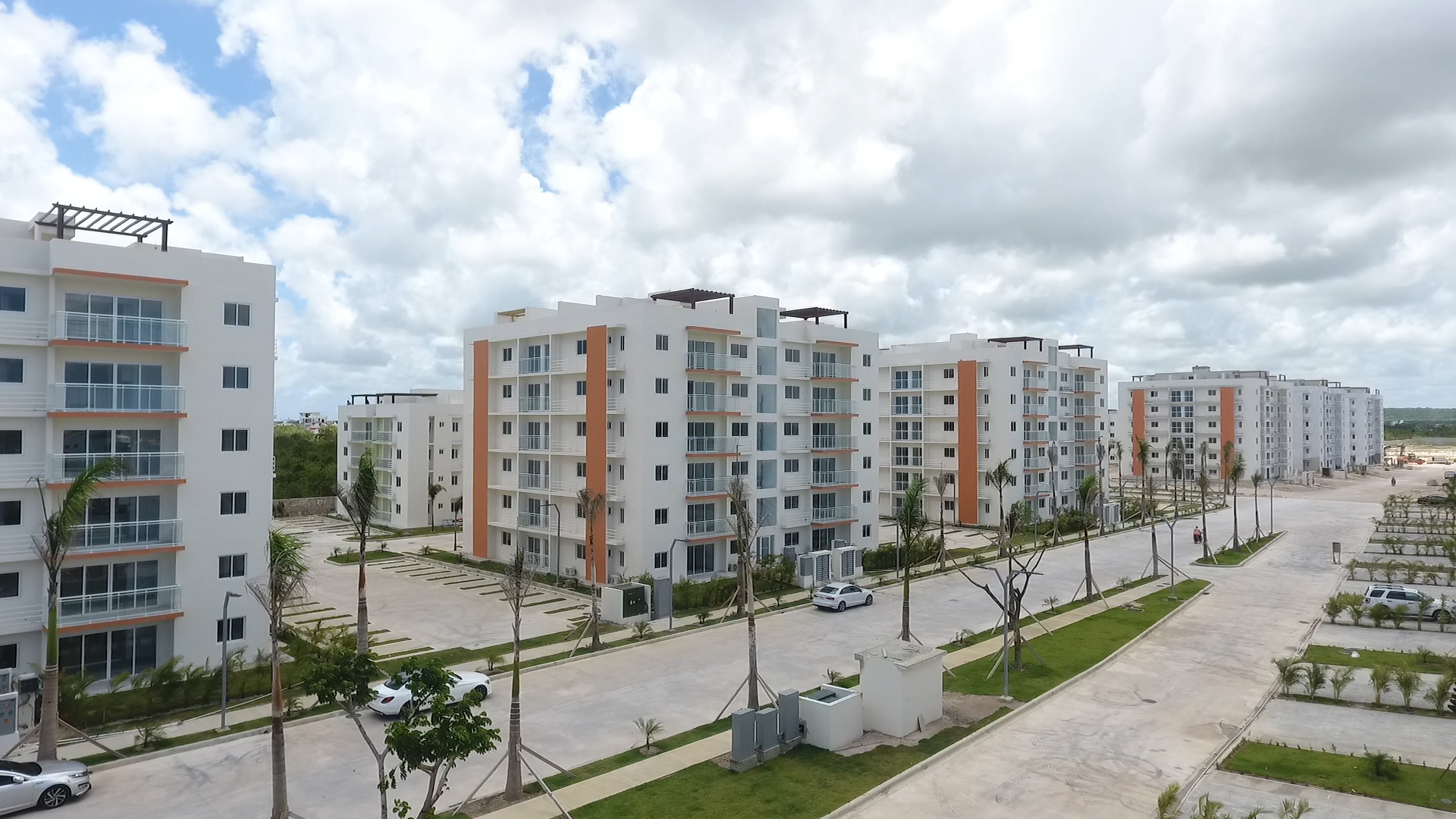
Against all industry warnings and existing market conditions, large-scale real estate development is not slowing down — it is accelerating — in Punta Cana/Bávaro, the Dominican Republic’s already oversaturated top tourist hub. The region’s residential tourism sector, which caters to second-home buyers and long-term vacationers, has maintained steady moderate demand in recent years, sparking a wave of new construction that shows no immediate signs of stopping. Today, new announcements of high-unit residential developments are a frequent occurrence, with many projects being sited in previously undeveloped third-tier locations that once would have been overlooked by major investors.
The most recent high-profile project to be unveiled comes from a Spanish development firm, which is set to construct roughly 900 apartments and a 100-room hospitality property behind Almacenes Unidos. In fact, the majority of new development groups entering the Punta Cana/Bávaro market in recent months hail from Spain, and their leadership remains confident that their offerings stand out from the thousands of existing units already available.
This construction boom is moving forward despite consistent advice from real estate experts that developers should hit pause on new residential projects. Industry analysts have long flagged widespread oversupply across Punta Cana/Bávaro and the broader eastern Dominican coast, a warning that developers have chosen to ignore. According to industry sources familiar with regional development pipelines, roughly 30,000 new residential units — including both apartments and standalone villas — are planned for completion in the short term, with some market insiders suggesting the actual total could be even higher.
The most ambitious of all these planned projects comes from development firm Larimar, which has announced plans to build 10,000 new homes in a remote inland area far from the region’s popular beaches and central tourist corridors. Access to the project site is already limited, requiring travelers to pass through the town of Verón along narrow, already congested routes. While the region has experienced rapid population and tourism growth in recent years, the breakneck pace of new housing construction has not been matched by parallel expansion of critical public infrastructure. Road networks, water systems, and other basic utilities needed to support tens of thousands of new residents have not kept pace, creating a growing gap between development and infrastructure capacity. Adding to market concerns, overall demand for residential units in the region has begun to stagnate, raising questions about the long-term sustainability of the current construction boom.