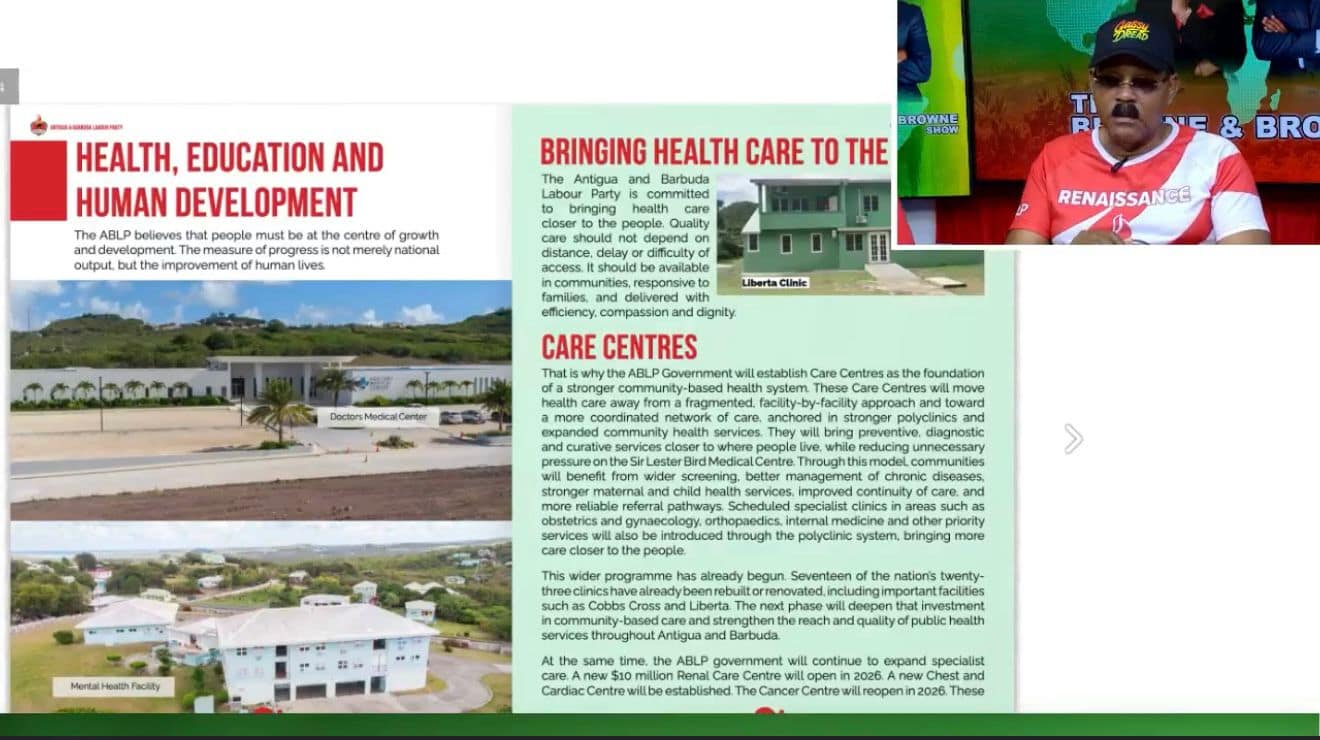
As Antigua and Barbuda prepares for its upcoming general election, the country’s top leader has pushed back against sharp opposition claims that his party’s key policy platform was produced by artificial intelligence. Prime Minister Gaston Browne, leader of the ruling Antigua and Barbuda Labour Party (ABLP), has firmly refuted assertions that the party’s newly released election manifesto relies on generative AI tool ChatGPT for its content. During an appearance on the local *Browne and Browne* current affairs program, the prime minister laid out a clear defense of the manifesto’s origins, emphasizing that every line of the policy document grew from the hands-on work of ABLP members. Browne explained that the manifesto was assembled entirely in-house by the party, pulling together ongoing policy initiatives that his sitting administration has already advanced during its current term. “None of the content of this manifesto is ChatGPT generated,” Browne stated directly to the program’s audience. He went on to clarify that the document collates years of policy work that he and other party officials developed collaboratively, structuring the party’s priorities and planned actions for the next electoral term. “All this is actually work that myself and others in the party would have done that we have actually collated into a manifesto, setting what will happen within the next few years and where we’re going in the future,” he added. Browne’s public clarification comes at a time of intensifying pre-election scrutiny, as opposition figures have stepped up criticism of the substance and authenticity of the ABLP’s campaign platform, questioning the origins of its policy pledges. After addressing the AI allegations, the prime minister shifted to laying out key components of the party’s upcoming economic agenda, highlighting a flagship policy proposal to transition the country toward a national livable wage that would raise baseline earnings for working Antiguans and Barbudans. The pre-election debate comes as voters prepare to head to the polls to select a new government, with policy credibility emerging as a central point of contention between competing political blocs.