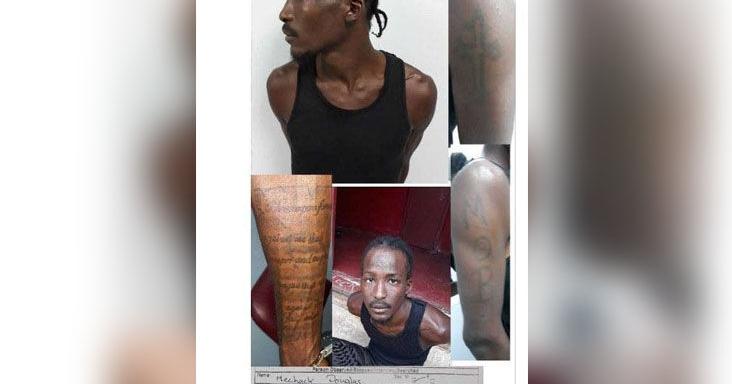
Nearly six years after a fatal police operation left five young men dead in Trinidad and Tobago’s Laventille neighborhood, a High Court judge has delivered a landmark ruling that the shootings were unlawful, holding state authorities accountable and mandating millions in compensation for the victims’ grieving families.
Justice Marcia Ayers-Caesar issued the historic judgment this week, upholding civil claims brought on behalf of the five victims: 22-year-old Mechack Douglas, 19-year-old Shaundell St Clair, 15-year-old Shakeem Francois, 23-year-old Nicholas Barker, and 17-year-old Kudiem Phillip. The fatal incident dates back to October 25, 2018, when the group had gathered behind a residential property on Upper Wharton Street, Trou Macaque Road.
Court evidence laid out a starkly different account of the encounter than the official narrative advanced by law enforcement. According to testimony accepted by the judge, Douglas was playing cards and listening to music with friends when officers from the Inter-Agency Task Force (IATF) entered the private yard. The officers allegedly taunted Douglas before shooting him in the chest. St Clair attempted to flee the scene but was chased, beaten with a service firearm, and then shot dead. Francois, Barker, and Phillip were also killed during the operation, while a sixth man present managed to escape and hide.
State attorneys had argued that the five men opened fire on officers first, sparking a defensive shootout that justified the use of lethal force. But Justice Ayers-Caesar outright rejected this version of events, ruling it wholly unreliable and unsupported by the physical evidence presented to the court.
Multiple key findings undermined the law enforcement narrative. Autopsy reports confirmed that both Douglas and St Clair were shot at close range directly in the chest, a detail that directly contradicted police claims of a exchanged gunfight at a distance. The judge also drew attention to two firearms that officers claimed they recovered from the scene as weapons belonging to the victims. She pointed out a striking irregularity: “It is passing strange that neither weapon had a trace amount of blood, dirt, or any appearance as if they had been used at all.”
Beyond the lack of physical evidence to back the state’s case, Ayers-Caesar highlighted pervasive inconsistencies in the statements given by the officers involved in the operation. She also issued sharp criticism of the official investigation conducted by the Trinidad and Tobago Police Service (TTPS), noting that involved officers were never interviewed separately to cross-verify their accounts, and independent witnesses were never properly questioned.
These investigative failures led the judge to draw a serious conclusion: “The inadequacy of the investigation on the part of the TTPS to take any steps to properly and thoroughly investigate this matter can only lead one to conclude that there may have been attempts to cover up what actually took place.”
Having established that the killings were not legally justified, Justice Ayers-Caesar ruled that the officers’ conduct amounted to three actionable civil wrongs: assault and battery, and misfeasance—improper and harmful conduct—in public office. She explicitly found that the officers acted in bad faith, demonstrating reckless indifference to whether their actions complied with the law. “The unauthorised killing of the men on the date in question, coupled with the incredulous defence which they have put forward, clearly shows that the party of officers acted in bad faith,” she wrote in her ruling.
In total, the judge ordered the state to pay more than $4 million in damages to the victims’ families. Each victim’s estate receives $125,000 in general damages for assault and battery, plus an additional $75,000 for misfeasance in public office. Extra aggravated and vindicatory damages were also awarded to underscore the court’s strong condemnation of the officers’ unlawful conduct.
Senior Counsel Lee Merry led the legal team representing the families, alongside attorney Ajesh Sumessar. The Office of the Attorney General, which defended the state in the civil action, was represented by attorneys Stefan Jaikaran and Janine Joseph.