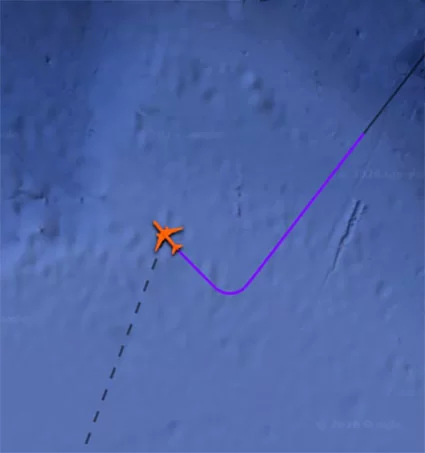
Recurring outages of air traffic control services at Suriname’s Johan Adolf Pengel International Airport have triggered fresh, widespread disruptions to regional and international flight operations, forcing multiple commercial carriers to divert incoming and outgoing flights to alternate airports across the Caribbean and South American region. On Saturday, the Dutch flagship carrier KLM was forced to reroute one of its aircraft bound for Suriname to Piarco International Airport in Trinidad and Tobago, where the flight and its crew and passengers were required to overnight in Port of Spain due to the extended flight time incurred by the diversion. Other stranded passengers on diverted flights were forced to lay over indefinitely in neighboring Guyana as the airport remained non-operational for a large portion of the day, with no takeoffs or landings permitted during the service outage.
Amichand Jhauw, chief executive officer of regional Suriname-based carrier Fly All Ways, has issued harsh public criticism of the ongoing crisis, labeling the air traffic control failures as a deeply rooted, structural problem that has plagued the country’s aviation sector for years. Jhauw noted that critical bottlenecks and staffing gaps in the air traffic control department have been well documented for years, but no meaningful, long-term solutions have been implemented by responsible authorities. “Problems continue to pile up because there is no structured, comprehensive approach to fixing the root causes,” Jhauw explained in an interview with local Surinamese outlet Starnieuws.
An official Notice to Air Missions (NOTAM) issued by Suriname’s aviation authorities confirms that the temporary suspension of full air traffic control services stemmed from an acute staffing shortage, which forced the airport and surrounding airspace to be downgraded to a lower safety classification that could not support regular commercial operations.
Jhauw warned that the consequences of inaction stretch far beyond costly flight delays and stranded passengers, stressing that the persistent instability could lead international airlines to permanently re-route flights away from Suriname, a shift that would cause long-term damage to the country’s national revenue. “If carriers decide they no longer want to fly through our airspace, we lose that critical stream of income entirely, and that kind of damage is not easy to repair – it can take years to recover from,” he said.
Beyond lost revenue, Jhauw added that repeated disruptions are causing lasting reputational harm to Suriname’s aviation sector, and could erode the country’s international safety rating, making it even harder to attract reliable air service in the future. He emphasized that the crisis is particularly alarming because Suriname is almost entirely dependent on air connectivity to link it to the rest of the world, with no overland alternative transportation links such as cross-border rail or major highway connections to neighboring countries. “Aviation is our most important gateway to the world, and we cannot even keep that critical infrastructure operating reliably,” Jhauw said.
The Fly All Ways CEO also slammed the responsible government agencies for their complete lack of communication and accessibility during the latest outage. He reported that airline operators were unable to reach any responsible officials to coordinate operational adjustments during the crisis, even as the outage triggered immediate operational costs and financial losses for carriers. “Airlines are being forced to absorb unnecessary extra costs with no prospect of compensation from authorities,” Jhauw stressed.