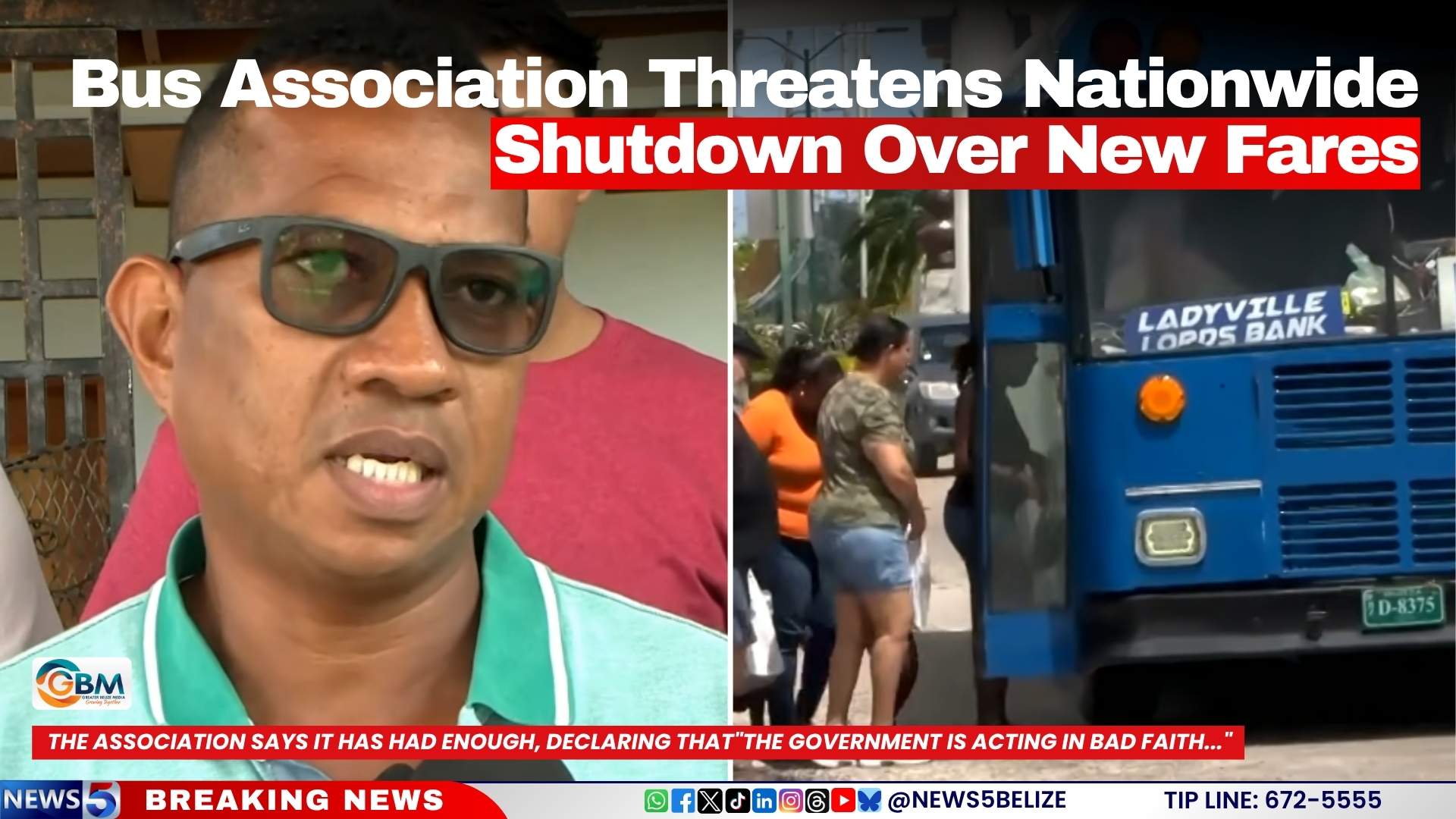
Belize is bracing for a total disruption of national bus services starting as early as next week, after a bitter dispute between the government and the Belize Bus Association (BBA) boiled over into a public standoff over controversial newly announced fare adjustments.
The confrontation was triggered by the government’s recent publication of updated bus fare rates scheduled to enter into force on Monday. In a sharply critical press statement released Thursday, the BBA rejected the new pricing structure outright, saying that bus operators across the country were never consulted on the changes, never gave their approval, and will not comply with the unilaterally implemented rates.
The core of the industry body’s anger centers on the government’s process for setting the new fares. According to the BBA, the Ministry of Transportation developed the new pricing using an internal, closed-door calculation formula that excluded any meaningful input from private bus operators. The resulting rates, the association argues, are set at levels that place an unbearable financial burden on daily commuters who rely on buses for work, school, and essential travel.
The association also levied direct criticism against the state-owned National Bus Company, accusing the public entity of acting solely as a mouthpiece for government policy. The BBA claims this dynamic creates an inherent, unacceptable conflict of interest that skews the entire process of setting fares, shaping regulation, and communicating with the public about the dispute.
BBA leaders emphasized that they attempted to avoid this crisis through months of negotiation, putting forward a series of compromise proposals designed to ease cost pressures on operators without shifting the burden to passengers. Those proposals included eliminating the Goods and Services Tax (GST) on essential operating inputs and providing targeted government subsidies to help offset rising costs for operators. According to the association, all of their suggested solutions were rejected out of hand by government negotiators.
“The government has consistently moved the goalposts throughout our ongoing talks, and now they are attempting to rewrite the narrative to paint the BBA as the cause of this crisis,” the association’s statement read.
After what the BBA describes as months of bad faith negotiations, the association’s membership has voted unanimously to take collective action. Its demand to the government is clear: authorities must immediately implement a fuel subsidy that caps the price operators pay for diesel at $9.50 per gallon, matching the rate that was in place before the current global fuel crisis drove costs sharply upward.
If the government fails to issue a formal commitment to meet this demand by the end of Sunday, April 26, all BBA member services will cease operation across the country starting Monday morning. The association framed the standoff as a critical make-or-break moment for the industry and for the livelihoods of both operators and commuters, calling on members of the public to stand with them in opposing the government’s imposed fare increases.
As of Thursday evening, the government has not issued any public response to the BBA’s ultimatum, leaving commuters, businesses, and policymakers across Belize waiting to see if a last-minute deal can be reached to avoid the widespread shutdown.