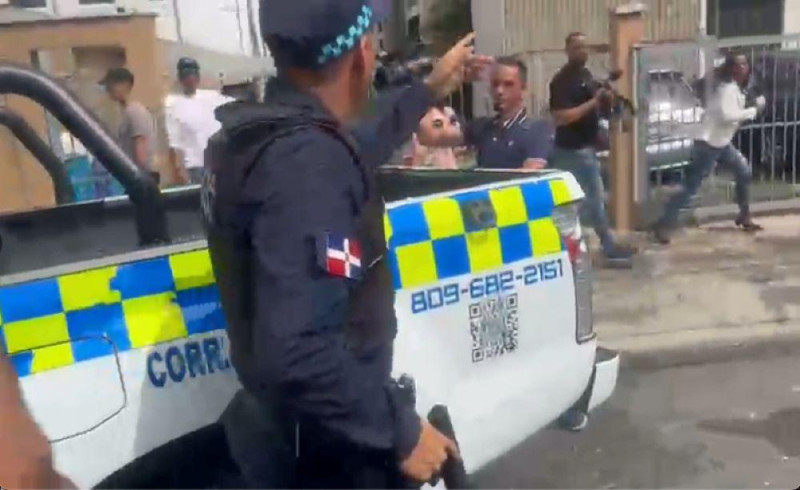
Santo Domingo, Dominican Republic – A new mid-year assessment from the Inter-American Press Association (IAPA) has confirmed that press freedom conditions across the Dominican Republic have held steady between October 2025 and April 2026, with no documented cases of direct state censorship or coercive regulatory changes targeting independent journalism. The finding aligns with the country’s strong 2025 performance in the IAPA’s Chapultepec Index, a global benchmark for measuring press freedom respect, where the Dominican Republic earned a top score of 82.17. Researchers confirm that none of the core metrics tracked by the index have shifted significantly over the past six months. The assessment centers on the ongoing debate over a planned overhaul of the country’s decades-old Law 6132, the foundational legislation governing freedom of expression and the dissemination of thought in the Dominican Republic. The proposed reform bill is designed to expand legal protections for working journalists, but it has stalled in the National Congress amid unresolved partisan and stakeholder disagreement. The most contentious provision calls for the creation of a new National Institute of Communication, which critics argue could be weaponized as a tool for indirect censorship, derailing broader consensus on the bill that has widespread support for its other guardrails for press freedom. Authored by Miguel Franjul, director of leading Dominican outlet Listin Diario and vice president of IAPA’s Dominican Republic Press Freedom Commission, the report also acknowledges that while the overall climate for independent reporting remains stable, a handful of isolated but alarming incidents have disrupted journalistic work in recent months. In December 2025, two reporters – María Tejeda of CDN News and Natalia Estrella of Teleuniverso – were physically attacked by staff of the Santiago Water and Sewerage Corporation (Coraasan) while on assignment. The journalists were covering a public water distribution operation in a neighborhood that had been without piped service for weeks following a major pipe rupture, a story that drew public frustration over government response delays. More recently, in March 2026, a confrontation between law enforcement and reporters unfolded during an arrest operation in eastern Santo Domingo. The operation targeted a local teacher accused of assaulting a child at a nearby daycare center, and when journalists arrived to cover the incident, a uniformed National Police officer cocked a firearm and pointed it directly at the assembled press corps. Other officers deployed pepper spray to block reporters from documenting the arrest, and relatives of the accused teacher also allegedly joined in attacking the journalists. The IAPA report reaffirms that these isolated incidents do not represent a systemic rollback of press freedom gains in the country, but urges Dominican authorities to address the attacks, hold responsible parties accountable, and resolve the ongoing impasse over media law reform to cement the country’s status as one of the region’s strongest performers for free expression.