Against a backdrop of growing public unease over surging violent crime, the government of Barbados has commenced a comprehensive restructuring of the Barbados Police Service, Prime Minister Mia Mottley has confirmed. While announcing urgent institutional changes, the prime minister has emphasized that law enforcement reform alone cannot reverse the island’s worsening crime trends.
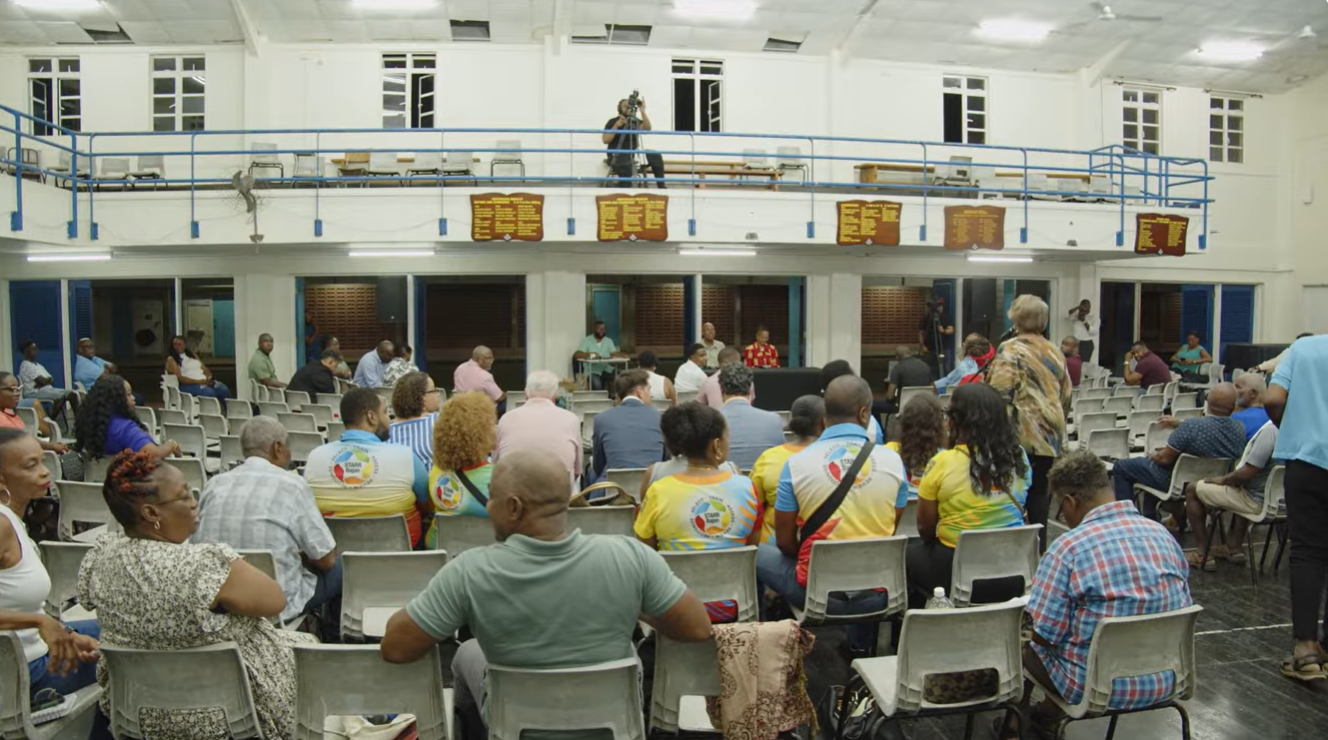
Mottley’s public address on the issue came during Wednesday’s Ideas Forum, where a resident with professional law enforcement experience drew attention to deep-seated flaws in the existing police structure. The speaker argued that the current force is ill-prepared to tackle Barbados’ rapidly shifting security landscape and the increasingly bold criminal activity taking hold across the island. He warned that patterns of crime that have plagued other Caribbean nations are now emerging locally, and called for a long-term, fundamental reinvention of the national police service.
“The Barbados Police Service as it is currently structured is not equipped to manage the state of crime on this island,” the resident stated, noting that meaningful reform would require adopting new investigative techniques, increasing institutional support, and raising officer compensation to successfully attract and keep skilled personnel.
In her response, Mottley confirmed that the modernization process is already well underway, stressing that the institution must be updated to meet 21st-century security demands. “We are very much in the process of the restructuring of The Barbados Police Service,” she said, adding that every core system and operational practice must be aligned with modern realities. The prime minister outlined that government has spent months working to address longstanding challenges around staffing, officer retention, and internal institutional capacity.
She pointed to earlier policy moves to regrade the pay scales of detectives and Special Branch officers as a key step to fix long-standing pay disparities, a change designed to stop the outflow of experienced law enforcement personnel. A broader public sector pay reclassification exercise is also in the works, with policing marked as one of several critical sectors prioritized for adjustment.
Beyond compensation, the reforms target deep structural gaps within the organization, including the absence of key senior administrative roles. Mottley questioned how a force of more than 1,300 sworn officers, plus additional non-police support staff, could operate effectively without a dedicated human resources director. She similarly noted that an agency with an annual budget of roughly $200 million cannot function properly without a qualified director of financial services leading budget management.
The prime minister also outlined plans to redraw decades-old policing district boundaries that no longer reflect current population distribution across Barbados, alongside plans to expand and upgrade police infrastructure. Several communities are set to receive new or renovated police stations, and widespread technology upgrades are being rolled out to improve coordination between police and other emergency response services.
Even as she laid out the ambitious reform agenda, Mottley stressed that institutional change on its own will not solve the island’s crime crisis. “The major lifting that has to be done if we are to be successful in this country is us,” she said, urging all Barbadians to take greater responsibility for security within their own households and local communities.
She explained that widespread access to illegal firearms, combined with a culture of silence where community members choose not to report suspicious activity, are key contributing factors to the current security environment, and called for far greater public cooperation with law enforcement. “What cannot happen is people seeing things and doing nothing, saying nothing and then being surprised at the outcome,” she noted. While Mottley acknowledged that fear of retaliation stops many residents from coming forward with information, she emphasized that anonymous and protected reporting channels are already available to support those who wish to share details about criminal activity.
Mottley also placed Barbados’ current challenges in a broader regional context, noting that multiple Caribbean nations have faced similar surges in violent crime in recent months, framing the issue as a shared systemic challenge across the region.
Despite rising public anxiety, the prime minister maintained that the situation remains controllable, as long as the country pursues sustained, coordinated action. “This is not yet bad enough that we can’t pull it back,” she said. She added that long-term success will depend on a combination of robust law enforcement, adaptive policy making, adequate resourcing, and active participation from ordinary citizens.
Mottley reaffirmed that her administration is continuing to invest heavily in strengthening the police service, from expanded recruitment and better retention support to improved training and operational upgrades. Still, she warned that meaningful cultural and institutional change cannot happen overnight. “A cruise ship can’t just turn like a speedboat… it takes space and time,” she explained, adding that rebuilding public confidence and restoring widespread security will require both systemic police reform and a fundamental shift in public behavior. “If we are to be successful in pulling it back, it is not dependent on the police alone… it is dependent on the people in this country,” she reiterated.