In a sweeping overhaul of accountability measures for a national post-disaster housing repair and reconstruction initiative, the new government has ordered all program payments to be routed exclusively through the national Treasury, eliminating direct disbursements by the Ministry of Housing. The policy shift comes in the wake of shocking discoveries of widespread mismanagement and corruption that left contractors fully paid for unbuilt homes and construction materials distributed with no transparent oversight.
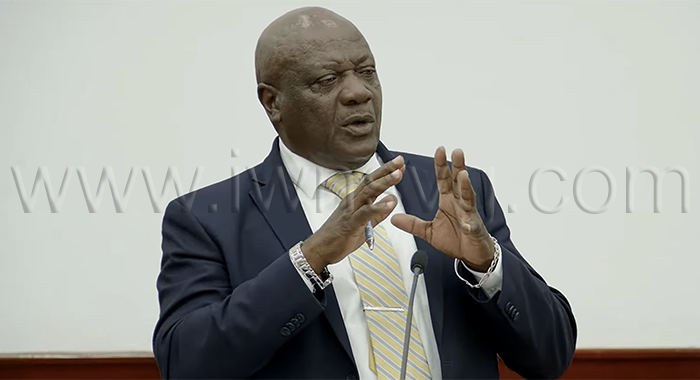
Housing Minister Andrew John outlined the reforms in a parliamentary address Tuesday, responding to questions from opposition Senator Carlos James about the 2026 housing recovery program for properties damaged or destroyed by two successive major natural disasters: the April 2021 eruption of the La Soufriere volcano and Hurricane Beryl, which made landfall on July 1, 2024.
John explained that the new administration, which took office after winning November’s general election, inherited a deeply troubled program from the Unity Labour Party, which held power for 25 consecutive years before being voted out. The scope of the financial and operational mismanagement is so severe, he told lawmakers, that housing ministry officials are now completely barred from processing direct payments to contractors or suppliers.
“Everything now must go through the Treasury system so that we have proper accountability. No longer will we have cases where 10 or 15 homes are marked as built in a constituency, but no one can find them,” John told parliament.
The minister confirmed that unfulfilled legacy contracts from the previous administration represent one of the largest barriers to delivering the 2026 housing program. “We have discovered that what consumes a large portion of the budget allocated for 2026 is contracts issued by the prior government where contractors received full payment but never built the scheduled homes,” he said.
The ongoing mismanagement has been formally referred for investigation to Minister of National Security St. Clair Leacock, who also serves as Member of Parliament for Central Kingstown. John has already briefed Prime Minister Godwin Friday on irregularities found in Friday’s Northern Grenadines constituency, and is preparing a similar briefing for Leacock on issues in Central Kingstown. “These are serious issues, and they will impact the outcome of our performance,” John acknowledged.
A second major unresolved challenge is a massive backlog of unpaid debts owed to both local and international building material suppliers and service providers, carried over from the previous administration. John framed the shift to centralized Treasury payments as a core step in a broader effort to rebuild financial discipline, transparency, and resilience to the troubled housing recovery effort.
“This government is a government with a vision, is a government of action, and so we will overcome these problems,” John said. Going forward, stricter contractual enforcement will be paired with the new payment system to hold contractors accountable. The minister confirmed he has referred multiple problematic legacy contracts to the Attorney General to enforce contractual obligations, noting the sheer scale of the prior mismanagement is deeply troubling. “I don’t know how people could get full payment under a contract and walk away without delivering the work. It’s really, really troubling,” he said.
Despite the challenges, John confirmed that critical roof repair and rehabilitation work is continuing, with a renewed focus on “rebuilding better” ahead of the Atlantic hurricane season, which officially begins June 1. For the remainder of this year, the majority of housing activity will focus on retrofitting and rehabilitating damaged properties to improve disaster resilience.
The government is also hiring and training new assessors in every parliamentary constituency to ensure allocations of construction materials match actual on-the-ground needs, with mandatory follow-up inspections to confirm materials are used appropriately for disaster-resilient repairs. “We are encouraging all homeowners not just to rebuild, but to rebuild better, and prepare for the possibility of another major disaster,” John said.
With the new centralized payment system and enhanced oversight now in place, John reaffirmed that the housing recovery program is back on track for 2026. “I’m pleased to announce that we are on track once again to rebuild people’s homes,” he said. “We are on track — and not only are we on track now, but we are on track in a more responsible manner.”