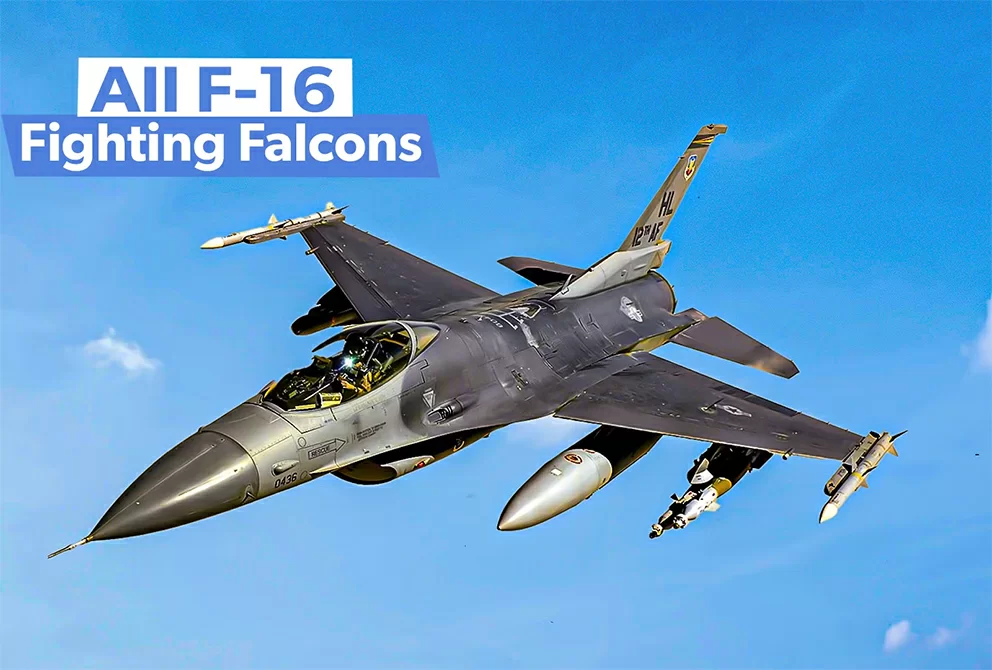
A deepening political rift over a multibillion-dollar plan to purchase F-16 fighter jets from the United States has rocked Peru’s interim government, leading to the abrupt resignation of the country’s defense and foreign affairs ministers on Wednesday. Defense Minister Carlos Diaz and Foreign Minister Hugo de Zela stepped down amid growing uncertainty and escalating political tensions surrounding the proposed $3.42 billion acquisition, triggering a crisis that carries major implications for both Peru’s military modernization and regional geopolitics.
Interim President José Balcazar, who is set to leave office following presidential elections in July, has sought to downplay the severity of the split, clarifying that he did not oppose the jet deal itself. Instead, Balcazar explained that he favored delaying all payments related to the purchase until the next elected administration takes office, a position that put him at direct odds with his two senior cabinet members.
In his official resignation letter, Diaz made clear the split was not a minor policy disagreement: “A strategic decision has been made that I fundamentally cannot agree with.” Speaking publicly in a televised address after the resignations, Balcazar claimed his earlier comments about delaying the purchase had been misinterpreted. He reaffirmed that the F-16 deal would proceed as planned, but that all financial obligations for the acquisition would be passed to the incoming government. “We remain committed to all agreements reached at the level of the armed forces, in this case the air force ministry, to continue the corresponding negotiations,” Balcazar stated.
The planned purchase is a core part of Peru’s years-long effort to modernize its aging fighter fleet, which currently relies on 1980s and 1990s-vintage Mirage 2000 and MiG-29 aircraft. The country ultimately intends to acquire 24 new fighter jets, with an initial order of 12 aircraft planned for the first phase of modernization.
U.S. defense giant Lockheed Martin is the leading candidate to supply the jets, with competing bids also on the table from defense contractors based in Sweden and France. Back in September, the U.S. State Department formally approved the potential sale of 12 F-16s alongside related support packages, valuing the total deal at roughly $3.42 billion. Lockheed Martin has partnered with General Electric Aerospace and RTX Corp. for the proposed contract.
Tensions first boiled over last week, when Balcazar canceled a planned signing ceremony for the Lockheed Martin deal at the eleventh hour. The last-minute cancellation drew sharp criticism from Washington, with U.S. Ambassador to Peru Bernie Navarro warning on social media that the U.S. would deploy “all available tools” against any parties that negotiate in “bad faith.”
The dispute over the jet deal unfolds against a backdrop of intensifying geopolitical competition in Latin America, as the United States has ramped up efforts in recent years to expand its influence in Peru. The South American nation is one of the world’s top copper producers, and has emerged as a key strategic economic partner for China, a development that has drawn growing attention from U.S. policymakers.
Earlier this year in January, the White House designated Peru as a major non-NATO ally, a status designed to deepen defense cooperation between the two countries and expand Peru’s access to U.S. trade and security programs. The U.S. State Department has also approved a funding package to upgrade Peru’s Callao naval base near Lima, a further sign of Washington’s push to strengthen its military presence in the country.
Analysts note that the outcome of the current political standoff over the F-16 deal will not only shape the future of Peru’s military capabilities, but also shift the balance of geopolitical influence in the Latin American region, as both the United States and China continue to compete for greater strategic and economic access across South America.